
Sugar Rush 1000 Slot – Free Demo
Provider:
Pragmatic Play
Two buttons in the corner of Sugar Rush 1000 offer to sell you the bonus, one at 100× your stake and one at 500×. The rules mention, without making a fuss about it, that taking the expensive door drops the game's published return from 96.53% to 96.44%. I took it twice anyway: 1,650× the stake the…
Play Sugar Rush 1000 demo
Three published returns for one game, and the sweetest one is not the one you want
Page four of the rules carries a line that most write-ups of this game never quote, because most write-ups never open page four. Sugar Rush 1000 does not have a return. It has three:
- Playing normally: 96.53%
- Buying the free spins for 100× your bet: 96.52%
- Buying the Super free spins for 500× your bet: 96.44%
Nine basis points is not a scandal and it will not decide anybody's evening, but it is the correct answer to a question players argue about constantly, printed by the studio in the game itself. The premium option is the worst-priced one. Call it a sugar tax.
The Minty Take: Two rounds at the same price returned 1,650× and 221×, which is the entire lesson: neither number is what 500× buys on average, or the studio would be running a charity. The useful findings here are the ones printed in the rules rather than the ones that happened to me: the ceiling is 25,000× and a free-spins round that reaches it ends on the spot with the remaining spins forfeited, the multiplier cap is ×1024 per square, and the Super buy carries the lowest of the game's three returns. If you are going to pay a premium, it is worth knowing the premium is priced in return as well as in cash.
What you are paying for is a memory
The grid is 7×7 and pays clusters — five or more of a symbol connected horizontally or vertically. Winners explode, survivors fall, new sweets drop in, and the sequence repeats until nothing new connects. Standard tumbling, and on its own it would be unremarkable.
The part that matters is what the grid remembers. Every exploding symbol marks the square it died on. The second explosion on that same square attaches a ×2, and every explosion after that doubles it: 4, 8, 16, and onward to a stated ceiling of ×1024. When several marked squares appear in one winning cluster their multipliers are added together, not multiplied — so a cluster crossing a ×8, a ×16 and a ×32 pays fifty-six times.
In the base game those marks are erased the moment the tumbling stops. That single sentence is the whole economy of this slot: in the base game you can never build anything, because the board wipes itself clean every spin. In free spins the marks stay for the entire round.
So the base game is a shop window
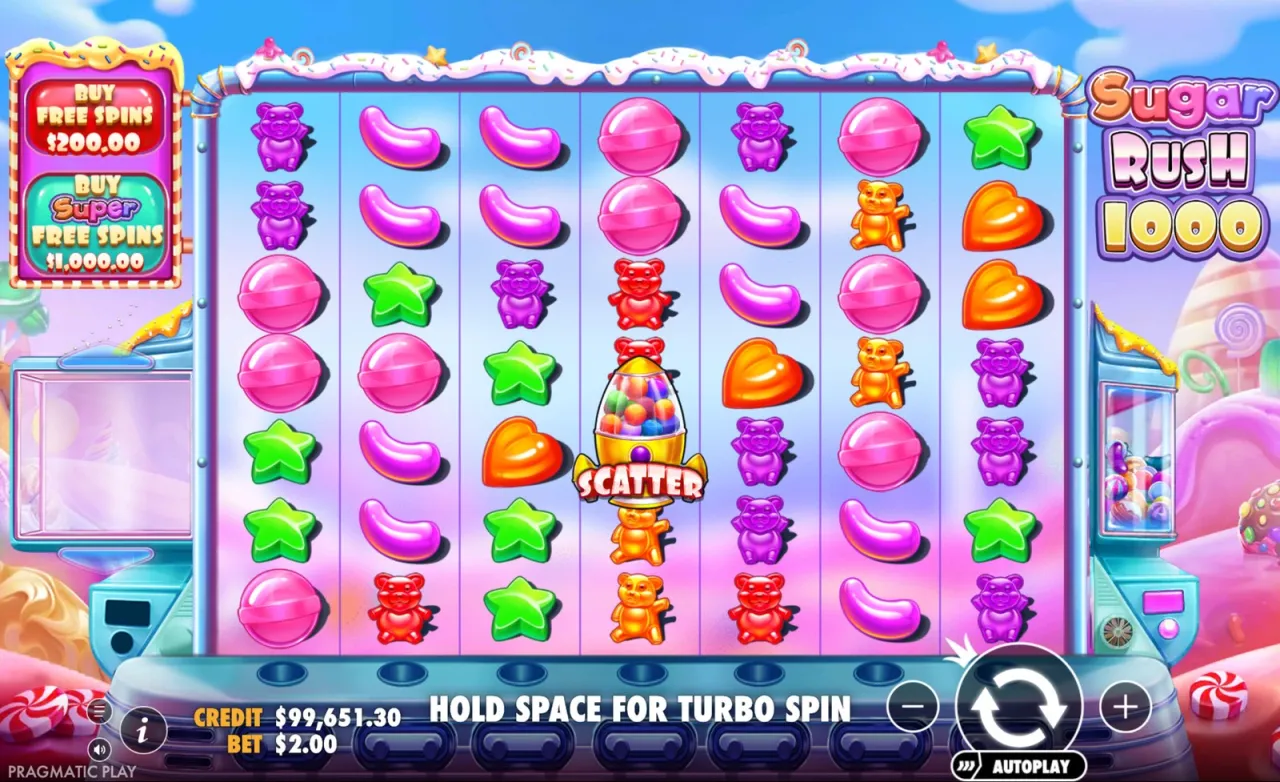
Knowing that, the layout starts to look less like a slot and more like a checkout queue. Two buttons sit permanently in the top-left corner — free spins for 200.00, Super free spins for 1,000.00 at the 2.00 stake I was playing — and the base game they interrupt is a place where nothing accumulates by design. Play it straight and you are funding scatters; the marks you build get swept away between spins, over and over, in a game whose entire value proposition is marks that stay.
I bought the expensive one
Super free spins, 1,000.00, which is 500 times the stake and by some distance the largest single click I have made for this site. The difference it buys is stated plainly: every square on the grid starts the round already carrying a ×2. You are not buying spins, you are buying a head start on the memory.
It opened at ten spins, went to twenty when scatters landed inside the round, and by the time it was down to six the counter read 285.20. Then the marked squares did what marked squares do once they are allowed to persist — the multipliers stopped being decoration and started stacking on top of each other, cluster after cluster landing on ground that was already worth eight or sixteen times.
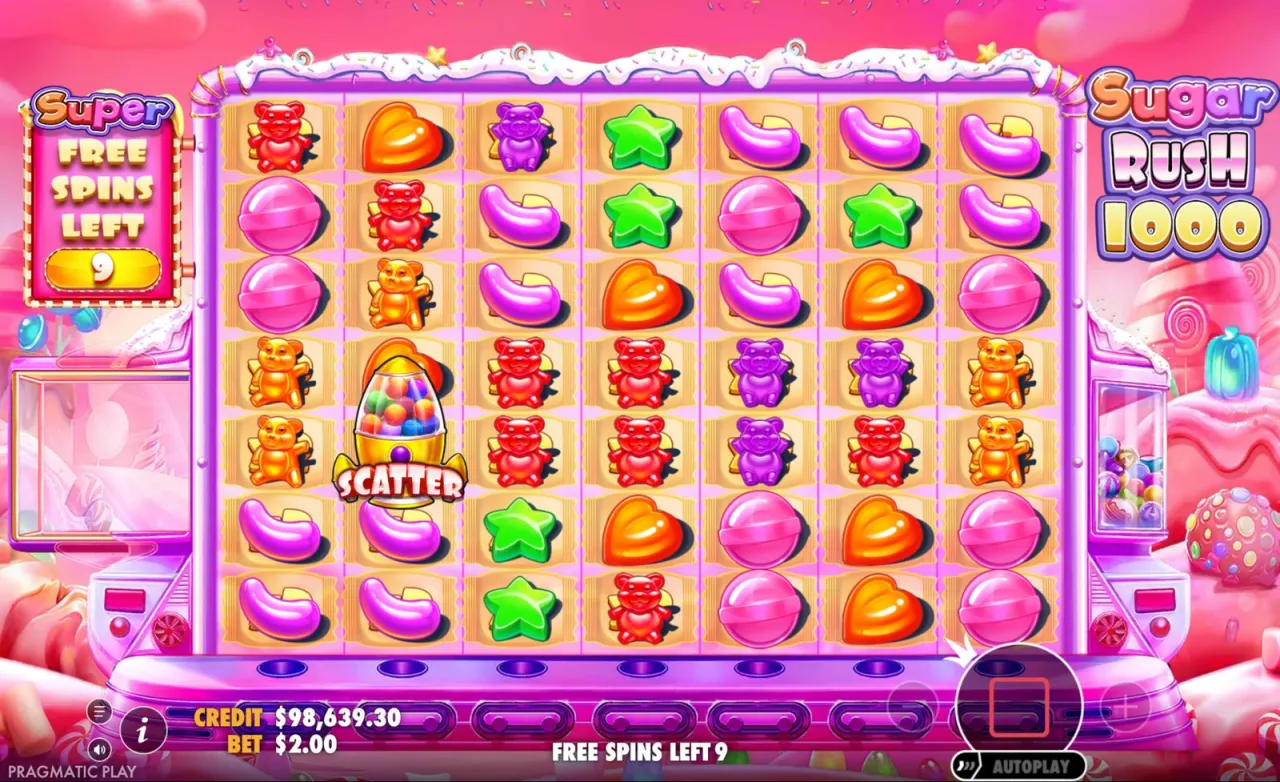
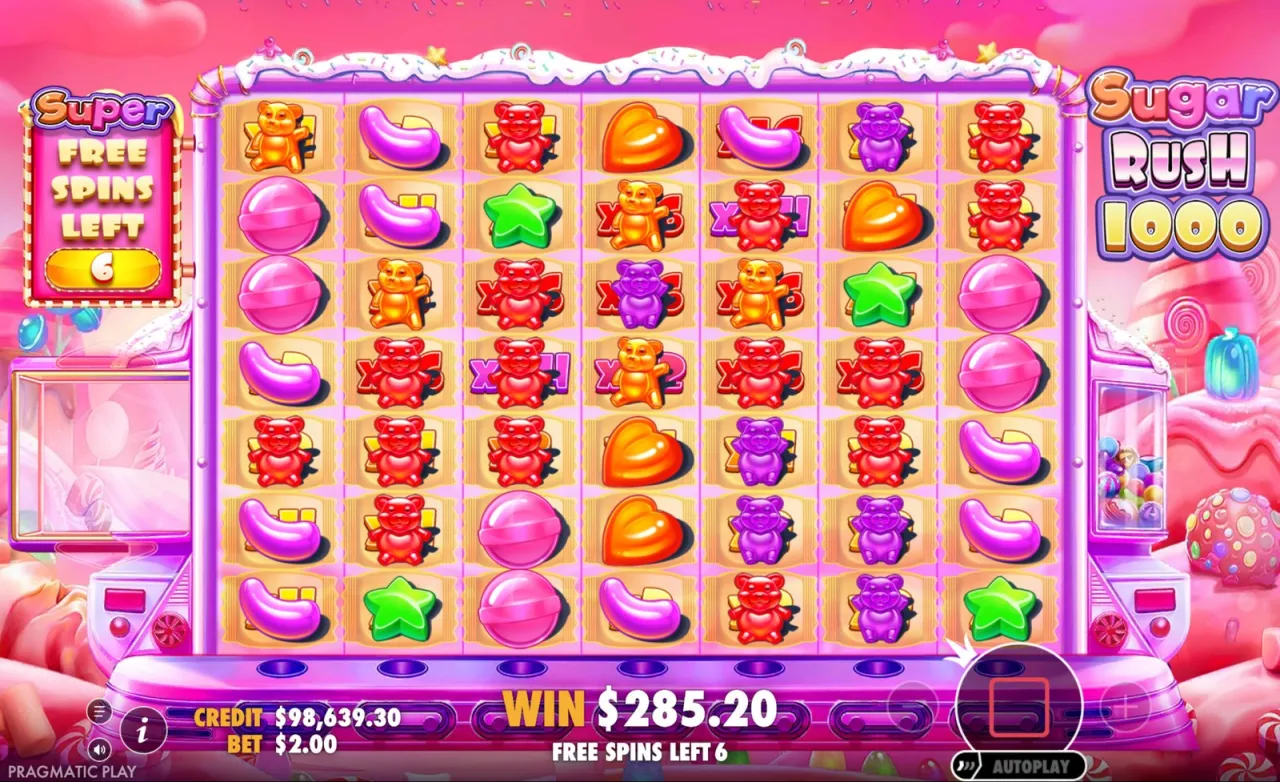
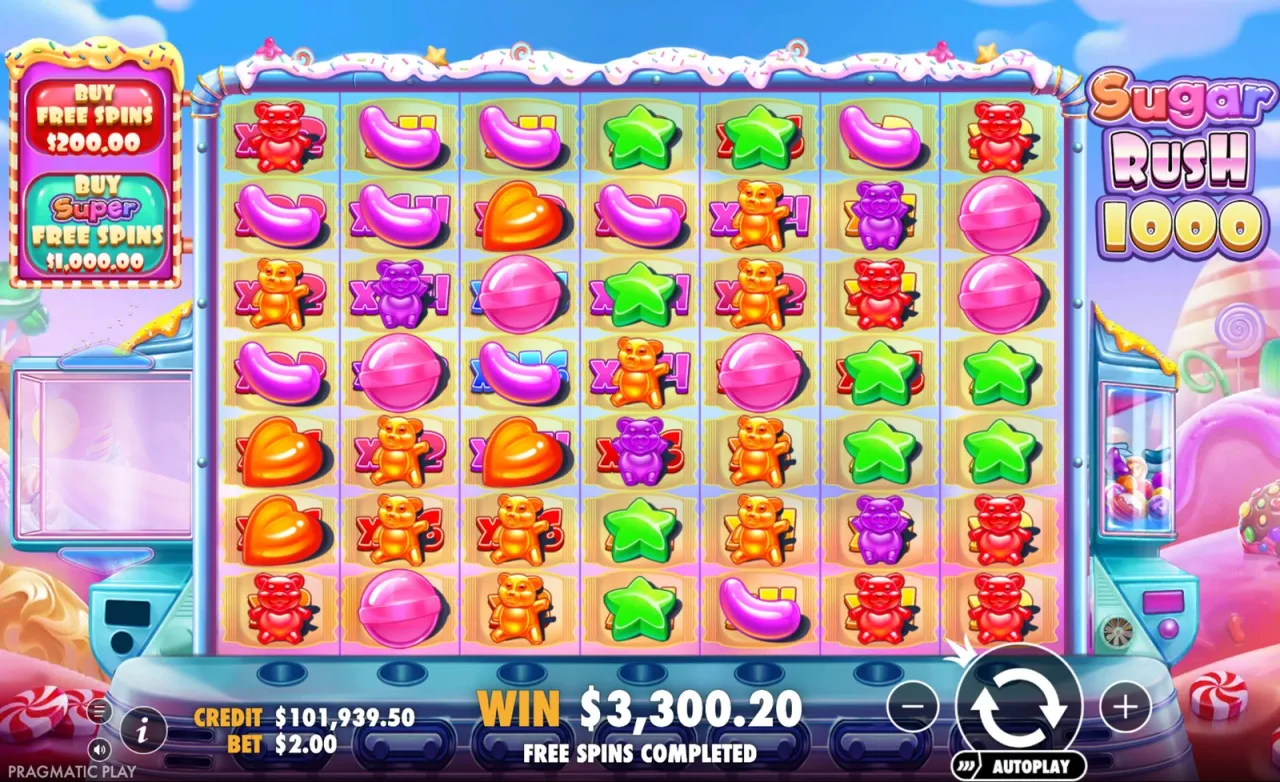
It finished at 3,300.20 — 1,650 times the stake, and three and a third times what the round cost to enter. The balance confirms it to the cent: 98,639.30 before the first free spin, 101,939.50 after the last one.
Then I bought a second one, and it behaved nothing like the first
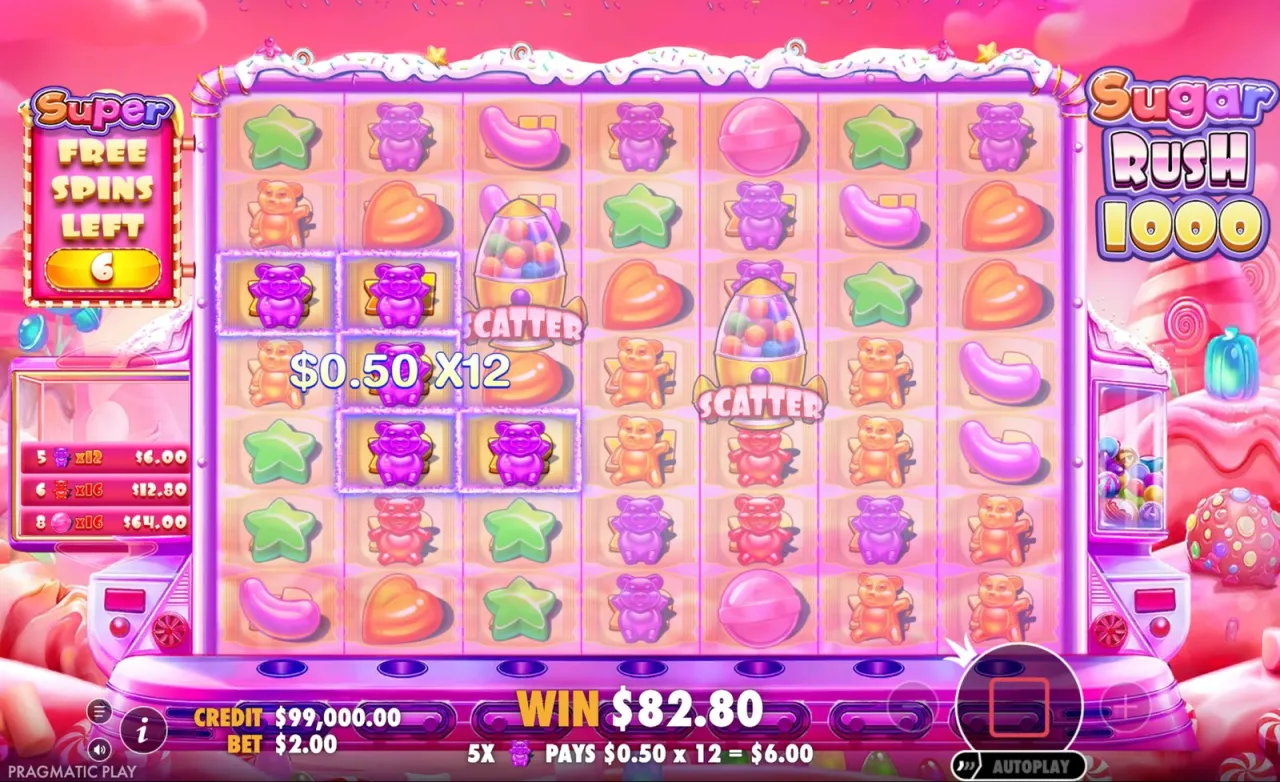
I went back in for another Super round at the same 500× price, mostly to photograph the thing properly. It opened ten spins, the marked squares filled in the way they are supposed to, and at one point the game stopped to tell me a cluster of five purple bears on a ×12 square was worth 0.50 × 12 — the multiplier arithmetic shown in full on screen, which is a courtesy most slots do not extend.
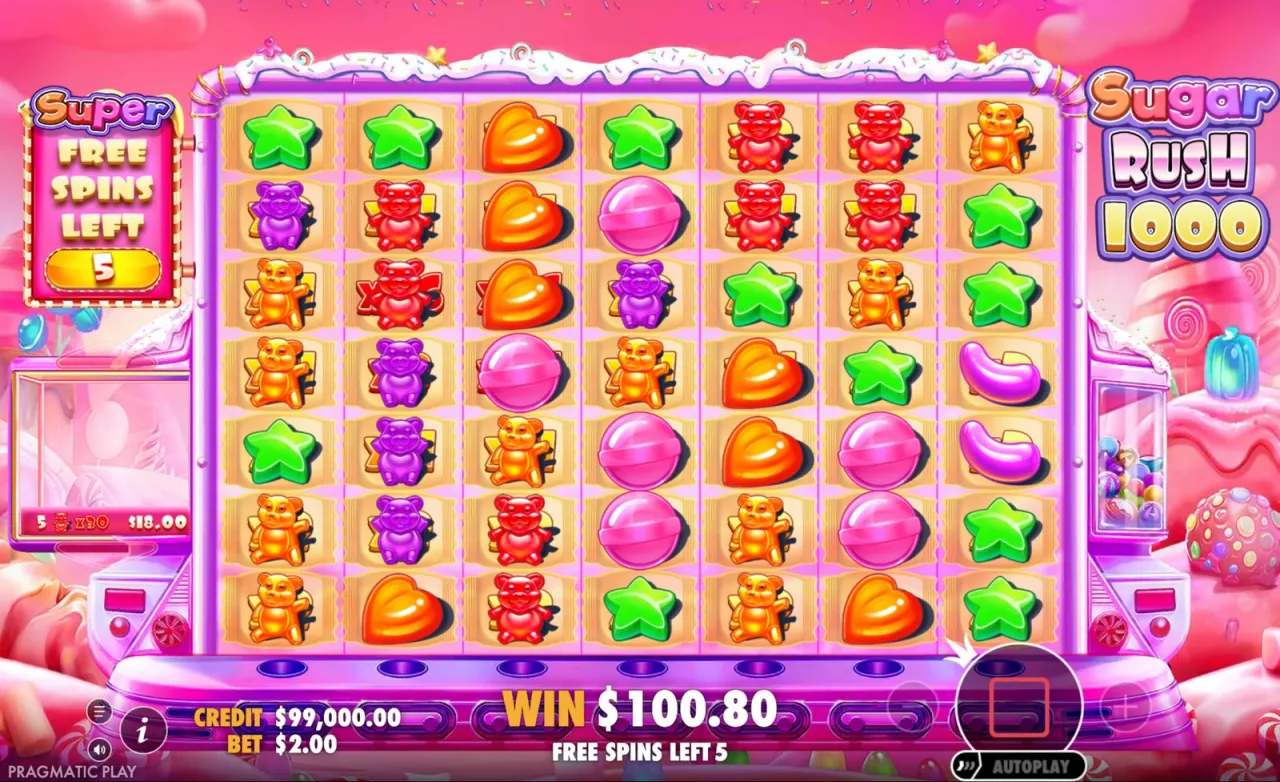
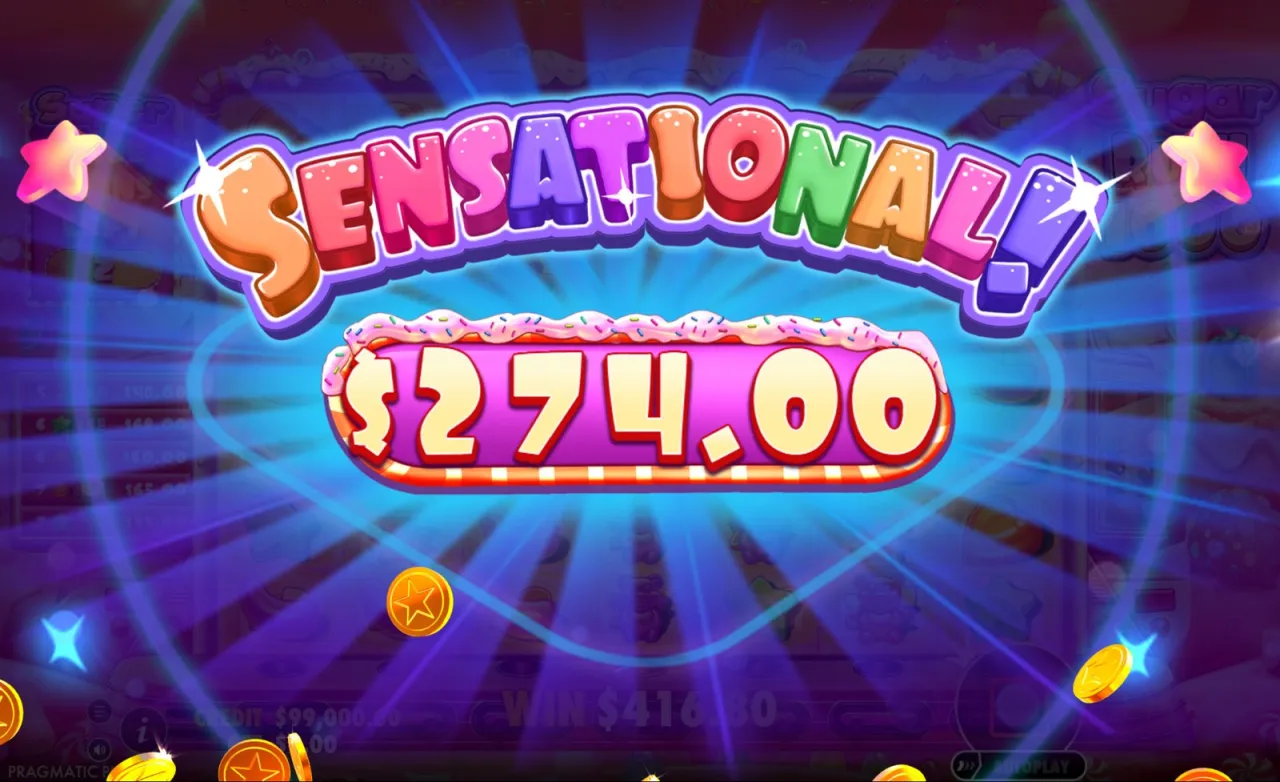
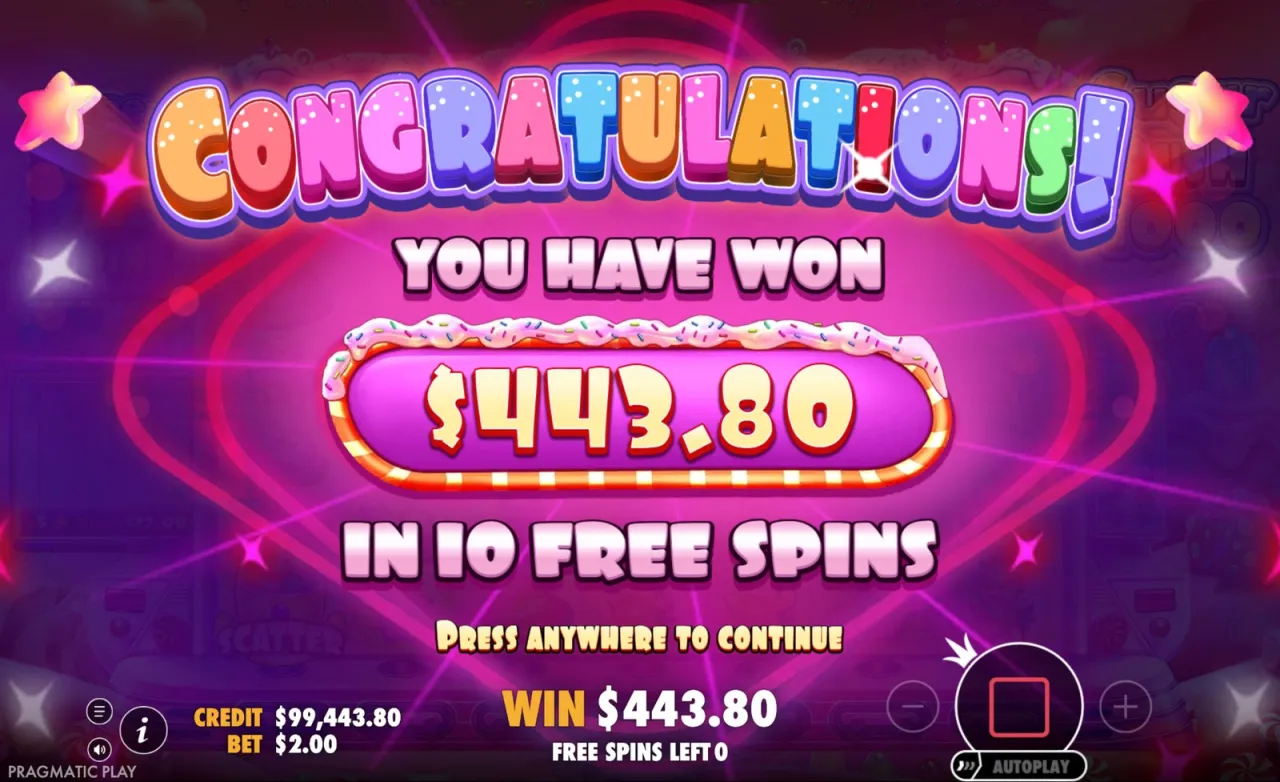
It peaked with a screen the game labels Sensational at 274.00 and closed at 443.80 across the ten spins — 221 times the stake, against 1,650 times for the first round at exactly the same price. Two identical purchases, seven and a half times apart. That is the honest picture of what 500× buys, and it is a better argument for reading the ceiling as a lottery ticket than anything I could write.
Where it sits among the other sweets
Pragmatic has built a confectionery aisle at this point, and the differences are structural rather than cosmetic. Sugar Rush Classic is the same idea at lower intensity; Sugar Supreme Powernudge takes the sweets and drops the memory mechanic for a nudging engine, which makes it a different game wearing the same wrapper. The 1000 is the one that leans hardest on persistence, and the one where the buy buttons make the most sense — which is, of course, exactly why they are the brightest things on the screen.
The verdict, briefly
A well-built, extremely modern high-variance machine with a genuinely clever central idea, wrapped in the most aggressively cheerful art direction in the catalogue and priced like a night out. It is also the only slot I have reviewed where a responsible-eating warning would be more use than a responsible-gambling one: at 1,000.00 a click, this is the most expensive bag of gummy bears in Canada.
Sugar Rush 1000 FAQ
- Q: Does buying the free spins change the RTP?
A: Yes, and the game says so on page four of its own rules. Played normally the return is 96.53%. Buying the standard free spins for 100× your bet gives 96.52%. Buying the Super free spins for 500× gives 96.44% — the most expensive entry carries the lowest return of the three. - Q: Why do my multipliers keep disappearing in the base game?
A: They are supposed to. A marked spot and its multiplier survive only until the tumbling sequence from that spin finishes, then the board is wiped. Marks persist for a whole round only during free spins, which is the single biggest difference between the two modes. - Q: Do multipliers on the same win multiply together or add up?
A: They add. A cluster covering an ×8, a ×16 and a ×32 pays 56 times, not 4,096 times. Each individual spot doubles on every further explosion, from ×2 up to a cap of ×1024. - Q: What does the Super free spins purchase actually buy?
A: Every square on the 7×7 grid begins the round already carrying an ×2, so the multiplier ladder starts one rung up everywhere at once. The scatter count on the triggering spin is still random, so the number of free spins you receive is not guaranteed by paying more. - Q: What happens if a round reaches the 25,000× maximum win?
A: The round stops there and then. The win is paid and any remaining free spins are forfeited — worth knowing before you assume a capped round would have kept climbing.