

Wild Wild Riches Slot – Free Demo
Provider:
Pragmatic Play
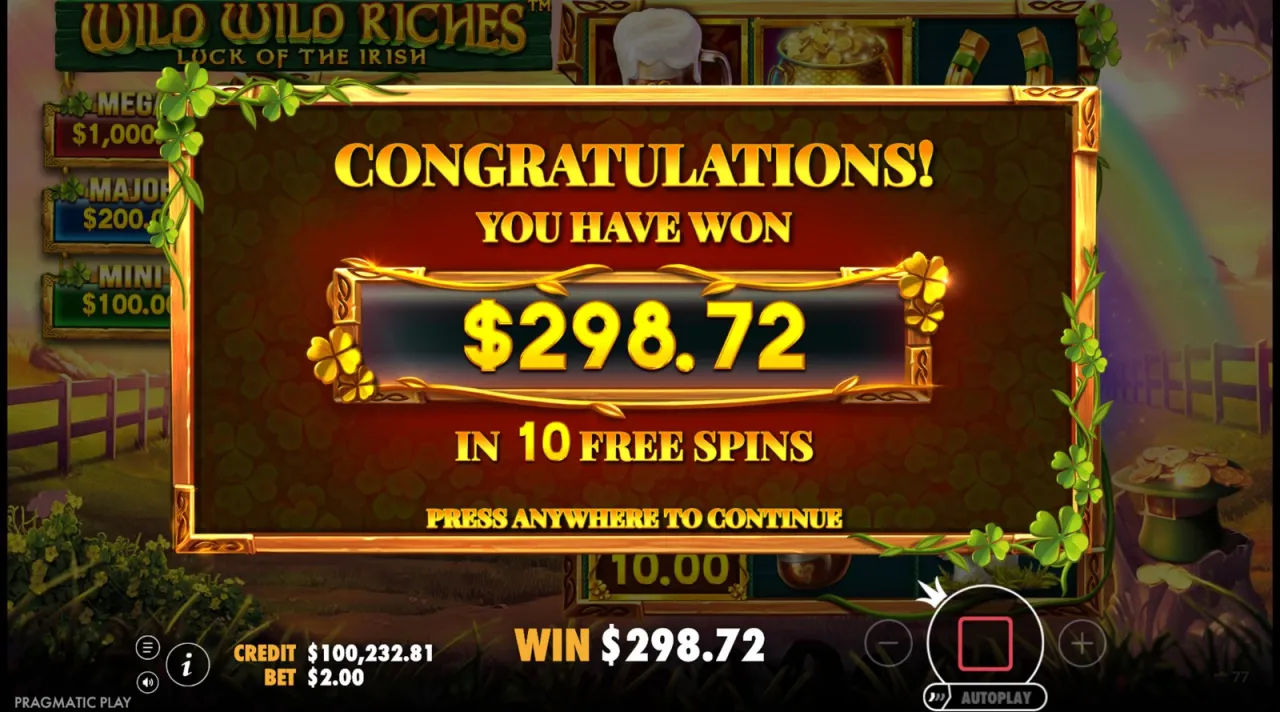
Three bonus rounds landed inside 230 spins, all of them ten free spins on the same reels, and they paid 298.72, 23.44 and 3.76. A comparable gap sits one level up: the same title ships at 96.77% and at 96.00%, and the operator picks which one you get.
Play Wild Wild Riches demo
96.77 or 96.00, settled before I sat down
Somebody decided which version of this game I was playing, and it was not me. Pragmatic ships it at a maximum return of 96.77% and a minimum of 96.00% — not a range the reels drift through over an evening, but two builds of one title, installed one at a time, chosen by whoever runs the site. There is no marking on the reels, no line in the paytable, nothing to check mid-session. Three quarters of a percentage point, invisible from the chair and fixed for as long as you keep spinning.
Catalogues, including the table above this article, quote the higher figure. That is the convention across the industry, and a convention is not a measurement.
Wilds on one and two, bonus on three, pots on the rest
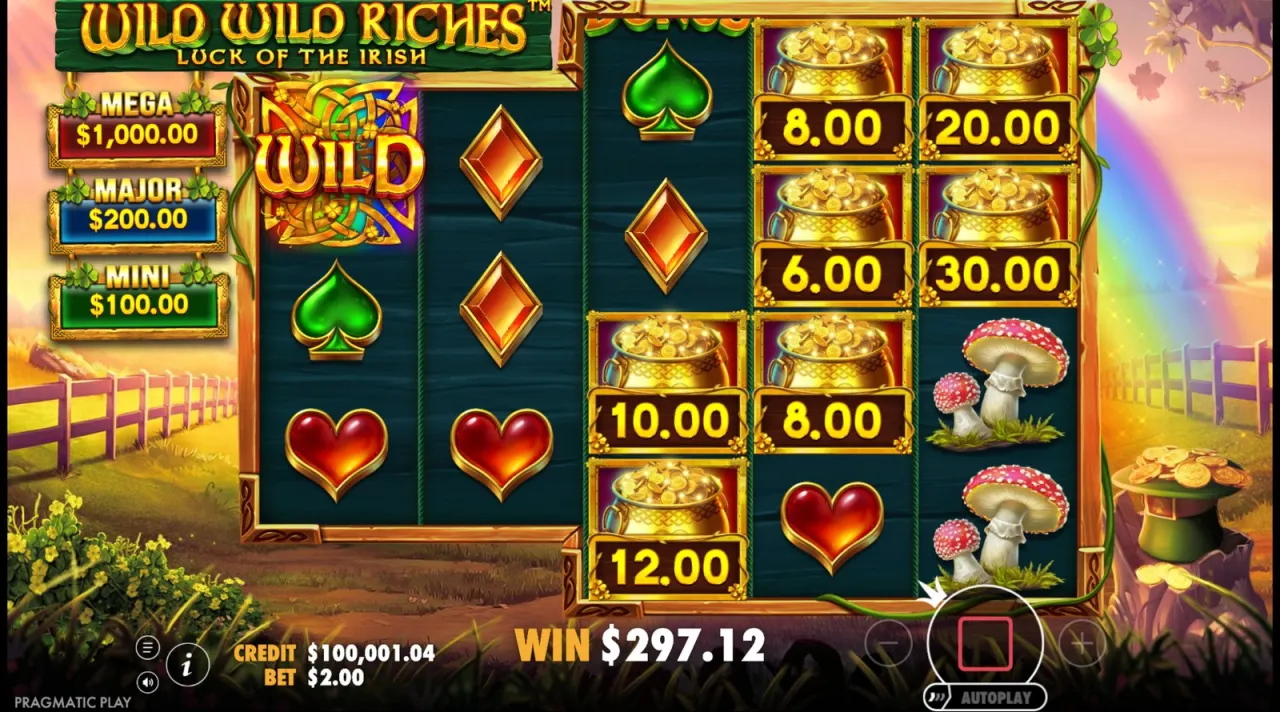
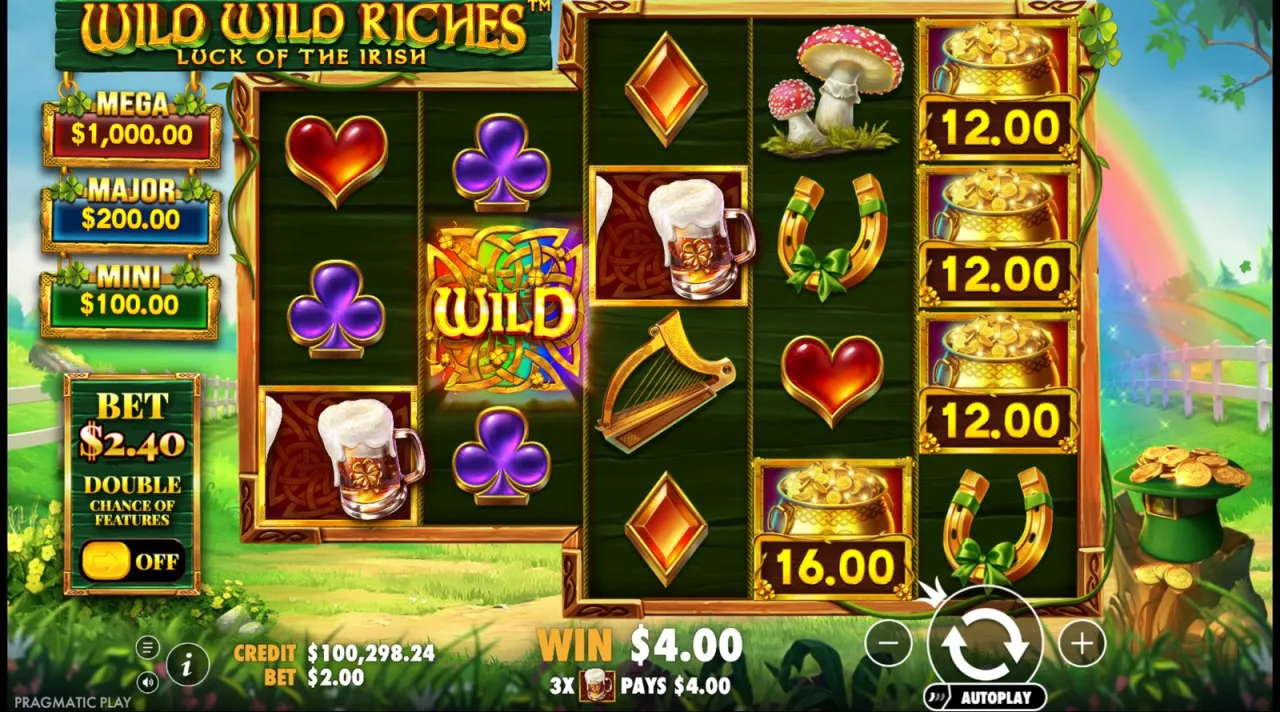
That distribution is the entire design. Wilds reach reels one and two and go no further. Bonus symbols land on reel three alone. Money pots occupy reels three, four and five. Everything the game does is assembled from those three facts: a wild pair on the left plus a bonus symbol gives ten free spins, a wild pair plus pots gathers every pot connected onward from the left edge.
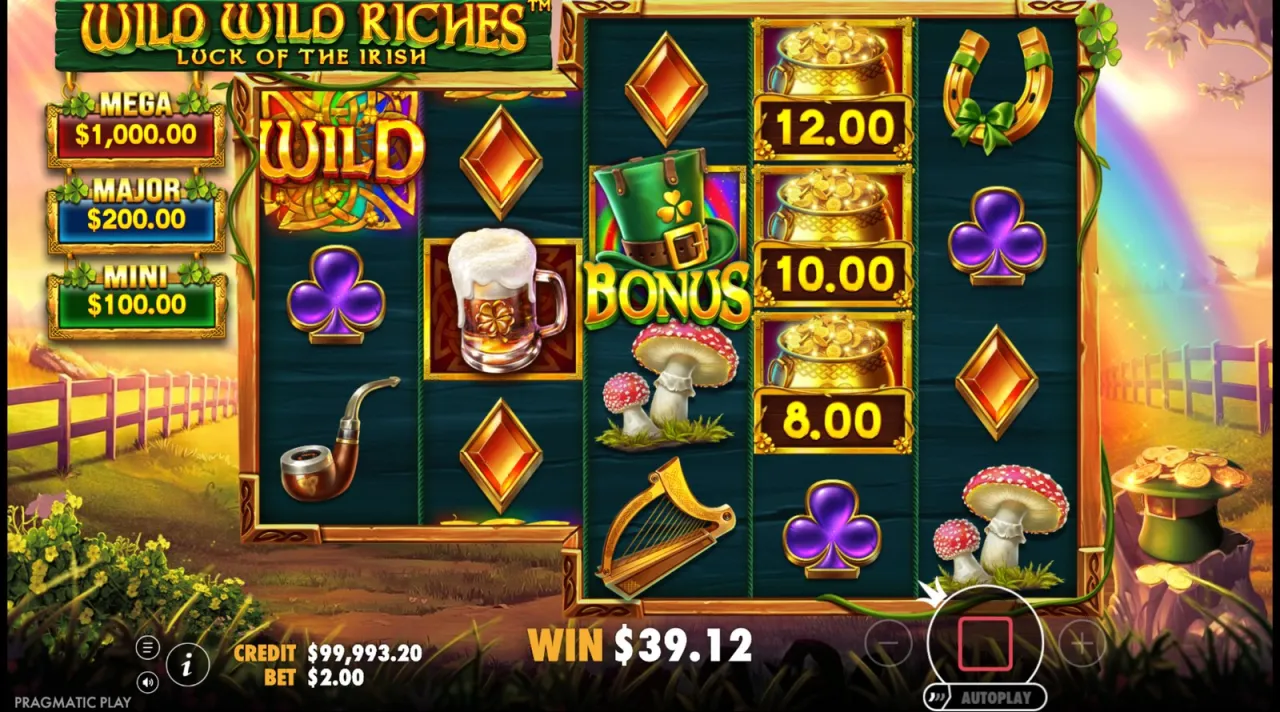
Three meters hang down the left edge and never move, because they are not progressives — Mega, Major and Mini are flat multiples of the stake at 500, 100 and 50, reading 1,000.00, 200.00 and 100.00 at the stake I played. They are printed inside money symbols like any other value, so winning one is the same event as a two-credit pot, only bigger. No slice of each spin is siphoned into a pool somewhere; the big prizes and the small ones are paid out of the same return.
Which leaves a screen that can look loaded and mean nothing at all. Pots on three reels, a bonus symbol in the middle, no wilds to the left of any of it — a blank spin, whatever it looks like. The largest of the ordinary pot values, 25 times the stake, turned up in exactly that position and paid nothing.
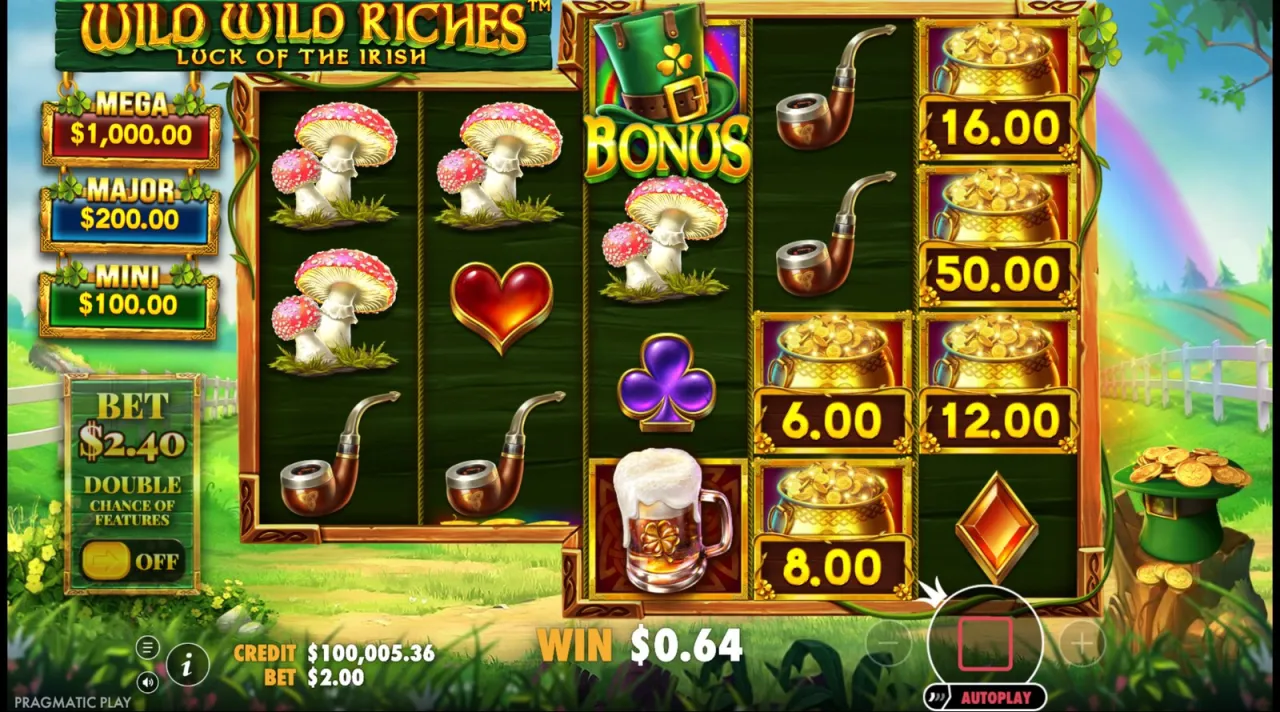
Multipliers of 2×, 3× and 5× appear on the fifth reel and apply to the whole collect, not to a single pot. The ante bet — a 20% surcharge that raises how often two wilds arrive — stayed switched off for everything below.
Three rounds of ten free spins: 298.72, 23.44, 3.76
I played 230 paid spins at a 2.00 stake, with the free spins on top of that count, and the bonus arrived three times. Each award was ten spins on the enriched strips. The rules allow a retrigger to add ten more with no upper limit; none of the three took one.
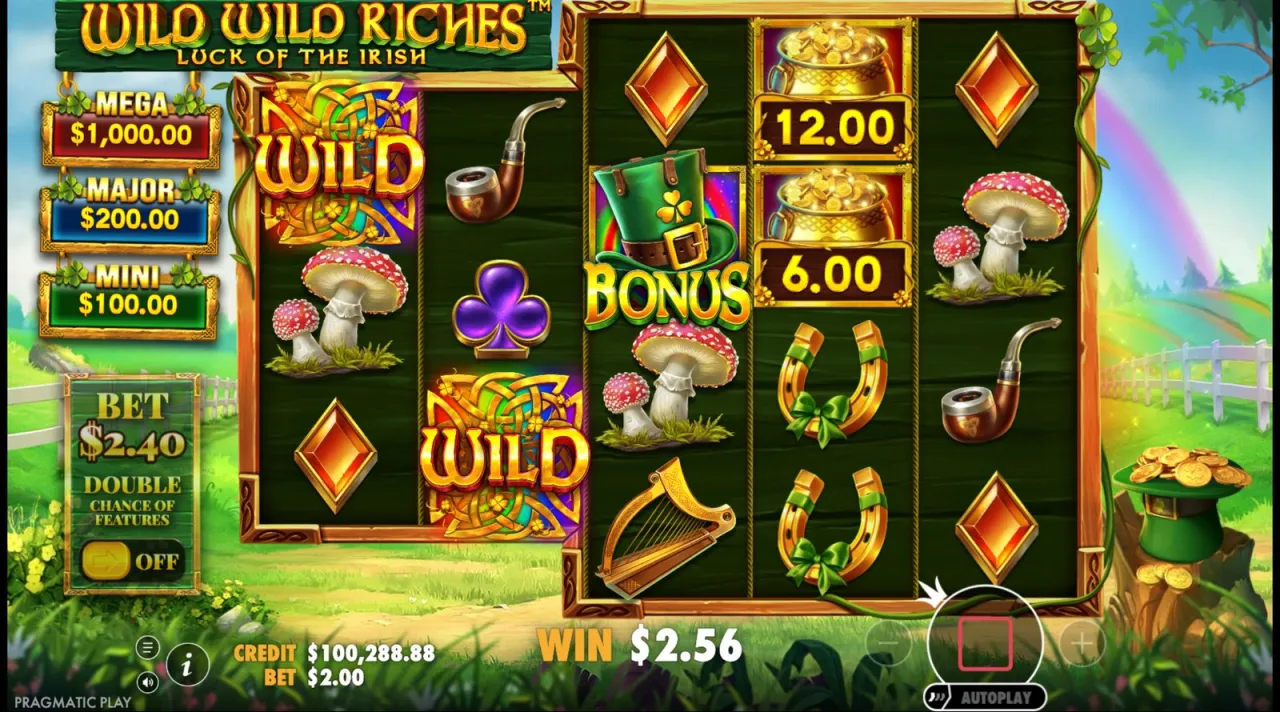
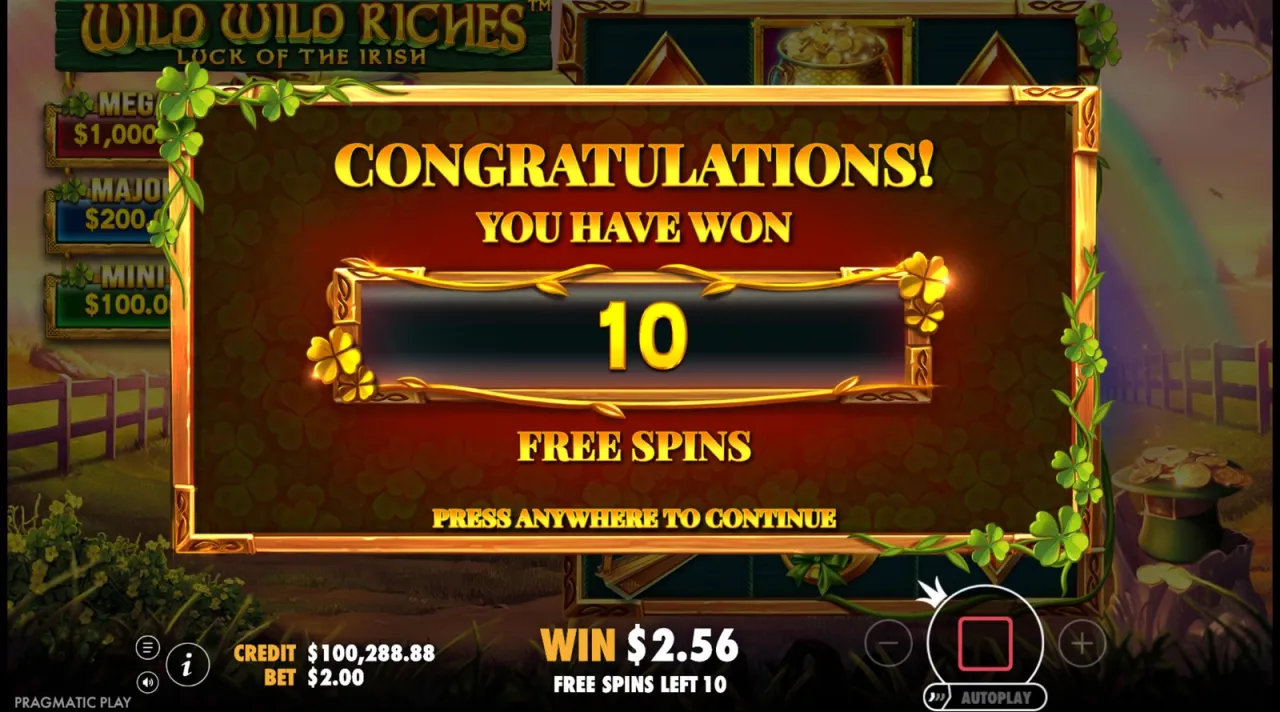
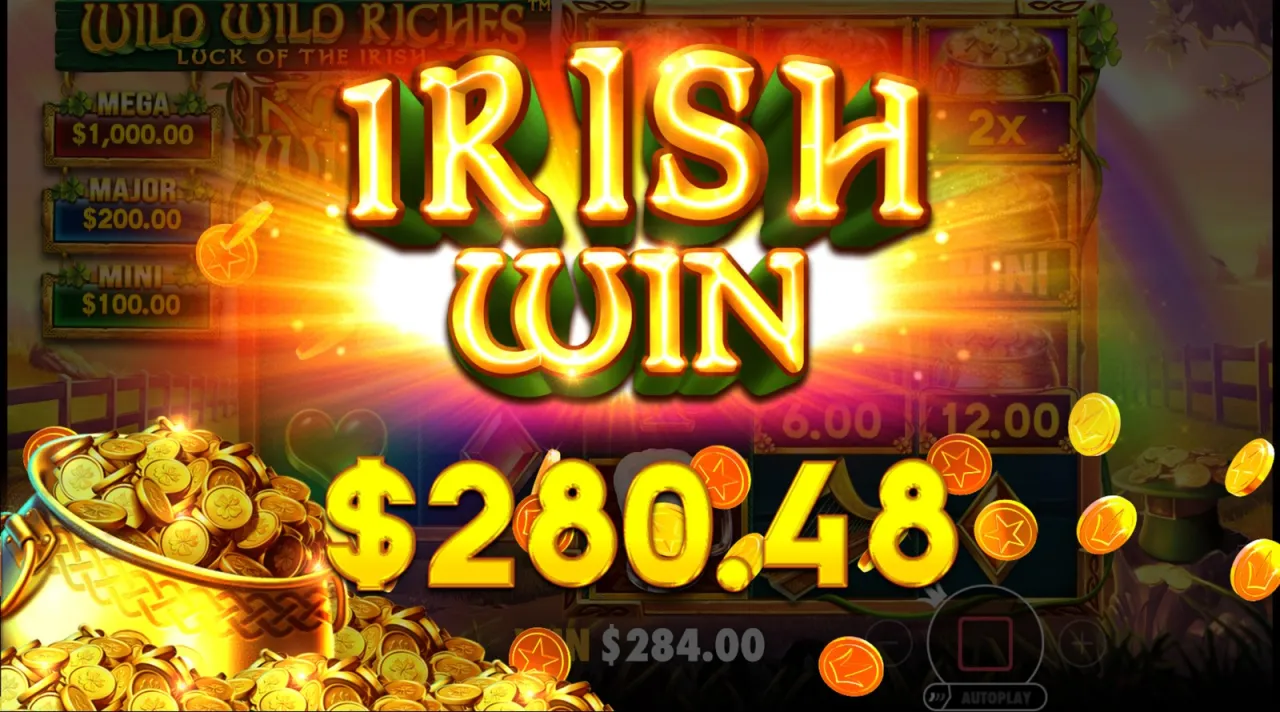
The first round paid 298.72, and 280.48 of that came from one collect the game flagged as an Irish Win. On the free-spin strips pots arrive in columns instead of singly, so a single wild pair can sweep six or seven values at once.
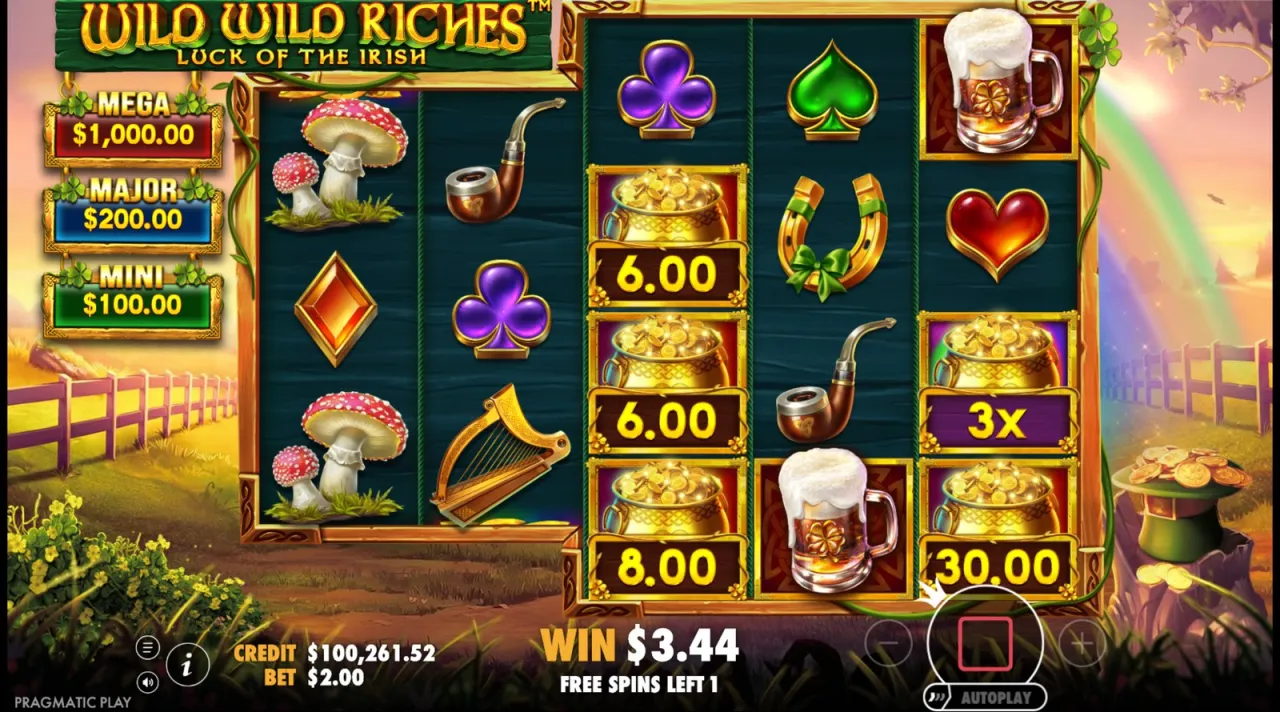
The third round paid 23.44. The second paid 3.76 — under two stakes, out of ten spins on reels weighted to produce the feature. Its final spin is the mechanic explaining itself: a 3× multiplier on reel five, a 30.00 pot beside it, and no wild pair on the left, so neither of them was collected and the spin paid 3.44 on an ordinary way win.
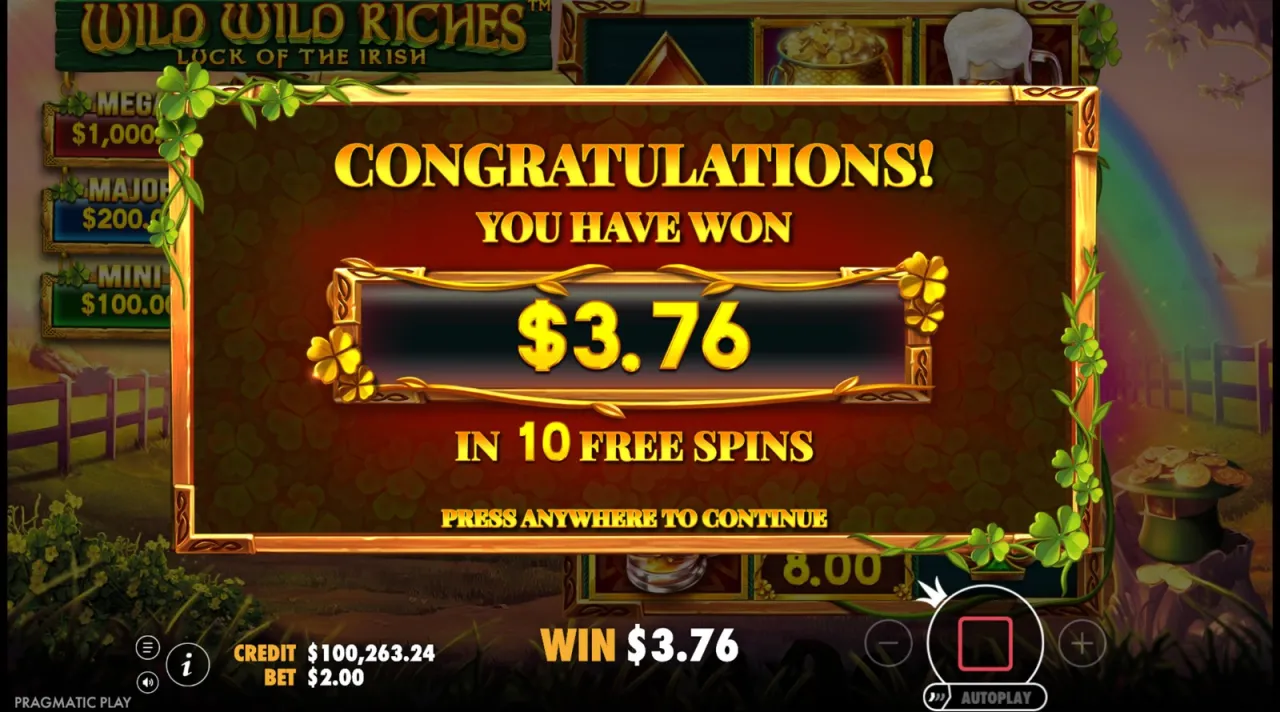
A factor of 79 between the best and worst outcome of an identical round is the figure I would hand anyone who treats volatility as a label instead of a quantity. Three rounds cannot describe a distribution, and I am not claiming they do. What the spread does show is the mechanic's own arithmetic: each round is decided by how often wild pairs coincide with loaded reels, and ten spins is a small number of attempts for that to settle anywhere near an average.
Between the second and third rounds, the base game produced a collect worth 51.68 — larger than two of the three bonuses.
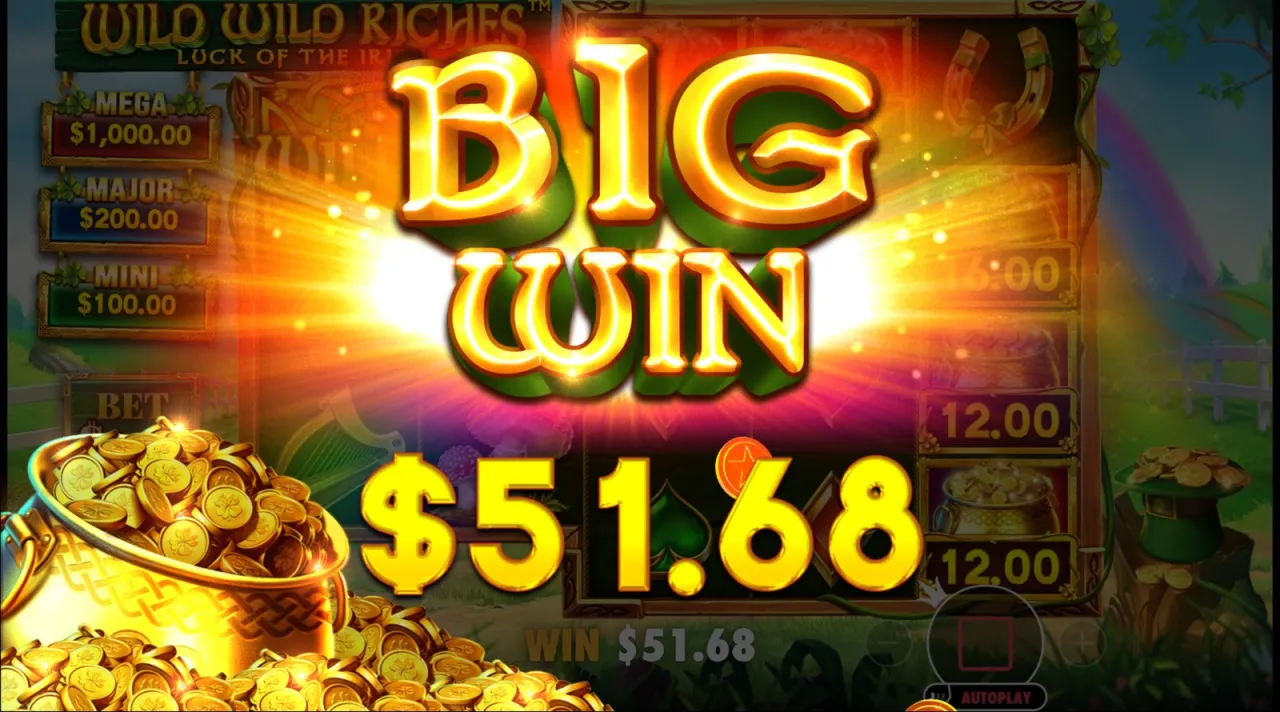
The Minty Breakdown: The session closed 298.24 up and one round accounts for all of it — the other two bonuses and 230 base spins came out level between them, to within half a credit. A collect feature with fixed jackpot values inside it pays in lumps by construction, and the return funding those lumps is the same 96-and-change as everywhere else, so the interesting question is not whether the maths is fair. It is which of the two builds is installed where you are sitting, and that is the one thing nobody publishes.
Which one did you get?
On the top build this is a clean, legible machine: no cascades, no ladders, no meters pretending to be more than a price list, just wild pairs meeting pots. On the bottom build it is the same machine paying three quarters of a percent less on a shape that already delivers its money rarely and in lumps — and that gap bites harder than it reads, because the thinner your share of the lumps, the more work the base game has to do, and the base game here is deliberately thin.
Pragmatic kept the collect and built outward from it. Wild Wild Riches Returns adds a second wild layer to the same pots, and Big Bass Bonanza 1000 takes the collect-plus-multiplier idea to a far higher ceiling. Both are worth a look if the pots are what brought you here.