
Bingo Slot – Free Demo
Provider:
Askmeslot
Forty-something balls dropped through the draw before either card showed a completed line. The master board filled in steadily and red daubs spread across both 5x5 grids. Rows kept stalling one number short. Then the bottom card locked its horizontal right near the end of a full 75-ball round. The…
Play Bingo demo
What 0.97 per line tells you before the first ball drops
Bingo by Askmeslot prints its payout ratio on screen: Payout 1 : 0.97. Each card costs the table stake, and a completed single line returns 0.97 of that stake. Buy a card for 100 credits and complete one line: 97 credits come back. That 3-credit gap is the entire house margin, and nothing the player does can change it. The RANDOM button assigns card numbers and the draw auto-daubs matches as balls appear. The round runs through a full 75-ball sequence with no decisions and no strategy panel. The maths is done before you sit down.
That transparency is either refreshing or beside the point, depending on what you want from a bingo title. There are no extra-ball buys or progressive jackpots in this version, and no bonus mini-game sits behind the draw. One line is the only paying outcome, and 0.97 is the only multiplier. The game is its draw.
The Minty Take: Bingo by Askmeslot is a straight 75-ball draw with a fixed 0.97 return per line and nothing beyond the line itself. Players who want the pure draw-and-daub format in a bright carnival wrapper will get what the payout table promises. Anyone expecting feature triggers or a slot-style bonus layer should look past this one.
Carnival bunting on a fixed-odds draw
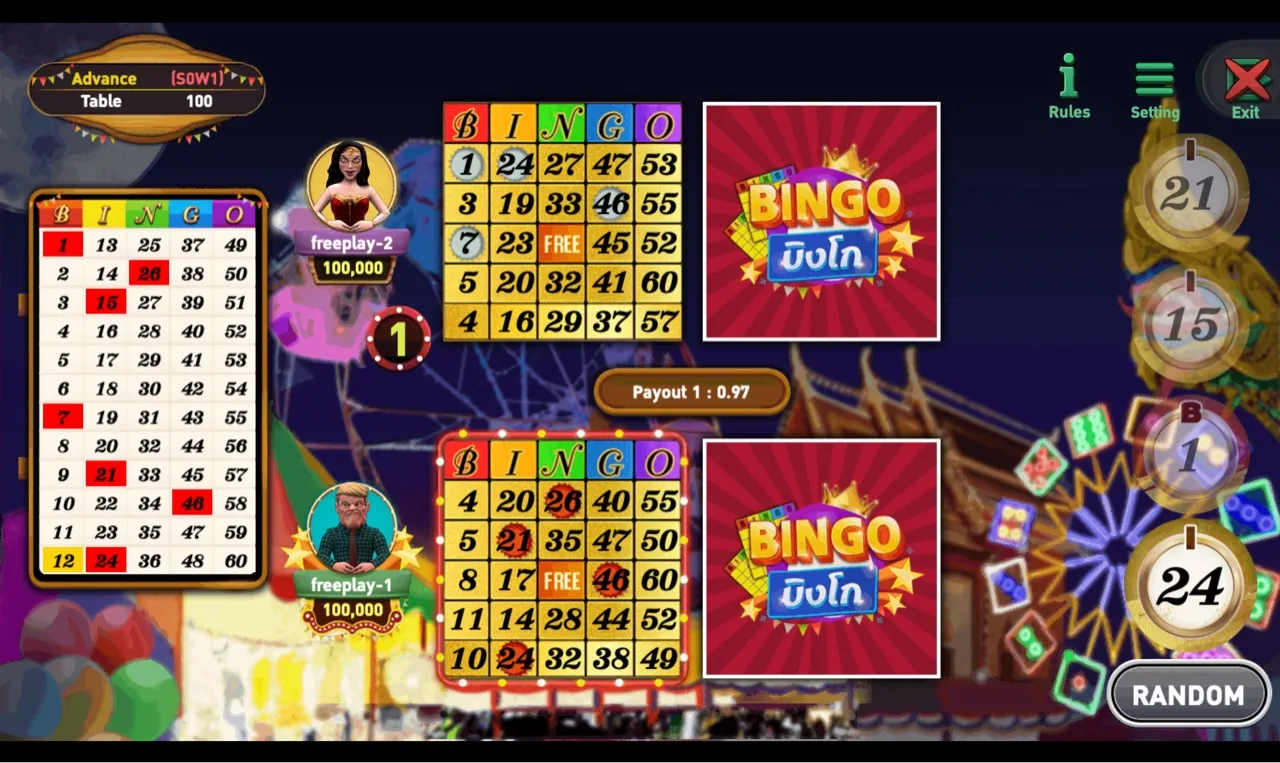
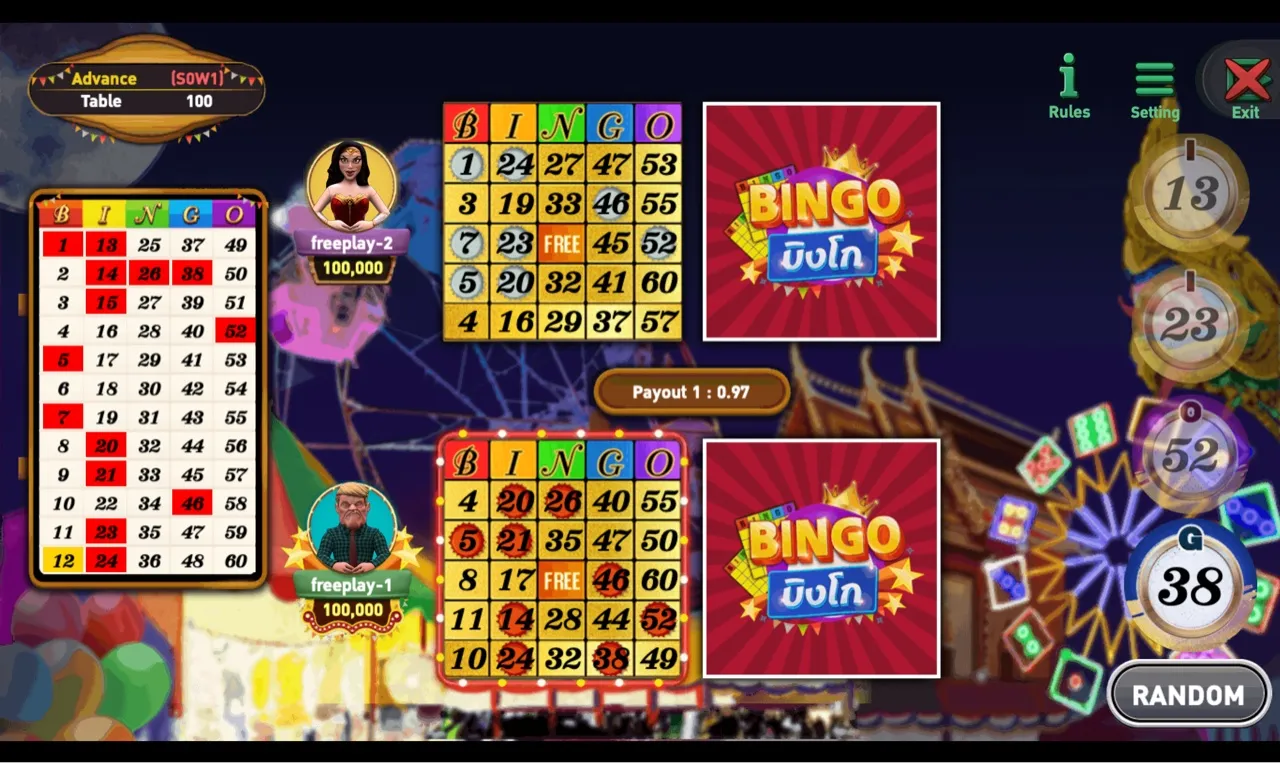
The presentation does most of the lifting. Two 5x5 cards sit side by side on screen, framed by a ferris wheel and carnival bunting, with fireworks popping in the background. A cartoon hostess stands at the side. Balls are drawn one at a time and stack up a B-I-N-G-O ladder on the right edge of the screen, while a master number board on the left lights up each called number against the full 1-to-75 grid. Auto-daub marks both cards simultaneously, and watching the red stamps spread across the grids is the entire gameplay loop.
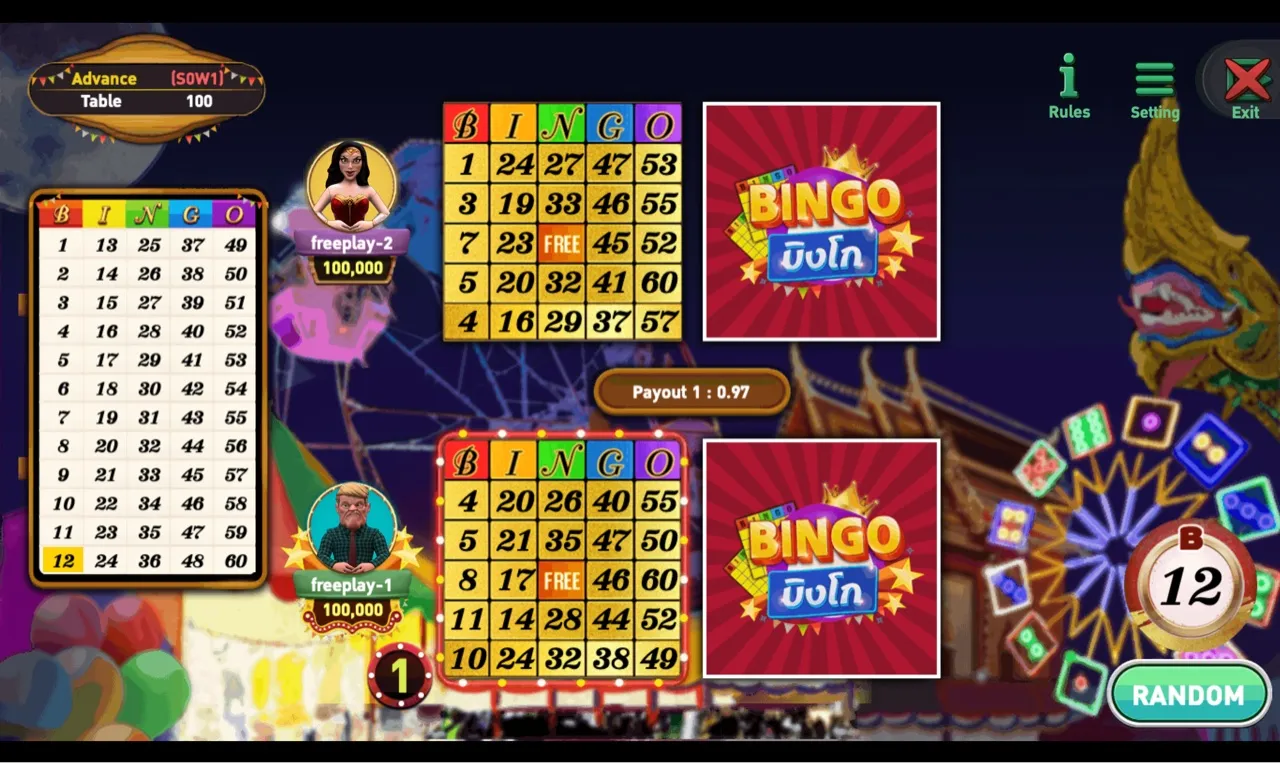
What holds your attention, despite the bare-bones maths, is the pacing of the draw. Rows fill one number at a time, stalling a single cell short of a line, and that builds real tension in a format that has no modifiers or feature triggers to lean on. The bottom card sat one number away from a horizontal for a long stretch of the draw before it completed. A full 75-ball round takes long enough to build anticipation and short enough not to drag, and the dual-card layout means you are sweating two sets of near-misses at once.
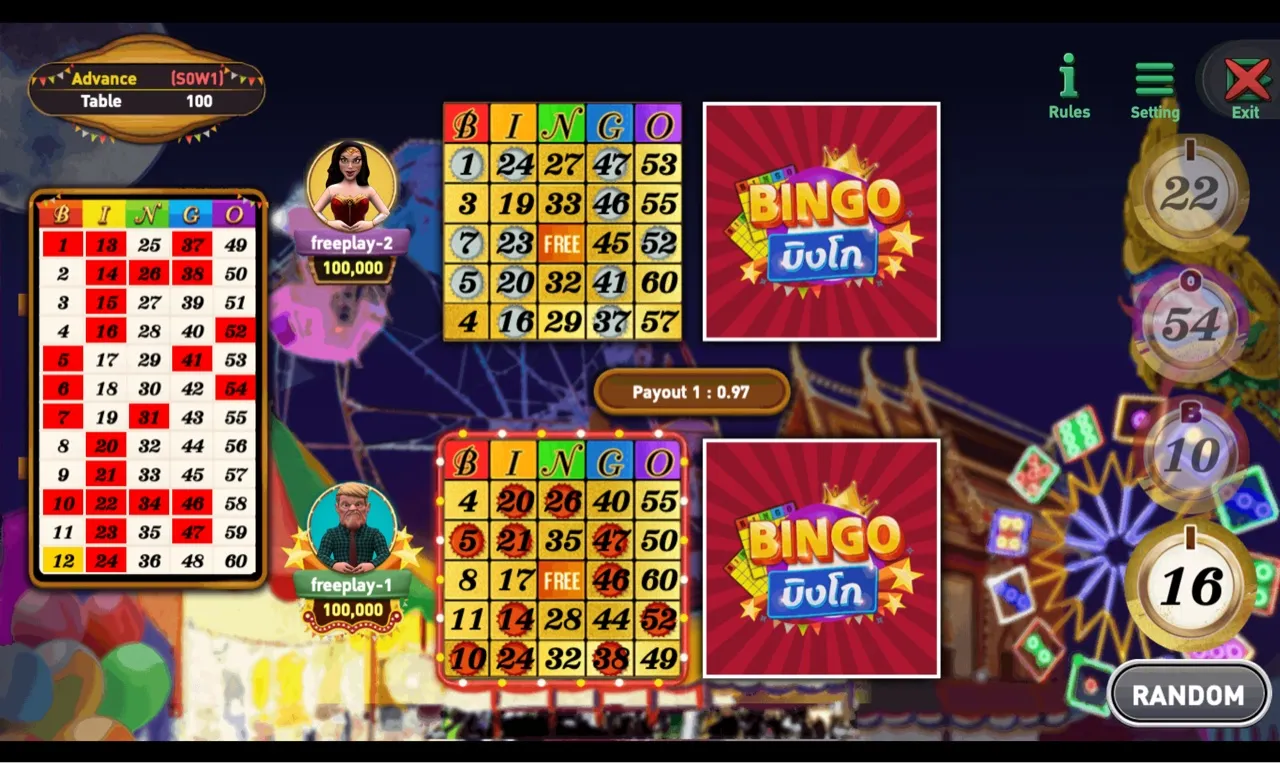
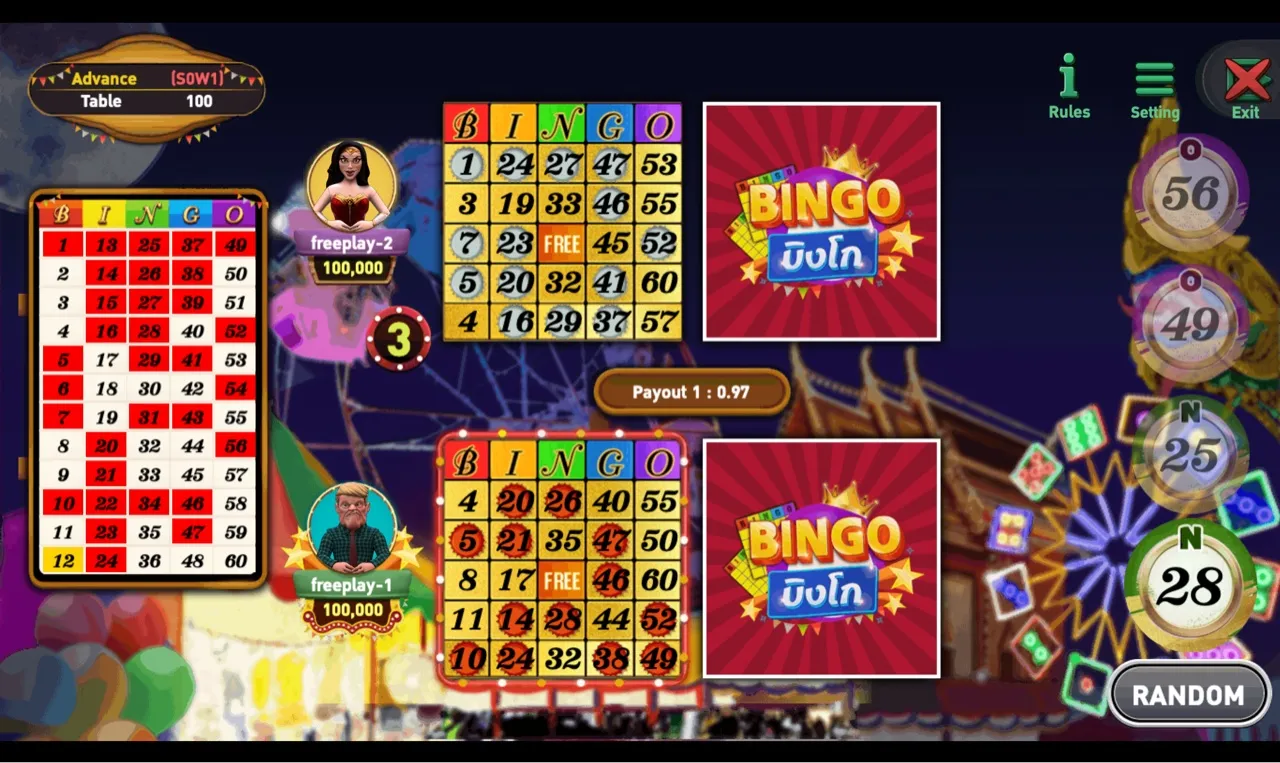
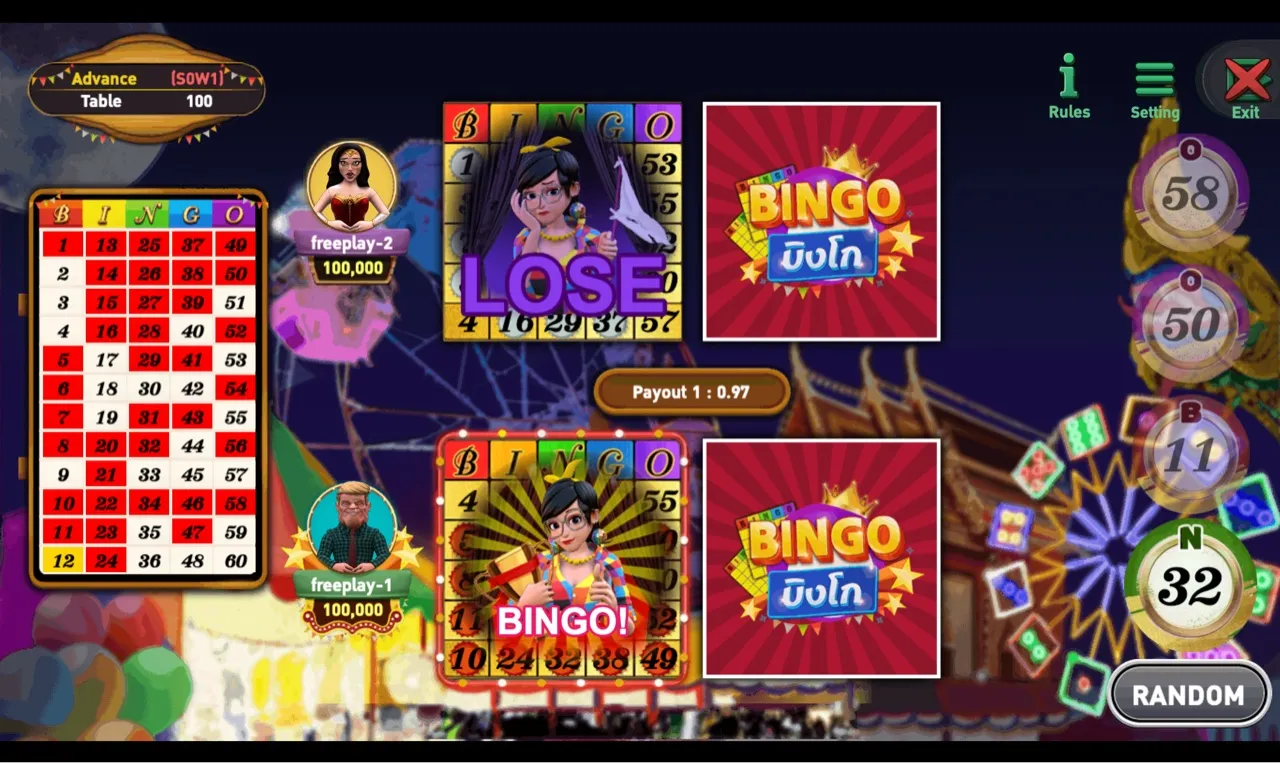
Two tickets, one line, three credits gone
I bought two cards at the 100-credit table stake and let the RANDOM button pick the numbers. The draw ran through all 75 balls. For most of it neither card had a completed line anywhere on the grid. The top card filled in patchily, clusters of daubs that never aligned. The bottom card hit the same wall until late in the round, when a horizontal row finally locked and the gold BINGO banner dropped across the screen.
The payout on that single line was 97 credits, exactly 0.97 of the 100-credit stake. The top card resolved as LOSE with zero completed lines, costing the full 100. Net across both tickets: minus 3 credits. The summary screen lays this out card by card, with the line count and total printed beside each result.
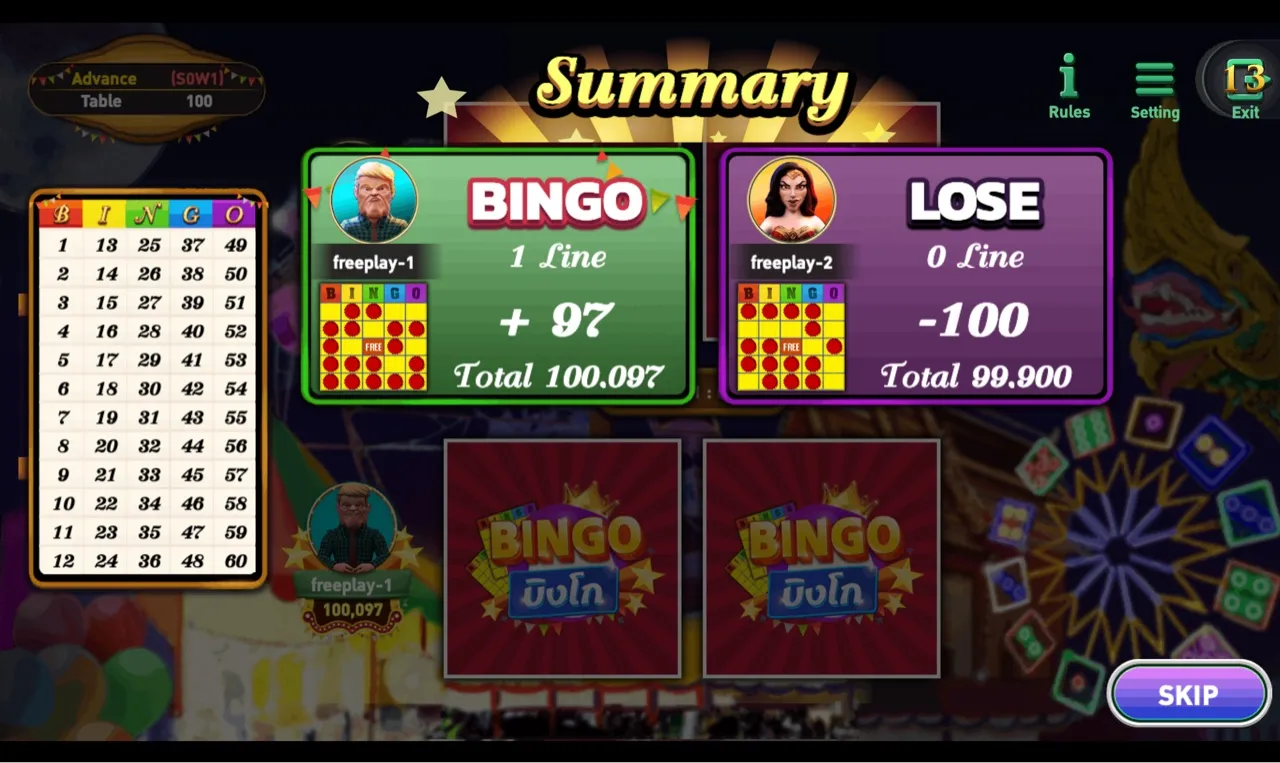
One round covers the complete experience. There is no second feature layer waiting behind a trigger count and no progressive meter running overhead. The game asks whether a row fills. It answers, and it stops.