Finn and the Swirly Spin Slot – Free Demo
Added: Jan 13, 2026
Updated: Feb 18, 2026
Provider:
NetEnt
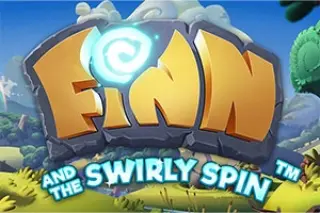
Finn and the Swirly Spin is a playful Irish-themed slot from NetEnt that replaces standard reels with a swirling 5×5 grid and avalanche-style wins. Each spin can trigger random modifiers like extra Wilds or symbol transforms, while the Key mechanic slowly progresses toward unlocking four different…
Play Finn and the Swirly Spin demo
Finn and the Swirly Spin slot review
Finn and the Swirly Spin is built around one simple promise: every spin should feel like it’s moving somewhere. Instead of watching tidy reels stop in straight lines, you play on a swirling 5×5 layout where symbols travel along a spiral path toward the center. That alone makes the game instantly readable in a different way, because you’re scanning for connected groups and “next” positions rather than counting paylines.
The developer is NetEnt and the slot leans into a cheerful, luck-of-the-Irish vibe. You’ll see familiar Celtic motifs, a friendly leprechaun guide, and a soundtrack that keeps the pace light even when the grid starts chaining multiple avalanches in a row. It’s a strong fit for players who enjoy modern mechanics but still want controls that stay straightforward.
If you like slots where progress matters, this game’s Key system adds a “keep going” layer that sits on top of the base gameplay. Wins don’t just pay; they also help advance a Key toward the middle of the spiral, and that journey is what ultimately opens up the free spins options.
Theme, visuals, and sound
Finn and the Swirly Spin commits to bright Irish folklore without going overboard on clutter. The background is all green hills, warm light, and a rainbow hinting at treasure, while the foreground keeps your attention on the spiral grid. Finn, the leprechaun character, sits near the play area and adds personality without blocking important information or distracting from symbol movement.
The swirl itself is the visual hook. Symbols appear across 25 spaces, then shift along the spiral as wins clear. That motion creates a “living board” feeling, especially during avalanches, because the grid doesn’t simply refill from the top like many cluster games. Instead, the board reshuffles through the spiral path, which makes streaks of hits feel more animated and less repetitive.
Audio is tuned for sessions where you might play hundreds of spins. The music stays upbeat and consistent, while feature triggers add short accents that make wild appearances, transformations, and destruction moments easy to notice even on mobile speakers.
How the spiral grid works
This is a 5-reel, 5-row slot presented as a 5×5 grid with a spiral path that starts at the bottom-left corner and ends at the center. The layout matters because symbol movement follows that route during avalanches. When a win hits, winning symbols disappear and the remaining symbols shift to fill gaps by moving along the spiral sequence, bringing in new symbols to restore all 25 positions.
Wins are not tied to paylines. Instead, you’re looking for win matches formed by at least three matching symbols in a row, horizontally or vertically, anywhere on the grid. Multiple win matches can be paid from the same outcome, and wins from a chain of avalanches add together, which is why some spins can feel like they “keep paying” after the initial result.
That win logic also changes how you evaluate risk. Because the grid can reconfigure several times from a single spin, the slot often delivers outcomes that are a mix of small hits and occasional longer chains, rather than a strict win-or-lose rhythm tied to a single reel stop.
Symbols, Wilds, and what to watch for
The symbol set sticks to a compact mix of card-suit icons and Irish luck items. Lower-value symbols use familiar suits like hearts and spades, while higher-value symbols lean into classic lucky imagery such as clovers, horseshoes, acorns, and a premium gem-style icon. Keeping the set tight helps the grid stay readable when symbols are constantly shifting through the spiral.
A star-style Wild substitutes for standard symbols to help complete win matches. The Wild also plays a special role in how avalanches behave, because the game differentiates between wins that include a Wild and wins that do not. That distinction matters for how new Wilds appear and how the board clears around them.
A Key symbol is the most important non-paying icon. It’s the “progress token” that starts at the bottom-left and moves toward the center as wins and avalanches occur. You are not just spinning for clusters; you’re also spinning to advance that Key into a position that can unlock the next layer of gameplay.
Avalanches and Wild generation
Avalanches are the engine of Finn and the Swirly Spin. After wins are evaluated, every symbol that contributed to a win disappears, then the remaining symbols shift along the spiral to fill empty spaces. Once the grid settles, the game evaluates again, and the process repeats until no more win matches exist. That’s where the slot’s momentum comes from: one spin can turn into multiple evaluations and multiple payouts.
Wilds make this system more dynamic because the game treats wins with Wilds differently than wins without them. When a win match does not include a Wild, a new Wild can be generated in place of a symbol that disappeared, often appearing around the middle of the winning line. When a win match does include a Wild, the Wild involved can explode and destroy adjacent symbols horizontally and vertically, opening extra space for the next avalanche step.
This push-pull keeps outcomes varied. Some chains build by creating new Wilds in the “right” locations, while other chains are about Wild explosions clearing just enough space to let a fresh set of symbols spiral in and connect immediately.
The Key mechanic and persistent progress
Finn and the Swirly Spin revolves around a Key that travels the spiral. The Key begins in the bottom-left position and advances toward the center as wins occur and the grid avalanches. Importantly, the Key cannot disappear during the main game, so it remains a constant reference point for your “how close am I?” question during a session.
Free spins are awarded when the Key reaches the central position and the grid has finished paying out all avalanche wins. When that happens, a key meter increases by one. The meter is designed as a longer-term progression layer, because it doesn’t reset when you close the game. That means the slot supports a “build up now, cash in later” playstyle, where you can return and continue unlocking additional free spins options over time.
If you enjoy slots with a sense of continuity, this is a core reason to try it. The game keeps the base rules simple, but the Key meter provides a structured path that can turn short sessions into a multi-session hunt for higher-tier free spins choices.
Random features in the base game
Beyond avalanches and Wild behavior, the base game can award one of four random features after a spin outcome is on the board. These features are applied before wins are paid, which is why they can immediately improve a “quiet” grid or turn a small hit into a chain. Because they are random, they also shape the feel of the slot: you’re not only chasing the Key; you’re also hoping the board gets a helpful nudge at the right moment.
Starfall Wilds drops multiple Wilds onto the grid. If the placement doesn’t produce a win, additional Wilds can be added until a win occurs, creating a reliable way to force action out of a dead board. Dragon Destroy is a destruction-style modifier that removes a number of symbols and triggers another avalanche step in a way that guarantees a follow-up win after the destruction. Irish Luck is a “guarantee” style feature that adds a full horizontal or vertical line of a single symbol type to create an immediate win match. Magic Transform upgrades the value profile of the grid by transforming spade and heart symbols into higher-paying symbols.
These are not cosmetic flourishes. They’re the practical tools that keep the base game paying and keep the Key moving, even when the natural symbol flow isn’t producing frequent win matches.
Free spins overview
When the Key lands in the center at the end of an avalanche chain, you enter a free spins selection step. There are four different free spins options, and each is linked to one of the random features. Free spins use the same spiral mechanic and the same 25-space grid as the base game, with the same bet level and coin value as the round that triggered the feature.
A key detail is that free spins choices are partially gated by your key meter. Initially, only one free spins option is available. Additional options unlock after you have played a certain number of free spins rounds over time, following a fixed order: Star Bar first, then Lava Lair, then Lucky Mug, and finally Golden Pot. The key meter does not reduce when you select a free spins option, so unlocking is about reaching milestones rather than spending keys like currency.
During free spins, Key symbols do not appear on the grid. The slot shifts focus from “move the Key” to “maximize the feature,” using the associated modifier to shape the first part of the free spins outcome.
Star Bar Free Spins
Star Bar is the first free spins option you can access, and it’s designed to feel familiar because it mirrors the Starfall Wilds modifier from the base game. When Star Bar triggers, you receive seven free spins and the Starfall Wilds effect is part of the package. It’s a straightforward free spins mode: more Wilds on the board means more chances for win matches that chain through avalanches.
Star Bar tends to appeal to players who like consistent activity. It doesn’t rely on a single massive event; instead it improves the probability of finding wins on the grid, which can keep the spiral moving and stack multiple small-to-medium payouts into a satisfying total.
Lava Lair Free Spins
Lava Lair is the second unlock tier and it comes with a shorter but more tactical burst of play. This mode awards three free spins and includes the Dragon Destroy feature. Lava Lair also introduces a Sticky Wild that appears in the position where the Key would normally sit in the main game. The Sticky Wild does not disappear, and it cannot be destroyed during the Dragon Destroy moments, so it effectively acts as a stable anchor point for building win matches as the grid reshuffles around it.
Dragon Destroy behaves slightly differently here because it can be stored and triggered when the grid fails to produce a win after an avalanche step. That makes Lava Lair feel like a “second-chance” free spins mode, where the game actively works to keep momentum going even when the board wants to stall.
Lucky Mug Free Spins
Lucky Mug is a later unlock and it awards four free spins paired with the Irish Luck feature. Irish Luck can only apply when there is no win present on the grid, and its purpose is to inject a guaranteed win by adding a full horizontal or vertical line of a single symbol type. In the Lucky Mug version, the feature is applied after the initial symbols appear but before wins are evaluated, which means it can reshape an otherwise mediocre starting grid into an immediate paying configuration.
This is the free spins option for players who enjoy “board engineering.” You’re not just hoping for the right symbols; you’re getting a structured intervention that forces at least one win match and can create the first avalanche step that leads into further chain reactions.
Golden Pot Free Spins
Golden Pot is the final unlock tier and it is the shortest of the four options, awarding two free spins. Its power comes from Magic Transform, the feature that upgrades the grid by transforming spade and heart symbols into higher-paying symbols. In Golden Pot, spade and heart symbols can be overlaid into positions on the reels, giving the transformation more raw material to work with. The result is a free spins mode that can quickly turn a low-value grid into something capable of producing stronger clusters.
Because it’s only two spins, Golden Pot plays like a high-impact finish: fewer chances, but each chance is intentionally shaped to increase the value density of the board and push you toward chunkier wins if the spiral connections line up.
RTP, volatility, and max win
Finn and the Swirly Spin is built around chained evaluations, and its theoretical math reflects that. RTP: 96.62% describes the long-run expected return baked into the spiral grid, where value is created through avalanche chains, Wild generation, and the Key’s ability to open feature-driven free spins modes rather than through classic payline hits on a single stop.
In day-to-day play, a meaningful slice of the return tends to come from the base game because avalanches can stack multiple paid win matches into one resolved spin, and random features can “rescue” flat boards by injecting Wilds, destruction, or symbol upgrades. The bonus feature layer still matters, but you’re not forced to wait for it to see activity; the slot frequently pays in small bursts while you’re progressing the Key toward the center.
Mechanically, that translates into lots of short outcomes and occasional longer sequences where the grid keeps reorganizing and paying. You’ll notice the rhythm: quick cluster hits, then a reshuffle, then either a stall or a new chain sparked by a fresh Wild or a random feature. When the Key is close to the center, the tension increases because any extended avalanche chain can be the one that ends with the Key in position and a free spins choice on the next screen.
This title is often described as lower-volatility leaning, and a simple numeric mapping puts it at 2/6. That generally suits players who prefer a steadier pace and want their balance to fluctuate in smaller steps, while still leaving room for occasional spikes when a random feature lands at the perfect moment or a free spins option produces a strong chain.
The win ceiling is defined rather than open-ended: the maximum win per spin is 840× bet. That cap sets expectations clearly, and it pairs well with the slot’s feature-forward design, because the appeal is less about chasing a single gigantic jackpot and more about enjoying a consistent flow of mechanics that can combine into a satisfying peak when everything links up.
Betting range and control feel
Finn and the Swirly Spin uses a level-and-coin structure rather than fixed paylines, which fits the cluster-style rules. You typically select a bet level and coin value, then the game calculates the total stake per spin. The minimum bet starts at 0.10, making it easy to explore the spiral behavior without putting pressure on your bankroll.
At the other end, the stake range supports bigger sessions too, with a commonly listed top end around 100 per spin depending on the operator’s configuration. That’s enough room to scale your play style from low-stakes learning to more serious feature hunting, especially if you’re intentionally trying to push the Key to the center and unlock higher-tier free spins choices.
The practical advice here is simple: keep your stake stable while you learn how the random features and Wild explosions interact with the spiral. Once you understand what a “good” board looks like and how chains tend to form, then you can decide whether increasing your bet fits your risk comfort.
Mobile experience and performance
This slot was designed with a mobile-first mindset, and it shows in the way information is layered around the grid. The spiral layout stays readable on smaller screens because it’s a single unified board rather than five narrow reels packed with tiny icons. Feature prompts are short, visual, and timed well so you can follow what happened even when avalanches resolve quickly.
Touch controls work naturally because the game is essentially “spin, watch the chain, repeat,” without needing constant payline adjustments. The Key meter and unlock progression are also especially mobile-friendly, because they give you a reason to play in shorter sessions. You can stop after a few spins, then come back later and continue working toward unlocking the next free spins option.
If you enjoy playing during commutes or quick breaks, this is the kind of slot that doesn’t demand long uninterrupted attention. You still get satisfying chain reactions, but you can also dip in and out while keeping your unlock progress intact.
Why try it in demo first
The spiral format is intuitive, but it’s different enough that a demo session pays off. Playing free lets you get comfortable spotting horizontal and vertical win matches on a board that is constantly reshuffling. It also helps you recognize when a random feature has meaningfully improved the grid versus when it simply created a small hit and moved on.
Demo play is also the best way to understand the Key’s pacing. Some slots deliver bonus features with simple scatter counts; here, the “bonus trigger” depends on where the Key ends up after an avalanche chain fully resolves. Once you’ve watched that cycle a few times, you’ll know whether the progression layer feels motivating or whether you prefer games with faster, more direct bonus triggers.
After you’ve learned the flow, it’s easier to decide if you want to play for real money, because you’ll have a realistic sense of how often the grid pays in small chains, how frequently random features appear, and how the free spins unlock path fits your play style.
Where and how to play
Players can play the Finn and the Swirly Spin slot online at casinos that offer NetEnt games, and it’s usually available in both demo mode and real-money mode. Start with the demo to learn the spiral board, the Wild explosion behavior, and the way the Key reaches the center only after all avalanche wins have finished paying.
Once you’re ready to switch, the transition is simple: choose a stake level that matches your comfort, then focus on steady play rather than chasing. This slot rewards patience because the Key meter supports longer-term unlock progress, and the base game can still deliver entertainment through random Wilds, destruction moments, and symbol transformations even before the free spins appear.
To compare similar mechanics and see what else the studio does with modern grid-based systems, explore NetEnt slots online and look for other titles that blend avalanches with structured bonus progression.
Finn and the Swirly Spin FAQ
-
Q: Can I play Finn and the Swirly Spin for free before betting?
A: Yes. Most platforms offer a demo mode with virtual credits, which is ideal for learning the spiral grid, avalanche chains, and how the Key reaches the center to trigger a free spins choice before you play for real money. -
Q: Who made Finn and the Swirly Spin?
A: The game is produced by slots by NetEnt, a studio known for experimenting with distinctive mechanics while keeping controls simple and mobile-friendly. -
Q: What bonus features does the slot have?
A: The base game can award random features such as extra Wild drops, destruction-based reshuffles, and symbol transformations, while the Key mechanic unlocks four free spins options (Star Bar, Lava Lair, Lucky Mug, and Golden Pot) with different rule twists.