Huff N' Even More Puff Slot – Free Demo
Provider:
Light & Wonder
Behind the reels sits a wheel the rulebook openly says does not reflect real odds. It is the permanent backdrop of a game that arrived a fortnight after Huff N' More Puff on the same 243-way frame and the same published return, then swapped one feature for seven, added a jackpot tier above the rest…
Play Huff N' Even More Puff demo
Same maths sheet, seven times the machinery
Light & Wonder shipped this a fortnight after Huff N' More Puff, on the same frame: 243 ways, the same 96% return, the same three pigs and the same wolf. Then it changed everything around them. The earlier game has one feature and sells you a shortcut into it for 47.5 times your stake. This one has seven — free spins, buzz saw, mega hat, mansions, and super versions of the last three that expand the grid from four rows to six — and no way to buy any of them.
The jackpot ladder tells the same story in one glance. Both games run Mini, Minor, Major and Grand at identical figures for a given stake. This one adds a fifth tier above them all.
The wheel is always there, and the rules admit it is lying
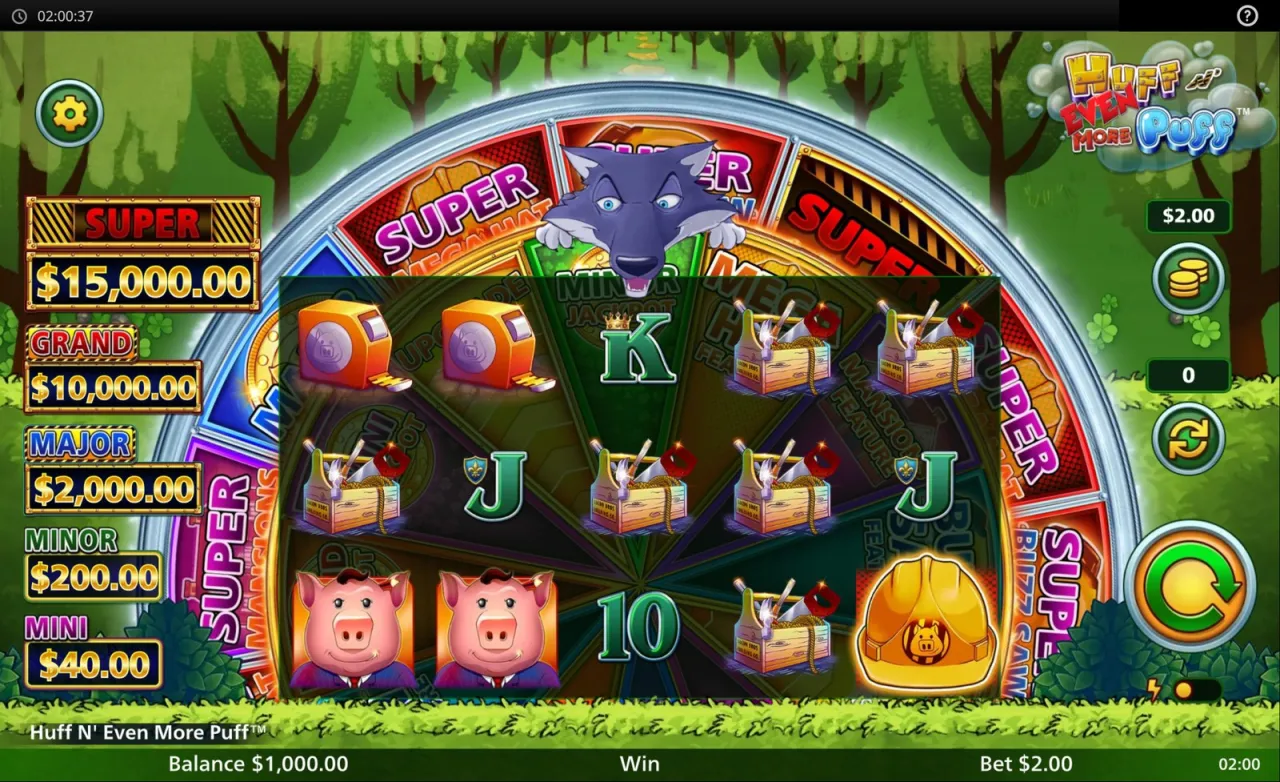
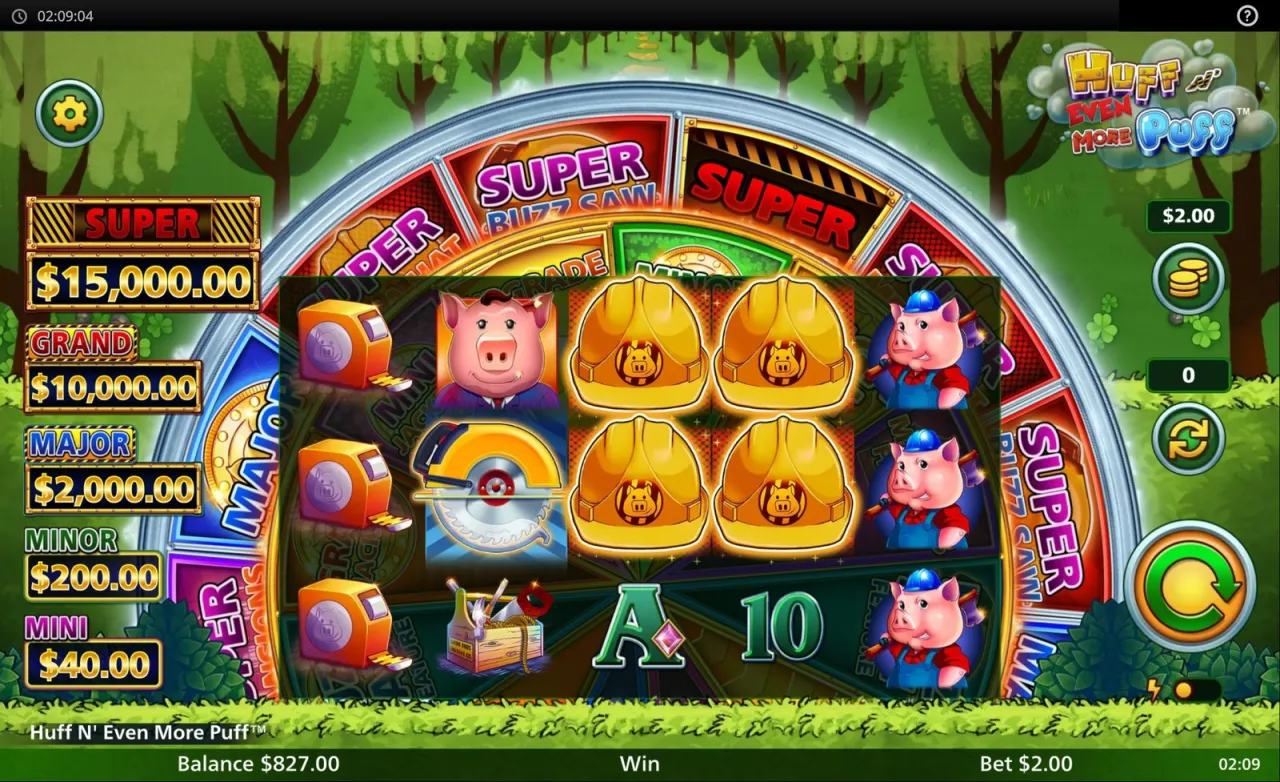
Look behind the reels. That enormous segmented wheel is not a bonus screen waiting to be summoned — it is the permanent backdrop, and the reel window sits on top of it like a postage stamp. Super Mega Hat, Super Mansions, Super Buzz Saw, Grand, Major, Upgrade: you read the prizes you are not winning on every single spin.
Three scattered buzz saws in the base game give you one spin of it. Two buzz saws plus the gold one give you a spin of the upgraded wheel, where the ordinary features are replaced by their super versions and the small jackpots disappear from the segments. And here the rulebook says something I have not seen a studio put in writing before, twice, once for each wheel: "The segments on the wheel do not accurately reflect reality and do not have equal odds."
Read that again with the backdrop in mind. The most prominent object on the screen, present at all times, is one the manufacturer explicitly warns you not to read as a probability. That is not a scandal — it is standard practice, and every wheel in this genre works this way. It is simply rare to see it stated.
Six spins, and a race you probably lose
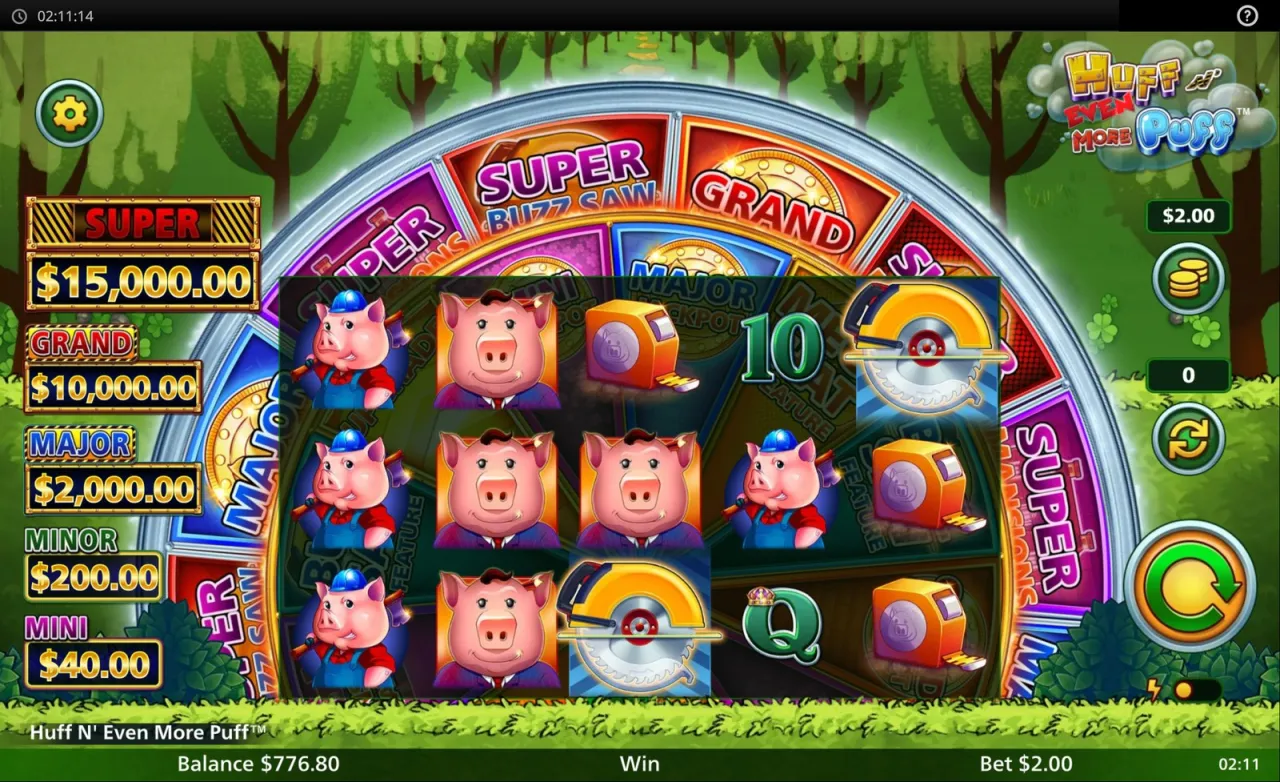
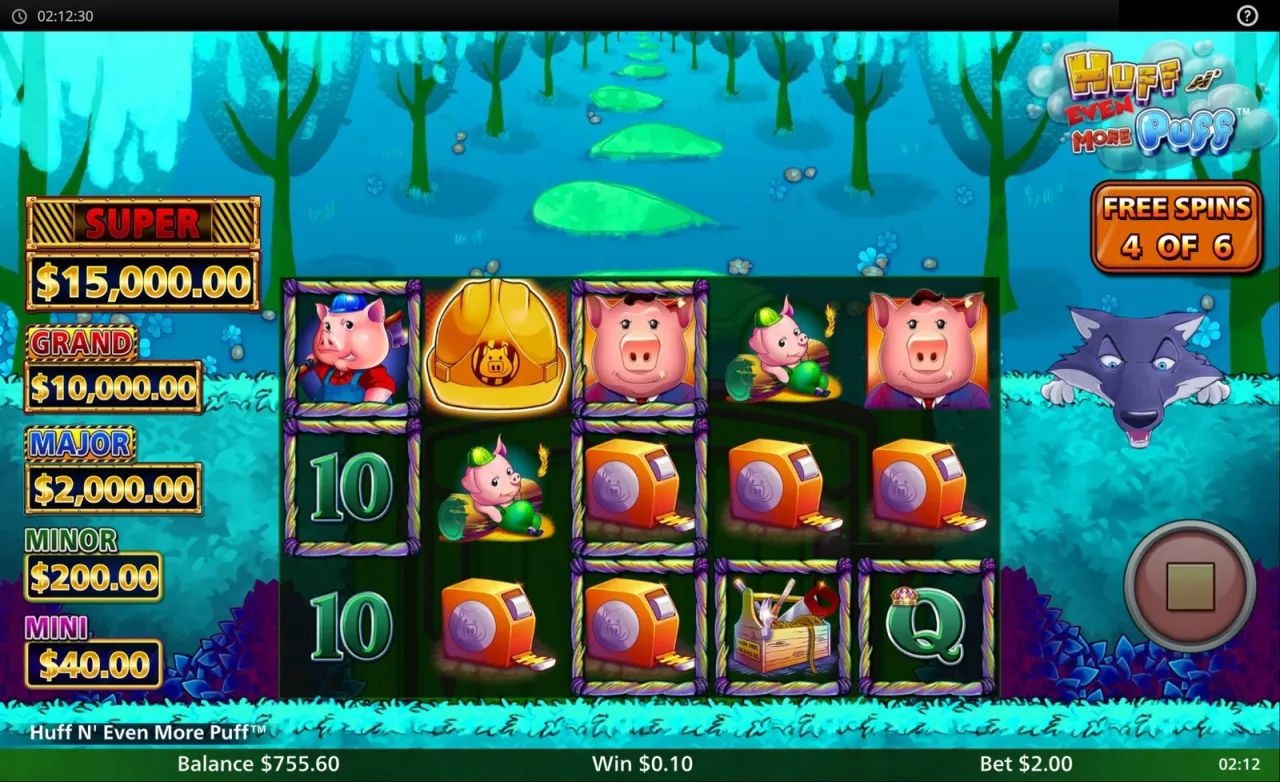
Six or more hard hats trigger the free spins, and each triggering hat plants a straw frame where it landed. From there the round is a construction race. Every new hat either adds a frame or upgrades one it lands on: straw becomes stick, stick becomes brick. A hat landing on an existing brick upgrades something else instead, and when there is nothing left to improve it pays ten times the stake.
The reason this matters is what the frames turn into. At the end of the round each one becomes a house and reveals a prize, and the three tiers are not close:
- Straw house — 0.5 to 1.25 times the stake. Less than the spin cost, at the bottom end.
- Stick house — 1.5 to 5 times the stake, or Mini, Mini ×2, Minor.
- Brick house — 5 to 180 times the stake, or any jackpot including Grand, or a wheel spin.
What my two rounds actually paid
I caught the feature twice at a 2.00 stake. Both times the reveal came back a wall of blue numbers — 0.5x, 0.5x, 0.75x, 1x, one lonely 1.5x — with a couple of log cabins among them and not a brick house in sight. The first round totalled 8.50 and closed at 13.00; the second finished on 25.60, which is 12.8 times the stake and the best thing that happened all session.
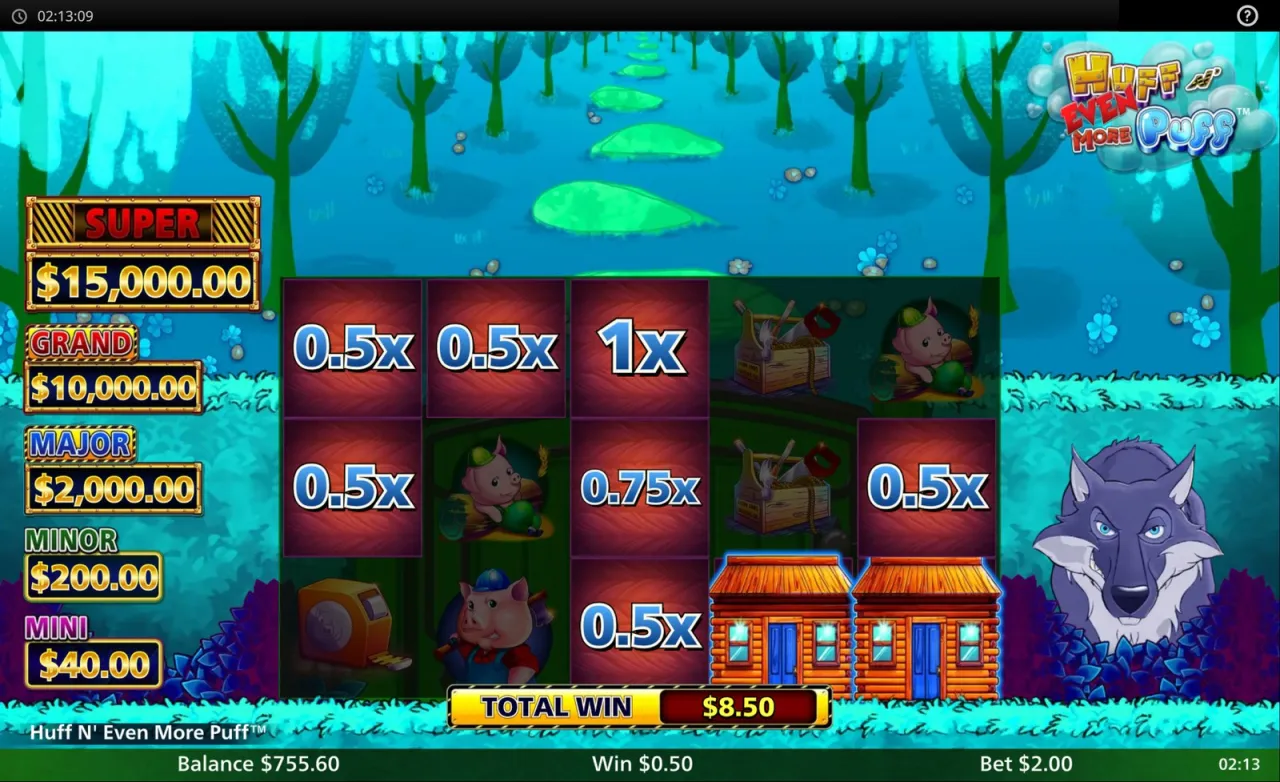
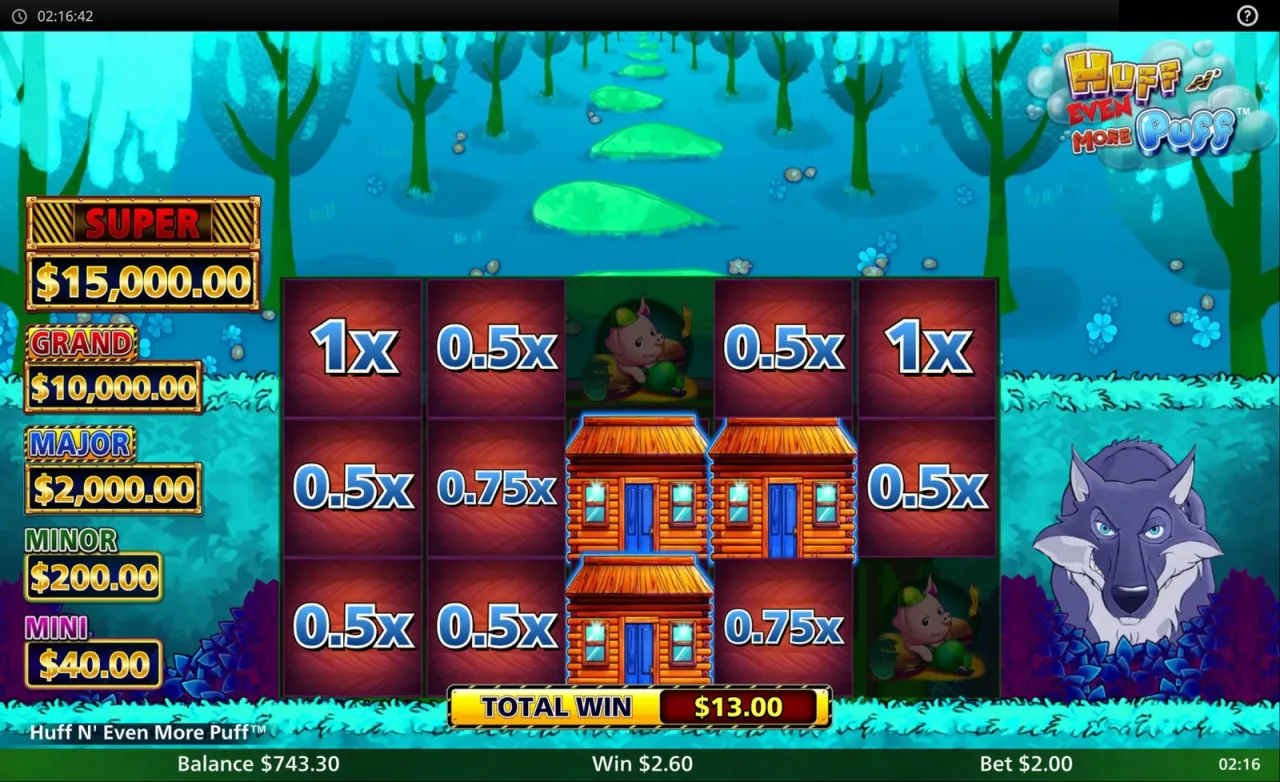
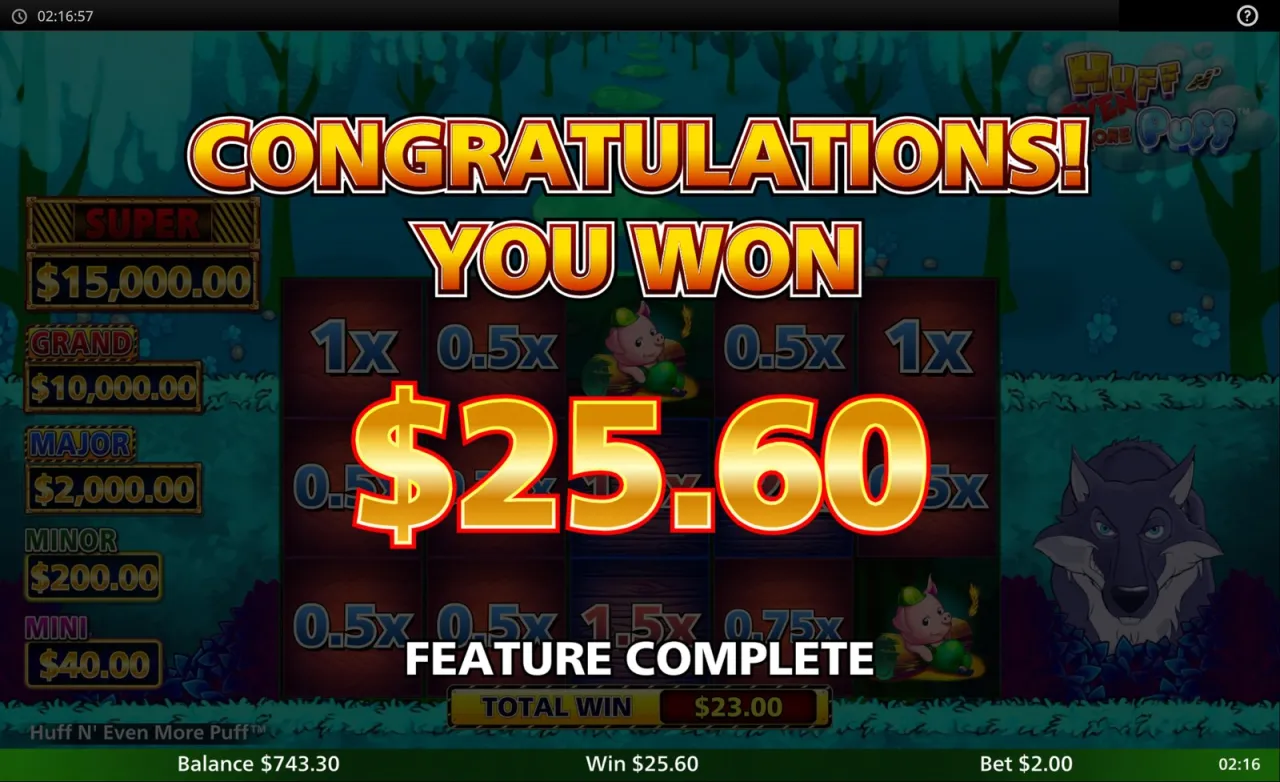
Set that against the ladder above it. A round that produces straw houses pays you roughly what six spins cost. The 7,500× ceiling this game advertises lives entirely in the brick tier and the wheel behind it, and nothing I did in those twelve spins got within reach of either. The balance went from 1,000 to 743 — about 128 stakes down across the session, with two features landed.
Final Minty Score: The published return is identical to its predecessor, so everything that differs is distribution, and the difference is severe. Straw houses paying half a stake are the common case; the brick tier holding 180× and the jackpots is what the volatility rating is actually describing. Removing the buy pass matters more than it looks — on Huff N' More Puff you can price the feature and decide; here you fund the base until it decides for you. Take this one if you want the seven-feature version and the Super meter on top. Take the other if you would rather know what you are paying.
Which of the two
They are close enough on paper to look interchangeable and they are not. Same ways, same return, same fortnight, same wolf — and then one gives you a single legible round with a posted entry price, and the other gives you a wheel you cannot trust by its own admission, six feature variants behind it, an extra jackpot tier and no way in except patience. Neither is better designed. They are aimed at different appetites, and the one thing I would not do is assume the sequel is the upgrade because it has more in it.