
Demo slot House of Doom

House of Doom Slot – Free Demo

Added: Mar 23, 2026 Updated: Mar 26, 2026
Provider: Play'n GO
House of Doom from Play'n GO is a 5-reel, 10-payline doom-metal slot built around a single expanding-wild mechanic, a skull pick bonus, and a free spins round where up to five reels can highlight and expand at once. With an RTP of 96.11%, a max win of 2,500× bet, and a base game that functions…

Play House of Doom demo

Developed by Play'n GO
Game details
Provider Play'n GO
Max Win Per Spin 2,500× bet
Min Bet 0.10
RTP 96.11%
Reels 5
Bonus Buy No
Increasing Multipliers No

House of Doom slot review

House of Doom is a gothic endurance test dressed in doom-metal iconography. Play'n GO kept the architecture minimal — 5 reels, 3 rows, 10 fixed paylines — and then loaded the entire payout thesis into a single bonus round. The base game revolves around one randomly highlighted reel per spin and an expanding Seer wild, which means most of your session is spent watching reels that weren't chosen. It is mechanically transparent, which is either refreshing or boring depending on your tolerance for waiting rooms.

The real math lives inside Doom Spins, where up to five reels highlight simultaneously and the House of Doom symbol converts into an additional wild. That is where a previously comatose session can suddenly produce multi-reel expansions worth chasing. Between the base game and the bonus sits a skull pick feature that either cashes out at modest multipliers or acts as a side entrance to free spins. The whole design is lean, deliberate, and unapologetically dependent on one feature firing correctly. A demo session will teach you everything the slot has to offer inside ten minutes.

Our Minty Verdict: House of Doom is a bankroll grinder that hides behind a leather jacket. The base game is a glorified admission fee — one highlighted reel per spin rarely produces anything worth remembering, and that mechanic earns its nickname as the Spotlight Tease. All the real voltage is crammed into Doom Spins, where multiple expanding wilds can stack across highlighted reels and retriggers keep the round alive. At 2,500× max win, this is not a volatility monster — it is a mid-range feature slot that rewards patience with occasional bursts of genuine reel violence.

Theme, music, and presentation

The visual setup is a crumbling crypt soaked in purple light, with skulls, candles, and occult geometry framing the board. Play'n GO skipped the rubber-bat Halloween approach and committed to a heavier aesthetic — premium symbols carry genuine weight, while the low-pay card ranks stay out of the way. For a compact 5×3 grid, it has more visual identity than most slots twice its age.

The audio is where this slot separates itself from the horror-slot herd. House of Doom was built as a collaboration with Candlemass, and the soundtrack delivers an actual doom-metal pulse instead of generic organ loops. That matters here because the mechanics are so direct that the presentation has to carry a significant share of the entertainment. The mood never breaks — first spin to final bonus round, it stays locked in the same register. Whether that feels atmospheric or oppressive depends entirely on how long your dry spell lasts.

Reels, paylines, and base game mechanics

The format is as stripped-back as it gets: 5 reels, 10 fixed paylines, stakes typically ranging from 0.10 to 100 per spin, and left-to-right win evaluation. No setup, no line selection, no configuration theatre. Every spin fires identically, which makes bankroll tracking clean — useful in a slot where the base game can flatline for extended stretches before a feature flips the session.

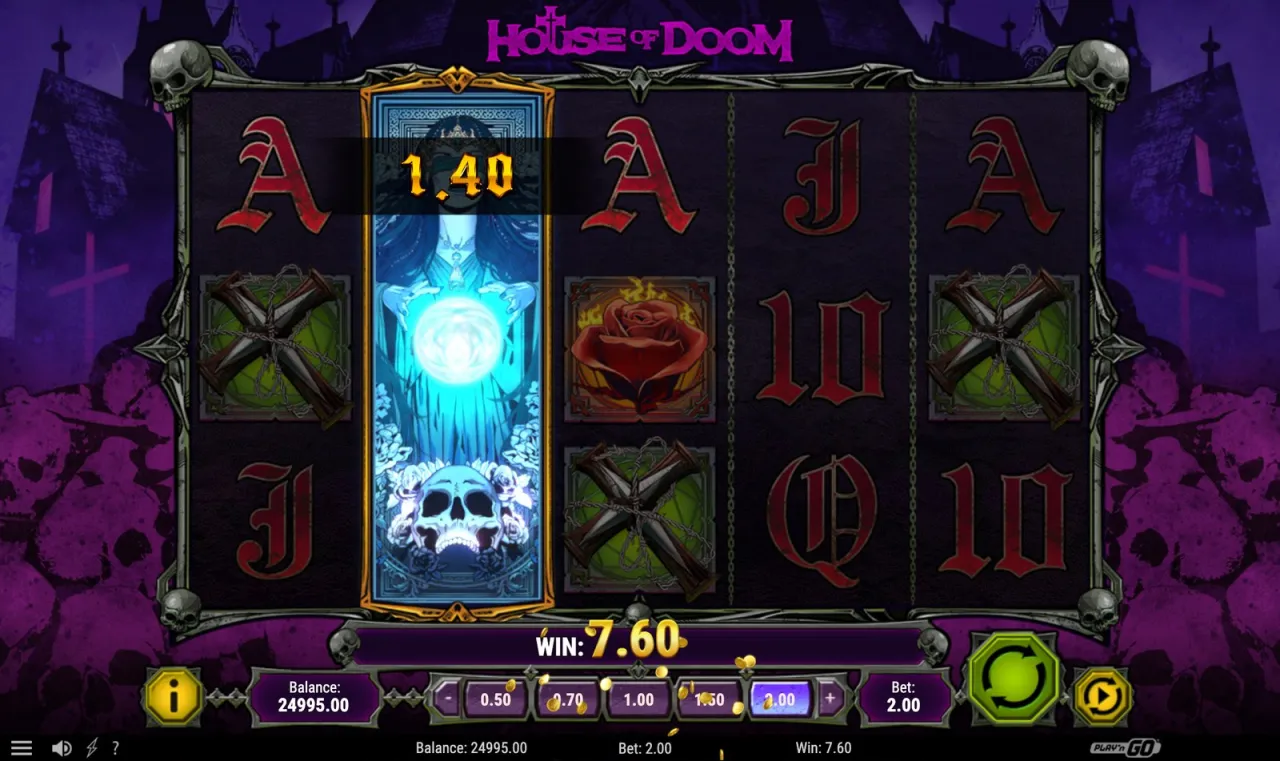
The Seer wild substitutes for all standard symbols and can also pay as its own combination when adjacent wilds connect on a payline. Each spin, the Hellgate mechanic randomly highlights one reel. If the Seer lands on that specific reel, it expands to fill all three positions. That is the only base-game pressure point worth monitoring. A normal wild hit is background noise — a wild on a highlighted reel is a genuine line-building event that can touch several paylines simultaneously.

In practice, the base game is a waiting game with a single variable: did the highlighted reel and the wild collide? Most spins, they do not. You collect modest line wins, watch the highlight skip from reel to reel, and wait for the collision that justifies your patience. It is mechanically readable inside three minutes of demo play, which is either a compliment to the design or a warning about the depth.

Bonus features breakdown

Hellgate expanding wilds

Hellgate is the base game's entire personality. One reel highlights per spin, and a Seer wild landing on it triggers a full-reel expansion. On a 10-payline grid, a single expanded wild column can influence multiple lines without the visual chaos you get on megaways boards. It is a clean, readable mechanic — but it also means the base game has exactly one trick, and it either performs or it does not. There is no secondary system to cushion the gaps between expansions.

Skulls of Abyss pick bonus

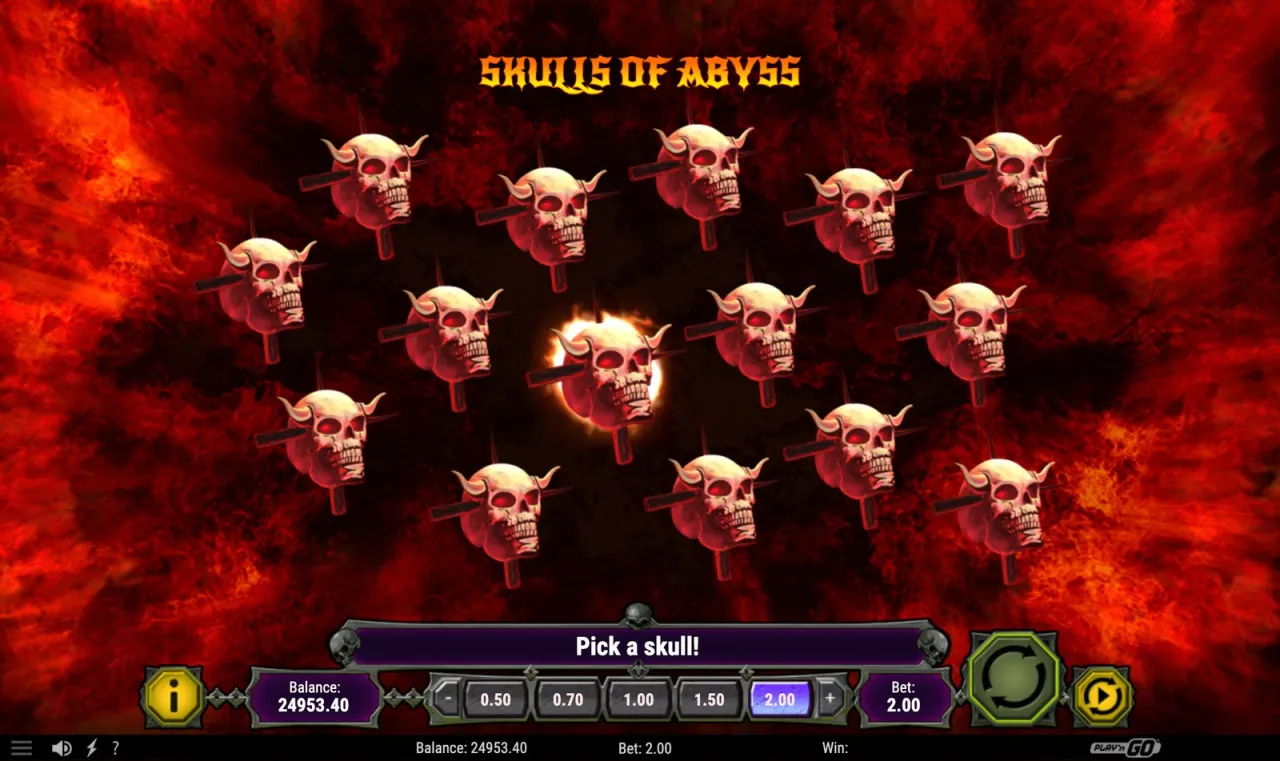
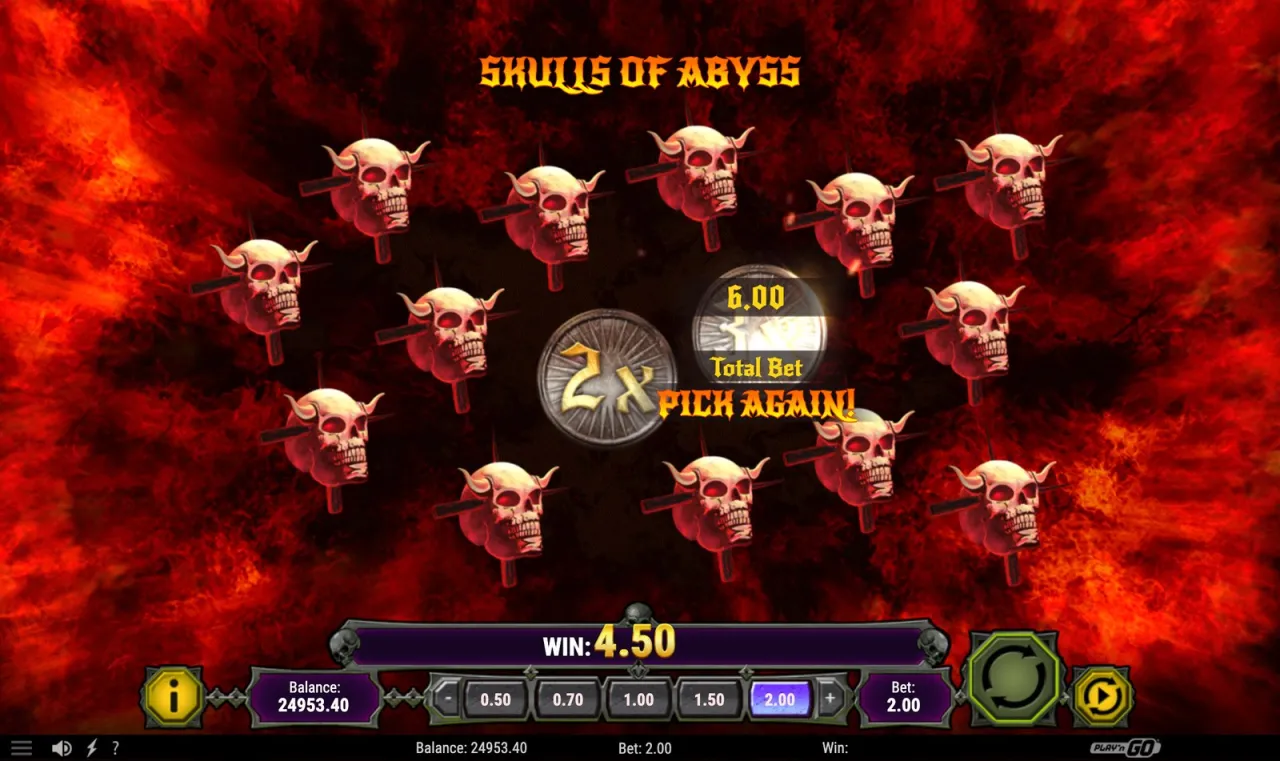
Three skull bonus symbols across reels 2, 3, and 4 launch the Skulls of Abyss pick round. You reveal hidden prizes sequentially — some award total-bet multipliers and keep the round going, while stop symbols end the feature and lock your result. The critical detail: one possible outcome ejects you directly into free spins, giving this pick round a dual function as both a standalone payout event and a bonus-round gateway.

There is no hold-and-win grid, no link-and-collect persistence, no sticky collection meter. House of Doom deliberately avoids the layered systems that newer horror slots pile on. That restraint keeps every feature immediately legible, which is a genuine advantage if you are allergic to slots that need a manual.

Doom Spins — free spins and retrigger potential

Three House of Doom scatters on reels 1, 3, and 5 award 10 free spins. The moment the feature starts, the House of Doom symbol converts into an additional wild, immediately thickening the wild density beyond anything the base game can produce. This is where the slot stops pretending to be polite.

During Doom Spins, between two and five reels are highlighted simultaneously, and at least one of reels 1, 3, or 5 is always included. Any wild — regular Seer or converted House of Doom — landing on a highlighted reel expands to fill the entire column. Multiple highlighted reels mean multiple expanding wilds in a single spin, which is where the 10-payline structure suddenly becomes mathematically violent. The grid is small enough that two or three expanded wild reels can dominate most active lines at once.

Retriggers exist: three or more wild House of Doom symbols during the feature add one extra spin per qualifying symbol. The result is a bonus round that can build its own momentum — early spins set up wild density, retriggers extend the runway, and highlighted reels multiply the expansion opportunities. The highest-impact moments in this slot are always concentrated here, not in the base game.

RTP, volatility, and max win

The commonly listed RTP is 96.11%, though lower configurations exist down to 84.10% — always verify the operator setting before committing real stakes. The math profile is feature-heavy: a large share of the theoretical return is concentrated in Doom Spins and, to a lesser degree, the Skulls of Abyss pick round. The base game contributes through line wins and the occasional Hellgate expansion, but it functions primarily as the toll road to the bonus rather than a payout engine in its own right.

The advertised top prize is 2,500× bet. By modern ultra-volatile standards, that ceiling is modest — but it is consistent with the slot's design philosophy. House of Doom is not built for a single apocalyptic hit. It is a feature-led game where the goal is to catch a strong sequence of wild expansions and retriggers inside Doom Spins, stacking smaller detonations into a meaningful result. Sessions follow a stop-start rhythm: long stretches of base-game quiet punctuated by bonus rounds that can shift from ordinary to dangerous in a single spin when multiple highlighted reels cooperate.

Prize structure and what the slot deliberately omits

There is no progressive jackpot, no branded jackpot ladder, and no separate prize meter competing with the reel features for your attention. The entire payout model is fixed around line wins, expanding wild outcomes, the pick bonus, and the capped max win. That makes the return structure easier to read than slots that fragment their value across three or four disconnected systems.

The Skulls of Abyss pick round can terminate on set total-bet outcomes like x5 or x20, or redirect you into Doom Spins instead. That branching path gives the feature a useful identity — it can either pay you immediately and send you back to the base game, or hand you a ticket to the slot's real payout engine. Beyond that, House of Doom avoids hold-and-spin chambers, increasing multiplier ladders, and sticky collection meters entirely. If clean mechanical restraint appeals to you, this is a slot that practices what it preaches.

Mobile play and demo value

The 5×3 grid ports cleanly to mobile. No cramped side panels, no dense secondary meters, no UI elements that require a stylus to tap accurately. The dark palette maintains enough contrast for symbol recognition, and the highlighted reels remain visually obvious on smaller screens. This is one of those older Play'n GO titles that was built simply enough to age well on every device.

As a demo candidate, House of Doom is near-ideal. A short free session teaches the entire mechanical loop: track the highlighted reel, understand the Seer expansion, learn the scatter landing requirements, and then witness how dramatically the bonus round escalates when multiple reels light up simultaneously. After absorbing that rhythm in demo mode, you will know exactly what the slot is asking of you before a single real-money spin fires.

Who should try House of Doom

House of Doom fits players who want dark presentation, metal-adjacent branding, and a classic video-slot skeleton with a few well-aimed feature hooks rather than a sprawling system map. It is also a reasonable entry point for anyone exploring more games from Play'n GO and wanting a horror title that does not require a tutorial video.

It is a poor match for players chasing massive top-end ceilings, persistent collect systems, or high-frequency bonus triggers. House of Doom demands patience. The payoff is a bonus round that can look unremarkable for its first few spins and then become a reel-expansion chain reaction when the highlighted columns and wild density finally align. Try the demo on this page to absorb the pacing — then decide whether the waiting game is worth the admission price.

House of Doom FAQ

  • Q: Can I play House of Doom for free first?
    A: Yes. A free demo is available directly on this page, letting you stress test the Hellgate mechanic, the pick bonus, and Doom Spins before committing real money.
  • Q: Who developed House of Doom?
    A: Play'n GO built House of Doom as a collaboration with doom-metal band Candlemass, giving it a heavier audio identity than most horror slots on the market.
  • Q: Does House of Doom include free spins or a jackpot?
    A: The slot awards 10 free spins via three House of Doom scatters and includes a Skulls of Abyss pick bonus, but there is no progressive or fixed jackpot system.
  • Q: What is the RTP and max win of House of Doom?
    A: The best-known RTP configuration is 96.11%, though lower operator settings exist down to 84.10%. The maximum win is capped at 2,500× bet.
  • Q: Can the free spins retrigger?
    A: Yes. Landing three or more wild House of Doom symbols during Doom Spins adds one extra free spin per qualifying symbol, allowing the bonus round to extend and build momentum.