
The Dog House - Royal Hunt Slot – Free Demo
Provider:
Pragmatic Play
The Dog House: Royal Hunt is Pragmatic Play's March 2025 entry in the kennel franchise. It keeps the 20-line, 5×3 grid from the 2019 original and wraps it in a countryside-castle theme, with a multiplier-wild engine that turns sticky inside the free spins. Stake range runs 0.20 to 240 per spin, the…
Play The Dog House - Royal Hunt demo
Royal Hunt: a March 2025 refresh of Pragmatic's original 20-line Dog House
Pragmatic Play shipped The Dog House: Royal Hunt on 31 March 2025, under the internal code vs20dhsuper. The frame is the 2019 original. A 5×3 grid with 20 fixed paylines, multiplier wilds confined to the three middle reels, free spins triggered when three scatters land on reels one, three and five. What Royal Hunt layers on top is a 3×3 reveal that meters out the free-spin count up to a 27-spin headline maximum, plus a two-tier buy panel: 100× of the stake for the standard route, and 500× for a Royal Free Spins option that arrives with higher base multiplier values on the sticky wilds.
The visual treatment puts the dogs in cravats against a countryside-castle backdrop and adds a hunter in a green coat to the premium row beside the gentleman and the lady. I ran 187 spins of the free demo at the default 2.00 stake, caught the free-spins feature twice, and saw neither bonus come anywhere near the 27-spin headline — both rounds resolved at 14 free spins.
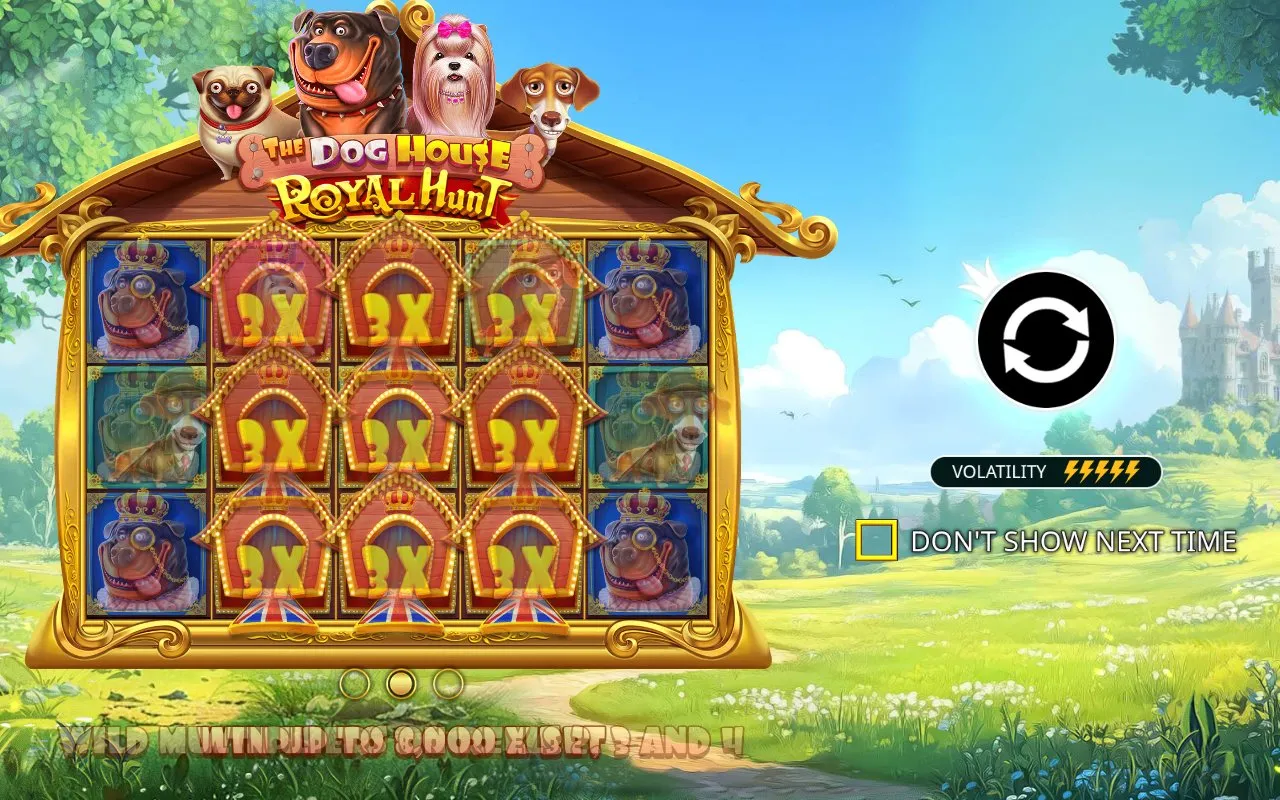
The Minty Take: A franchise refresh on the original engine, not a reinvention. The configurable RTP is the analyst's flag: 96.51, 95.50 and 94.50 percent ship as separate builds, and the operator chooses which one to deploy. Read the 8,000× ceiling and the 500× Royal buy as exposure tools first, win targets second.
Three published RTP tiers, and which one the operator actually deploys
Pragmatic Play's specification sheet for vs20dhsuper lists three return-to-player builds: 96.51%, 95.50% and 94.50%. That is standard practice for a 2024–2025 Pragmatic release. The studio publishes the math at multiple tiers and lets the operator pick. For an Ontario player on an AGCO-licensed site this is the first number to verify. The Alcohol and Gaming Commission of Ontario does not mandate a specific tier. It requires the game's RNG and math be certified by a recognised lab (GLI, eCOGRA and iTech Labs are the common ones), and beyond that the operator decides which build is live.
The spread between top and bottom builds is two full percentage points of theoretical return. On a 1,000-spin session at the maximum 240 stake, that gap works out to roughly 4,824 of expected return between the 96.51 build and the 94.50 build. At the low end of the bet range it is noise. At the top of the range it is not. Wherever you play, open the in-game info screen and read the RTP off it directly. Treat third-party "RTP" figures from review sites as starting points, never as confirmation.
Paytable and bet range: twenty fixed lines on a 5×3 grid
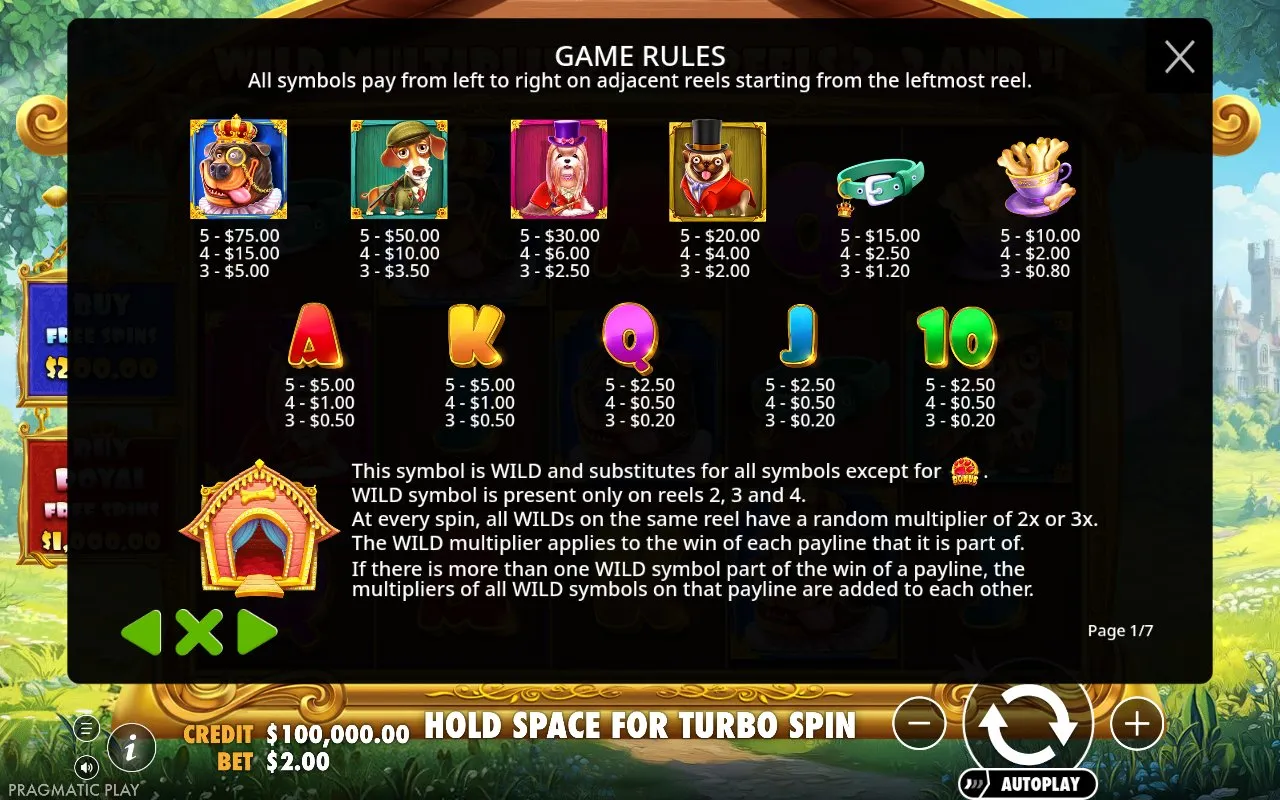
The paytable runs seven help-menu screens and resolves to eleven regular reel symbols plus a wild and a scatter. Premium row: the dog house itself sits on top, with the lady paying 80.00 for a five-of-a-kind line at the demo stake (the highest non-wild line I drew), the hunter at 50.00, the gentleman at 20.00. Mid-tier: the money bag at 15.00 and the gold crown at 10.00. The card-style lows (the bell, orange, magenta, blue, green ten) cover 2.50 to 5.50 for a five-of-a-kind. Twenty fixed paylines, left-to-right adjacent reels from reel one.
Stake range in the demo build runs from 0.20 at the floor to 240 at the ceiling, with the spin button defaulting to 2.00 and a Space-bar turbo toggle. On AGCO-registered Ontario builds the same range maps to CAD; the demo I ran ships in USD. The buy-feature buttons sit on the left rail and are easy to clip by accident if you spin at pace. No autoplay or autospin presets were exposed in the demo I played.
Multiplier wilds: 2× and 3× on reels two, three and four
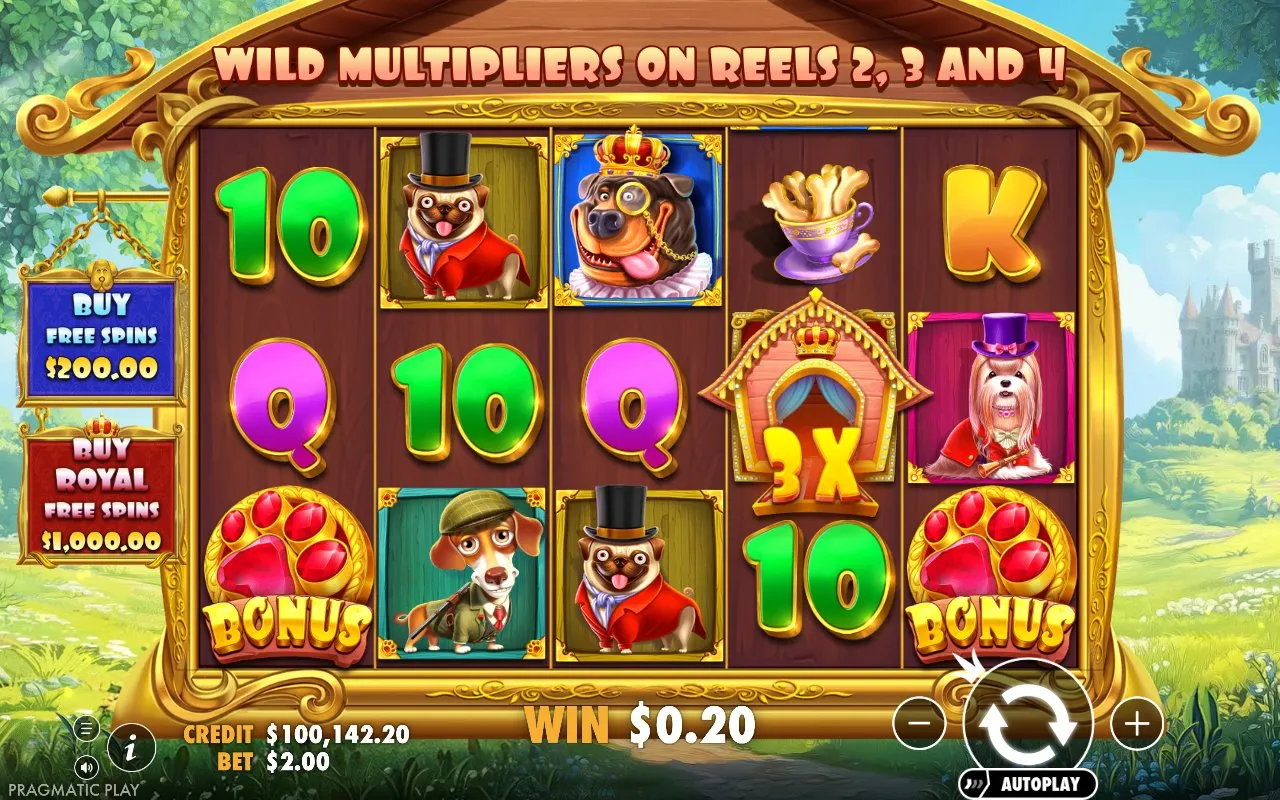
The wild is a house-with-crown icon (the paytable's own wording) and it is restricted to the three middle reels. It substitutes for every regular symbol except the scatter, and it lands with either a 2× or 3× multiplier value printed on the icon itself. When a payline crosses more than one wild, the multipliers compound: two 3× wilds on the same line, both substituting, multiply the line win by 9×. That stacking effect is the main upside lever in the base game.
In practice the wilds are rare enough that most base-game spins resolve without one. There is a 90-spin window inside my session (spins 72 through 161 at 2.00 a turn) where the dry runs really did stretch out. Four small line hits, eighty-six dead spins, a biggest base-game win of 15.50, and a net of -25.10 over the run. That is the volatility cost in plain numbers. The bonus triggers and the sticky-wild stacks inside them do the heavy lifting; the base game pays the cover charge while you wait for them.
Three scatters, the 3×3 reveal, and the free-spin counts I actually drew
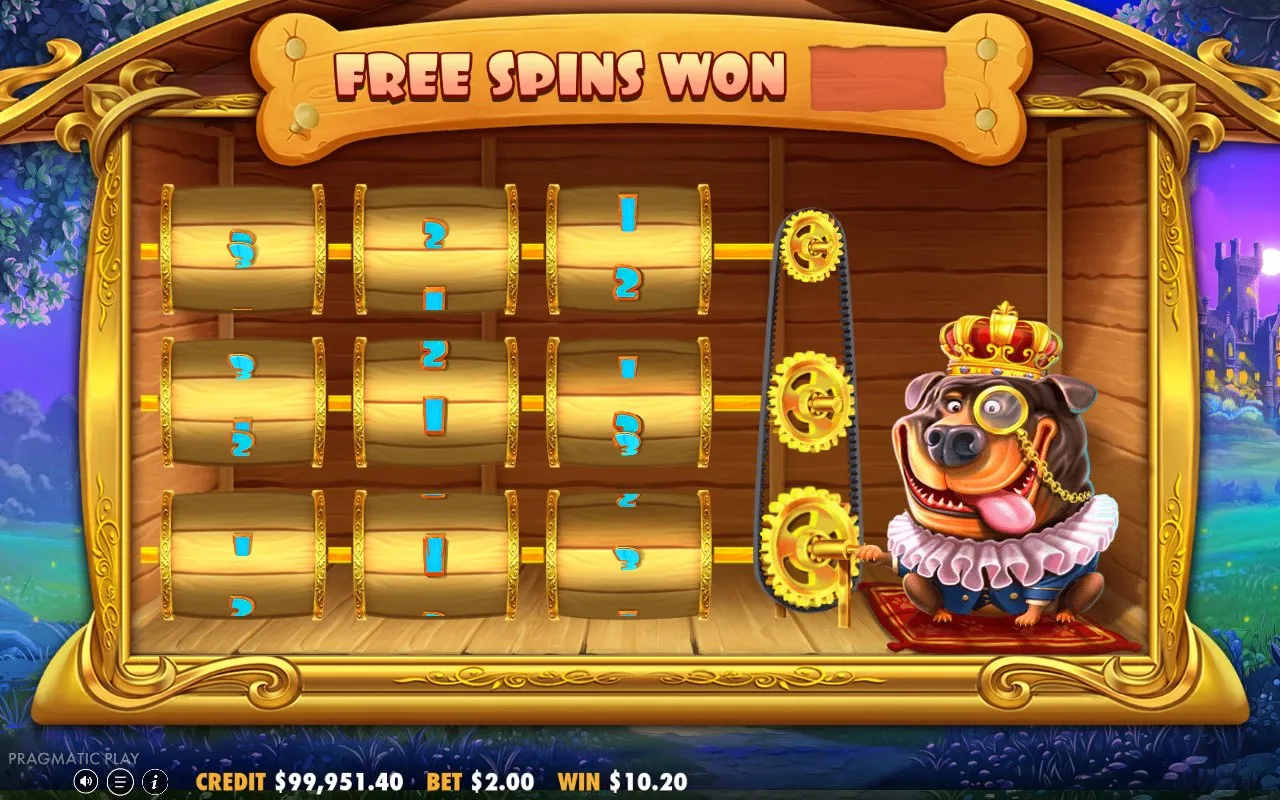
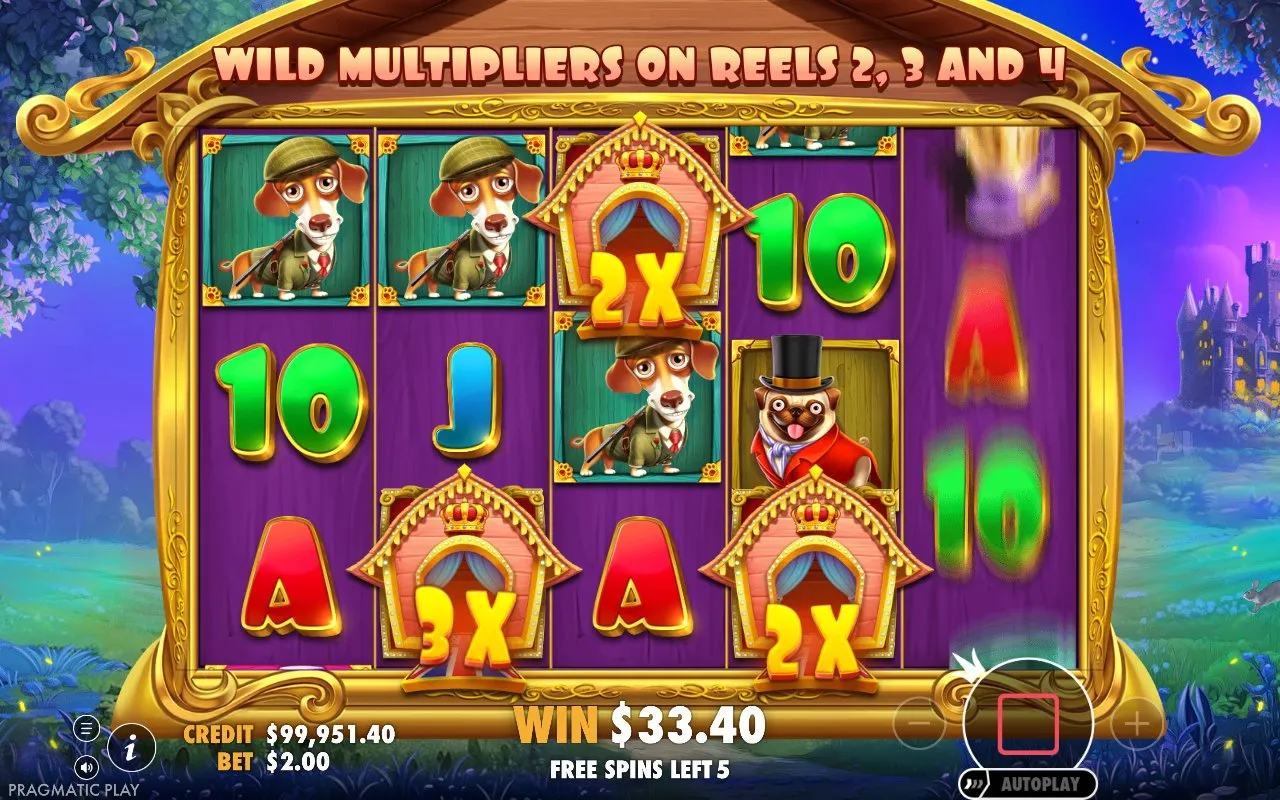
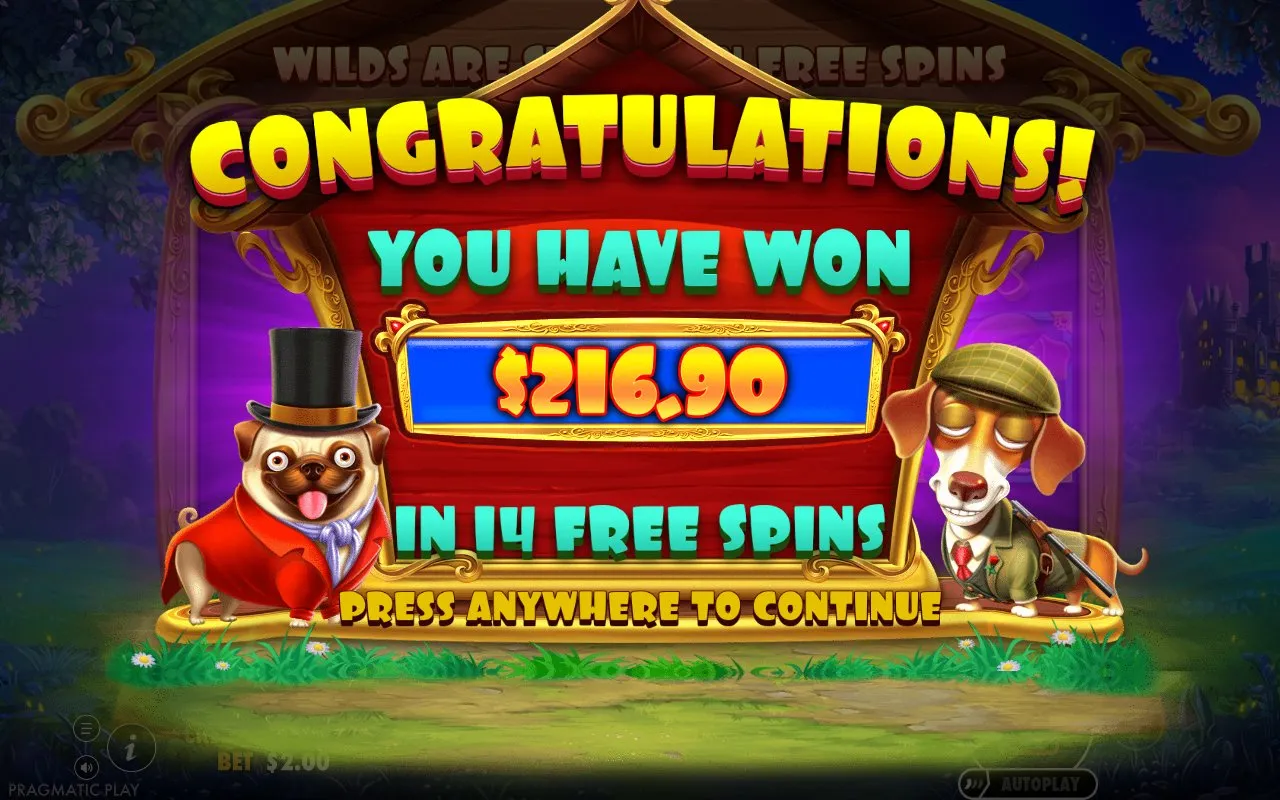
Free spins are triggered by three scatter symbols landing on reels one, three and five. Before the round begins, a 3×3 grid reveals tiles that combine into your total free-spin count, advertised up to 27. In my session the marketing and the experience parted ways. Two triggers across 187 spins, both resolving to 14 free spins, neither anywhere near the 27 maximum. Two triggers is a thin sample. The pattern is still worth flagging: the 27-spin number is an upper bound, and two consecutive 14s suggest the typical draw sits well short of it.
The first trigger came around spin 43. It awarded 14 free spins, paid 206.70 in total (roughly 103× the 2.00 stake), and delivered the largest single-spin win of the entire session at 85.40 on the eighth spin of the bonus. The second trigger landed much later, at spin 163, and produced 34.40 across its 14 free spins. Same trigger, same award count, an order-of-magnitude swing in what came out the other side. The next section explains where that swing actually originates.
Sticky multipliers inside the bonus: where the upside actually lives
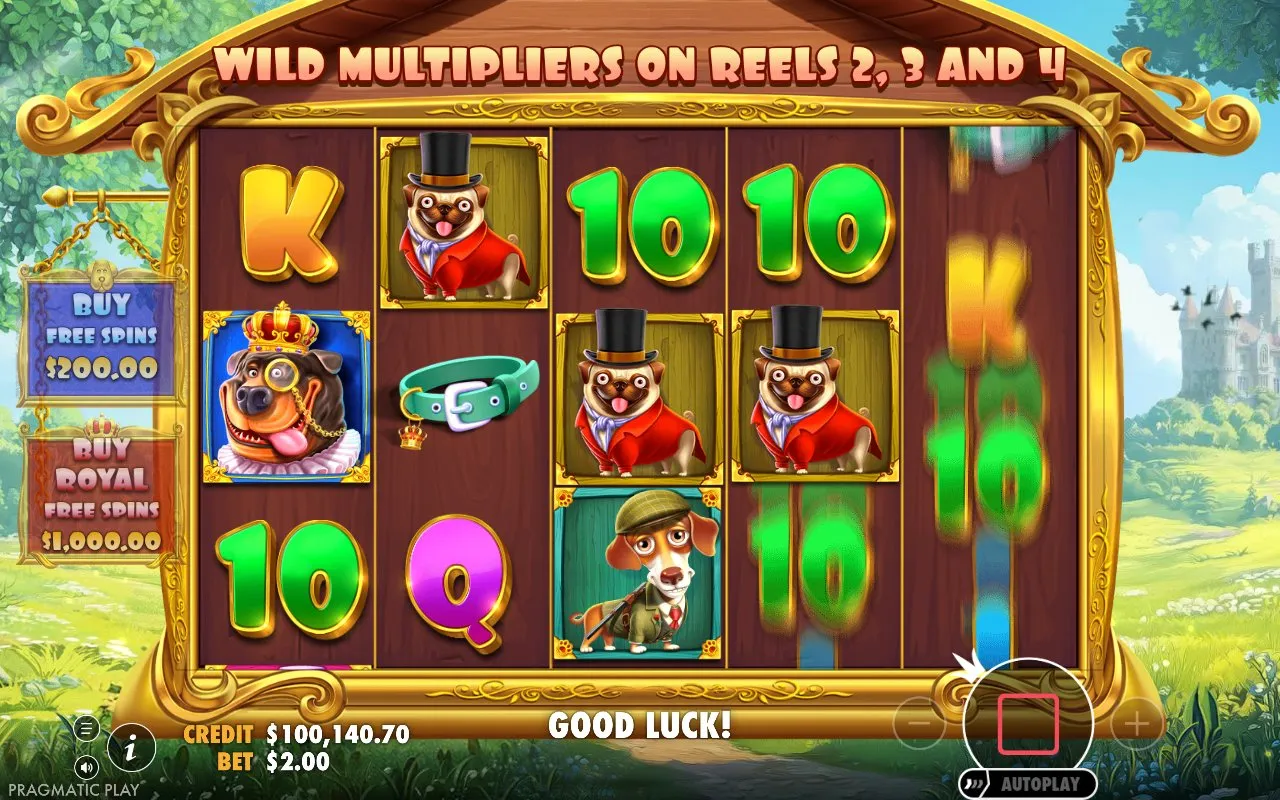
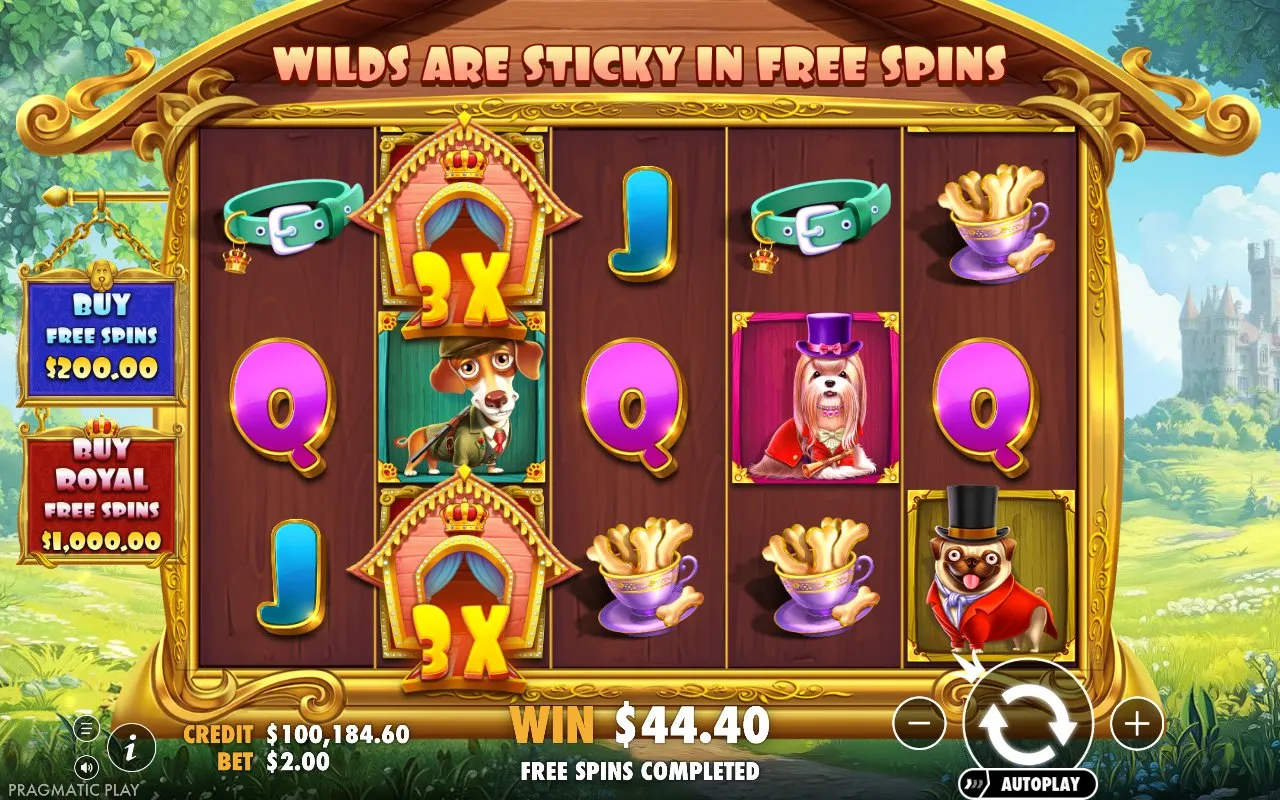
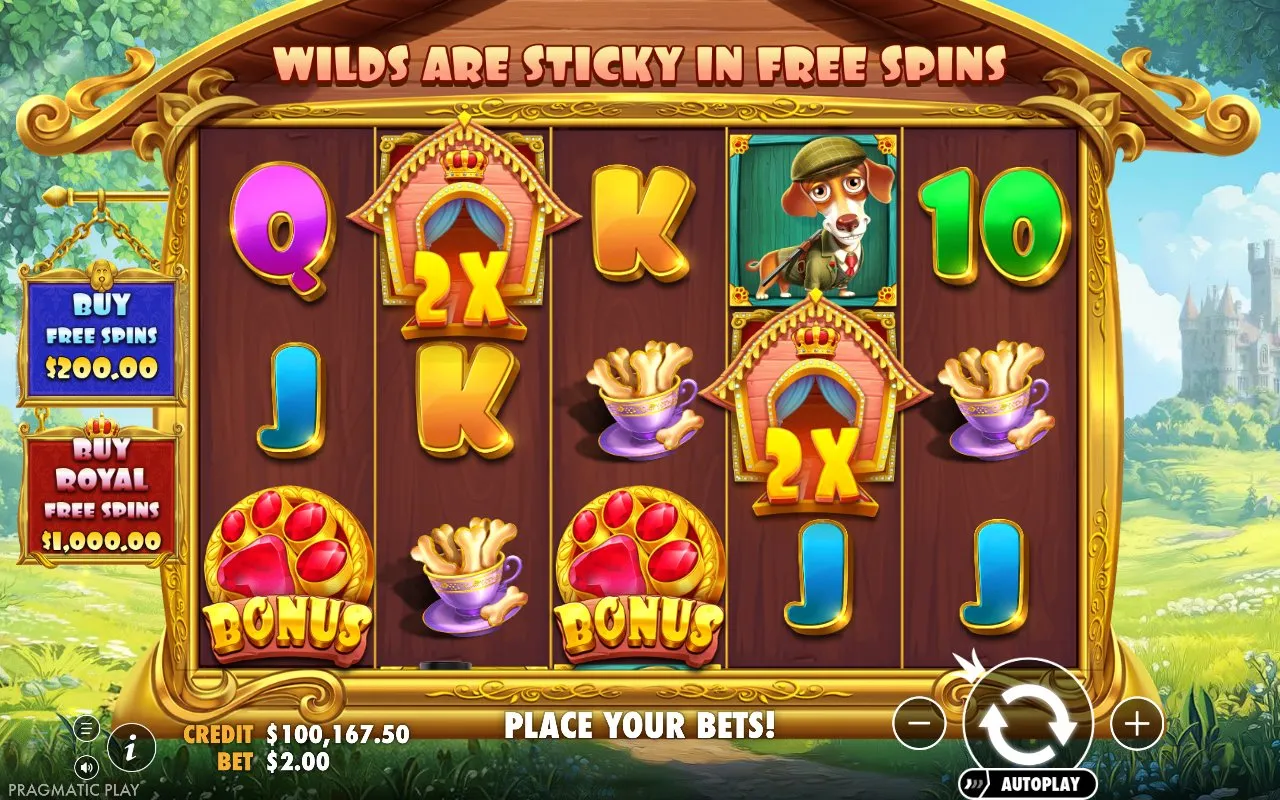
Inside the free-spins round, any wild that lands on reels two, three or four stays put for the rest of the round, locked in with its 2× or 3× value. Land more wilds and the sticky positions accumulate. Land a premium-symbol line through a sticky 3× and a sticky 2× and that line pays 6× its standard amount. Get a stack of three sticky multipliers in the right configuration early in a 14-spin bonus and the rest of the round becomes a procession of amplified line wins.
My two bonuses showed the spread cleanly. The first one: the 85.40 spike on the eighth spin came after two sticky wilds had already locked in on the centre two reels, both at 3×, and a premium dog-line resolved through both of them. The second one: the round opened on low-paying card symbols and a single 2× wild that stuck on reel three, never picked up a partner, and ground out a string of small line hits to a 34.40 close. The mechanic is straightforward. The variance is in how early the multipliers land and whether they connect with the premium row.
Bonus Buy: the 100× standard and the 500× Royal route
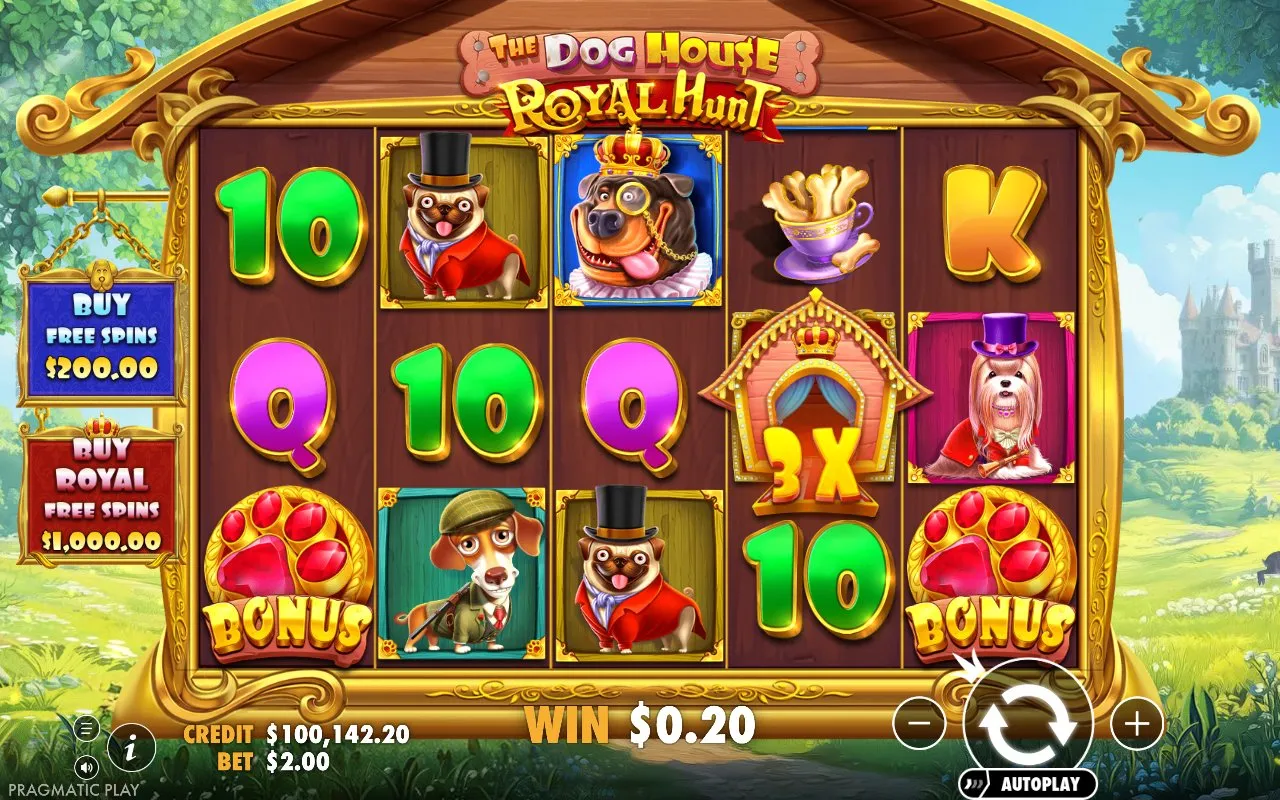
The buy panel offers two priced shortcuts into the free-spins round. The standard buy costs 100× the current stake and drops you into the bonus on the same base multiplier values as a natural trigger (2× and 3× on the middle reels). The Royal Free Spins buy costs 500× the stake, and the in-game description advertises higher base multiplier values on the sticky wilds. Pragmatic's published spec attaches 10× and 20× tiers to the Royal variant, though I did not execute either buy in this session and so cannot ground those values from my own play.
One regulatory note. Bonus-buy availability is jurisdiction-dependent. UKGC-licensed sites have removed the feature under the Gambling Commission's slot-design rules. Ontario's AGCO permits buys on registered iGaming Ontario sites under the relevant session-control standards. Offshore sites typically expose the panel without regulatory friction. If the buy buttons are missing from your operator's build, that is the licensing reason, not a software fault.
Volatility read: 187 spins, two bonuses, one long dry window
Pulling the session into a single picture: across 187 spins I caught two free-spins triggers, the first netting +206.70 over its 14 spins, the second a much quieter +34.40. Between them the base game produced long flat runs broken by occasional small line hits. The cleanest single window onto the base-game pace is the 90-spin stretch from spin 72 to spin 161: four line wins, eighty-six dead spins, a biggest base-game hit of 15.50, and a net of -25.10 across the run.
A high-volatility classification matches what I observed. The expected shape is base-game grind, occasional 2× or 3× wild moments that lift a single line win, and variance concentrated in whether the free-spins triggers land sticky multipliers in useful positions. Standard caveat: one session is not a distribution, and the configurable RTP tiers mean two players on different operators can be running materially different math.
Where Royal Hunt sits next to the older builds
The original Dog House (2019) put the same 20-line, 5×3 architecture and multiplier-wild engine on the market and built the franchise on the back of it. Later entries from Pragmatic Play kept the engine and shifted the wrapping. The Megaways edition swapped the fixed reels for the variable-reel format. Dog or Alive layered a Wild West theme over the same multiplier idea. Royal Hunt steps back to the original's fixed grid with a heavier emphasis on sticky-multiplier stacking inside the bonus.
If you played the original, Royal Hunt will feel familiar in shape and pace. The new pieces sit at the edges: a 3×3 reveal that meters the bonus length, a buy panel with a tier above the standard one, and a configurable RTP that the operator chooses. Whether the makeover is enough to justify a second franchise licence depends on how you weight those changes against the carried-over engine. From an analyst's chair the configurable RTP is the bigger story than the cosmetic refresh.
The Dog House - Royal Hunt FAQ
- Q: What is the RTP of The Dog House: Royal Hunt?
A: Pragmatic Play publishes three return-to-player builds for this title: 96.51%, 95.50% and 94.50%. The operator hosting the game chooses which build is deployed, so open the in-game info screen on the site you are playing before committing a session and do not trust the headline figure quoted on any third-party review. - Q: How are the free spins triggered, and how many can you win?
A: Three scatter symbols landing on reels one, three and five trigger the bonus round. Before the round starts a 3×3 grid reveals tiles that combine into your total free-spin count, advertised up to a 27 maximum. Both triggers I drew in a 187-spin demo session resolved to 14 free spins, so treat the 27 figure as an upper bound on the count. - Q: Can I buy the bonus directly, and how much does it cost?
A: The buy panel offers two routes. The standard buy costs 100× the stake and drops you into the free spins on the base 2× and 3× wild multipliers. The 500× Royal Free Spins buy is advertised as shipping with higher base multiplier values on the sticky wilds. Bonus-buy availability depends on your operator's licensing: UKGC sites have removed the feature, AGCO-licensed iGaming Ontario sites permit it.