
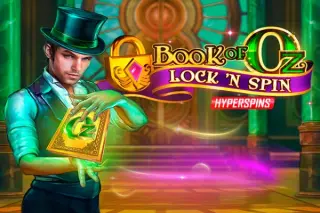
Book of Oz Lock 'N Spin Slot – Free Demo
Added: Feb 26, 2026
Provider:
Triple Edge Studios
Book of Oz Lock 'N Spin by Triple Edge Studios is a Wizard of Oz-inspired online slot that mixes a classic 5-reel book-style layout with a more tactical reel-lock mechanic. Instead of only hoping the next spin lines everything up, you can lock selected reels and respin the rest to chase line wins,…
Play Book of Oz Lock 'N Spin demo
Book of Oz Lock 'N Spin slot review
Book of Oz Lock 'N Spin takes the familiar fantasy-book formula and gives it a more hands-on twist. The game uses a compact 5-reel, 3-row layout with 10 fixed paylines, but it does not feel like a basic line slot for long because the extra reel-lock option changes how you read near-miss outcomes. Instead of treating every spin as fully finished, the game invites you to decide whether a promising setup is worth extending with an extra paid respin on the unlocked reels.
The result is a slot that feels more deliberate than many titles in the same niche. It still has the recognisable ingredients players expect, including wilds, scatters, free spins, and an expanding-symbol mechanic, yet its real personality comes from the Lock 'N Spin functionality. That makes it a useful choice for players who enjoy classic symbols and simple paylines, but still want something more interactive than a standard press-and-wait format.
Triple Edge Studios is the developer behind the game, and the title fits neatly into a catalogue known for straightforward mechanics with one or two strong twists. If you like book-style slots but want more control over when to push a setup, Book of Oz Lock 'N Spin stands out for that reason alone.
Theme, visuals, and overall style
The theme leans into a magical Oz-inspired world with emerald tones, potion bottles, a wizard figure, and the familiar blend of fantasy imagery and card-value low symbols. Visually, the game keeps the presentation clean rather than overloaded. The reels are easy to read, the symbol set is instantly understandable, and the green-and-gold colour palette does a good job of supporting the enchanted setting without making the interface feel too busy.
That restrained presentation matters because the extra reel-lock mechanic needs clarity. When you are deciding whether to keep one, two, three, or even four reels in place, you need to see the current layout quickly. Book of Oz Lock 'N Spin does that well. The interface makes the locked-reel decision the centerpiece, so the art direction supports the gameplay instead of distracting from it.
The audio and visual tone also suit the game’s pacing. This is not a hyperactive slot built around constant explosions, rapid cascades, or oversized motion effects. It is more measured, which works because tension builds when a pair of scatters lands or when a strong premium-symbol arrangement appears and you begin weighing the cost of another try. The visual identity therefore supports the tactical side of the design rather than competing with it.
Reels, paylines, and base game flow
At its core, this is a 5x3 video slot with 10 fixed paylines. That immediately places it closer to traditional line-play machines than to modern Megaways or cluster-pay games. Because the payline count is modest, individual symbol positions matter more, and near misses are easier to evaluate at a glance. That is important because the whole point of the Lock 'N Spin function is to let you react to those near misses rather than simply move on.
The symbol mix follows the expected hierarchy. Card ranks sit at the lower end of the paytable, while themed premium symbols carry more value, and the wizard-themed premium sits above the other regular icons. The wild substitutes for standard paying symbols and helps complete winning combinations, while scatters are tied to the free spins feature. This is a familiar structure, which keeps the game accessible even for players who have never tried a lock-and-respin format before.
Betting starts at 0.10 per spin, so the game is approachable for smaller-stake sessions. That low entry point matters because Book of Oz Lock 'N Spin is not only about the base spin cost. When you start using the reel-lock option, your total outlay can rise depending on how many reels you hold and how strong the preserved setup is. In other words, the game can be played simply, but it becomes more tactical once you start using its signature mechanic regularly.
How the Lock 'N Spin feature works
The defining mechanic is the ability to lock up to four reels and respin the rest. After a base result lands, you can preserve the reels that already show useful symbols and pay an added cost to spin only the remaining unlocked columns. That gives you a chance to complete line wins, improve a premium-symbol arrangement, or chase the extra scatter needed to open the free spins feature.
The price of locking reels is not a flat decorative add-on. It changes based on the potential value of the setup you are holding, so stronger positions cost more to protect. This is what gives the feature its bite. It is easy to understand in principle, but it introduces real decision-making because not every promising layout deserves extra investment. Two scatters on screen with good reel coverage can make the choice tempting, while a weak premium-symbol arrangement may not justify the extra spend.
Why it changes the feel of the slot
Many book-style slots are driven by long stretches of ordinary spins interrupted by free spins. Book of Oz Lock 'N Spin breaks that rhythm by adding meaningful post-spin decisions. The base game therefore feels less passive than usual. You are not choosing bonus buys or entering complex side features, but you are making small, outcome-based calls that shape volatility in practice and can turn near misses into extended attempts.
This is also why the game works well in demo mode. The more you play, the more you learn which board states feel worth pressing and which ones are better left alone. That learning curve adds replay value without making the rules complicated. Players who enjoy reading the reels and judging probability will usually get more from this title than players who only want nonstop automated action.
Free spins, expanding symbols, and Second Chance
The free spins feature is triggered by landing three or more scatter symbols, and the round can award up to 25 free spins depending on how many scatters appear. That structure keeps the entry familiar for book-slot players, but the bonus round still has enough identity of its own. Before the feature gets going, a special expanding symbol is selected, and whenever that symbol appears during free spins it can stretch to cover the reel and improve the chance of creating fuller line wins.
That expanding-symbol layer is important because it is where the slot starts to concentrate more of its better value. During ordinary spins, payouts tend to be fragmented and influenced by line structure plus any reel-lock decisions you make. In free spins, by contrast, one chosen symbol has the ability to reshape the board more aggressively. That shift gives the bonus round a more decisive feel and creates the larger swings that many players expect from this type of game.
The Second Chance option adds another layer during free spins. Instead of being completely locked into the first chosen expanding symbol, the game can offer a reshuffle for a different one. That does not turn the feature into a giant branching system, but it does add a useful moment of variety and keeps the round from feeling overly static. In practical terms, it means the free spins feature has more than one route to a stronger result, which helps the bonus stand apart from a basic expanding-symbol round.
There is no progressive jackpot attached to the game, so the main appeal comes from feature timing, reel-lock decisions, and the fixed payout ceiling rather than from chasing a separate pooled prize. For players who prefer a clearer connection between mechanics and outcomes, that can actually be a plus.
RTP, volatility, and max win
Book of Oz Lock 'N Spin is commonly listed with RTP: 96.35%, and some published game listings place certain configurations in a narrow 96.35% to 96.60% band. In practical terms, that means the slot’s long-run return is built around a mix of ordinary line wins, paid reel-lock extensions, and free-spin rounds rather than around one giant standalone jackpot mechanism. The number matters most here because the extra lock feature changes how often a player may choose to press an advantage instead of accepting the initial result.
The way value is distributed in this game is fairly distinctive. Base-game wins exist, but the slot is not primarily about constant medium-sized payouts arriving on fixed rhythm. A meaningful share of the return is tied to moments when the board gives you something worth preserving, or when the scatter count and expanding-symbol feature combine to open better upside. That makes the return profile feel more decision-led than in a regular 10-line book slot, even though the underlying structure remains very simple.
That distribution also shapes the kind of outcomes you actually experience while playing. Instead of cascades or stacked multiplier chains, the tension comes from partial setups: two scatters showing, a premium line almost complete, or a reel screen that looks just strong enough to justify locking columns and respinning the remainder. The game therefore creates suspense through extension and conversion. You are often judging whether a nearly-there result deserves one more paid attempt, and that makes the action feel sharper than a standard line-spin cycle.
Volatility is generally described as high, which fits the way the mechanics behave. The slot can spend time delivering modest or unremarkable results, then suddenly become far more interesting when a reel-lock opportunity appears or when free spins line up with a favourable expanding symbol. That higher-risk profile is not created by huge feature clutter; it comes from the fact that better sessions are usually built on a handful of timely decisions and stronger bonus rounds rather than on steady drip-feed wins.
The fixed top end is 5,000× your bet, which is solid rather than extreme by current standards. That ceiling tells you what kind of game this is. It is not a low-hit title chasing a five-figure multiplier, and it is not a soft, low-risk grinder either. It sits in the middle ground where disciplined stake sizing matters, bonus rounds have real weight, and the reel-lock mechanic can noticeably influence how a session unfolds from one spin to the next.
Mobile play and user experience
Book of Oz Lock 'N Spin translates well to mobile because the layout is compact and the main interaction is easy to understand. Five reels, three rows, and a visible reel-lock decision are much easier to handle on smaller screens than oversized feature menus or heavily layered interfaces. Whether you are playing on desktop or phone, the game remains readable, and that is especially important when you are deciding which reels are actually worth holding.
The pacing also helps the mobile experience. Since the game is not built around endless side panels or constant animation bursts, it works well in shorter sessions. You can jump in, understand the state of the reels quickly, and decide whether to continue with a normal spin or use the lock function. That makes it suitable both for relaxed play and for players who like to study their options without interface friction.
Players looking for Triple Edge Studios slots online will likely find this one easy to revisit across devices because the feature set is compact, recognisable, and not dependent on deep menu navigation. It is a practical mobile slot rather than one that only looks good in screenshots.
Why try the demo first and when real-money play makes sense
The strongest reason to start in demo mode is simple: this slot rewards judgment more than many games in its category. A free session lets you get used to the reel-lock pricing, the frequency of tempting near misses, and the difference between ordinary base play and rounds where the free spins feature carries the session. That learning period matters because the slot is more engaging once you stop using the extra feature blindly and start applying it with some discipline.
You can play the Book of Oz Lock 'N Spin slot online at casinos that offer Triple Edge Studios games, but the better route is usually to understand the mechanics first and then decide how aggressively you want to use them. After a few demo sessions, it becomes easier to tell whether the game’s measured pace, higher-risk distribution, and tactical respins suit your style.
Once you are comfortable with that rhythm, moving on to play for real money makes more sense because you are no longer treating the lock feature as a novelty. Instead, you are using it selectively and with a clearer idea of how it affects session cost and upside. Players who enjoy feature timing, modest payline counts, and a fantasy-book slot with a little more agency than usual should find plenty to like here.
If this balance of classic structure and interactive respins appeals to you, more games from Triple Edge Studios are worth exploring as well. Book of Oz Lock 'N Spin is a good example of how a familiar format can feel fresher when one mechanic is strong enough to reshape the whole play pattern.
Book of Oz Lock 'N Spin FAQ
-
Q: Can I play Book of Oz Lock 'N Spin for free first?
A: Yes. A free demo is available directly on this page, so you can learn the reel-lock feature, free spins flow, and paytable behaviour before deciding to play for real money. -
Q: Who made Book of Oz Lock 'N Spin?
A: The game was developed by Triple Edge Studios, a studio known for fantasy-led video slots with clear rules and focused feature sets. -
Q: Does Book of Oz Lock 'N Spin have free spins or a jackpot feature?
A: The slot includes a free spins bonus feature with an expanding symbol and a Second Chance element. It does not rely on a progressive jackpot, with the main upside coming from its fixed 5,000× bet win ceiling and the Lock 'N Spin mechanic.