
Book of Dead Slot – Free Demo
Provider:
Play'n GO
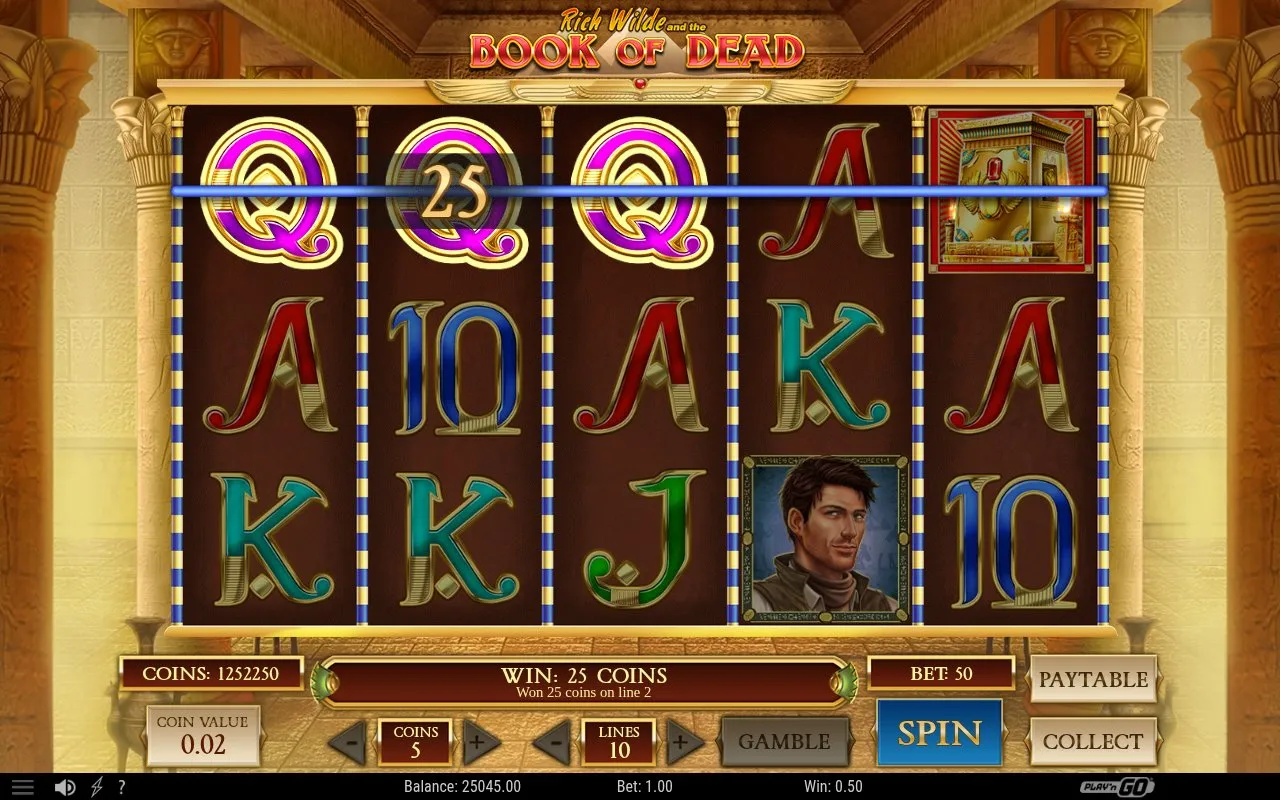
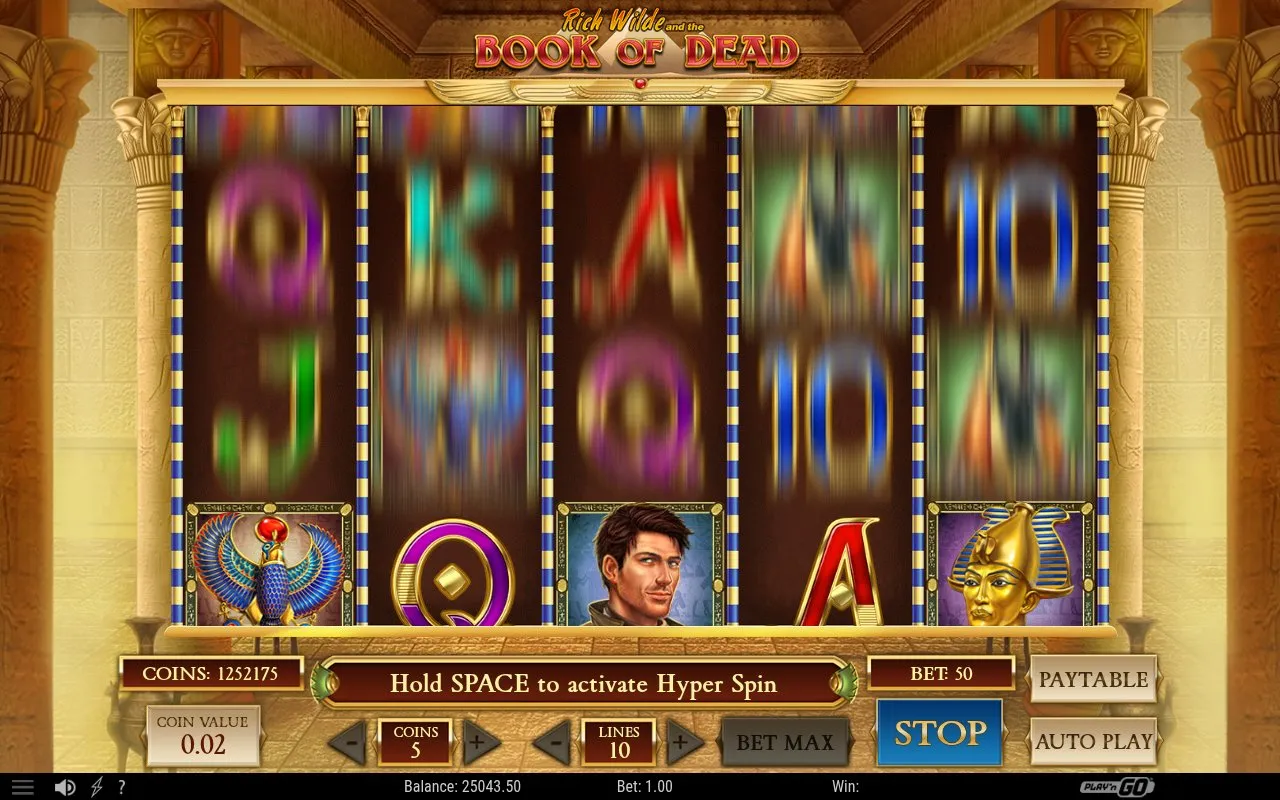
I sat with the Play'n GO demo of Book of Dead for about 250 spins last week, partly to confirm a ten-year-old title still behaves the way its certification documents describe and partly to see how the bonus reads to a player who isn't grinding for it. It does, and it reads about how Canadian…
Play Book of Dead demo
Book of Dead at Ten: Why the RTP Build Is Still the First Question
Play'n GO launched Book of Dead in January 2016, and a decade on it still sits at or near the top of most Canadian operator lobbies. That persistence is itself useful data. The Egyptian wrapper (the Rich Wilde explorer character, the gold-on-blue palette, the slow piano score) is essentially marketing decoration. What I came to verify on the Play'n GO demo was the underlying math: a 5×3 grid, ten adjustable paylines, left-to-right wins from reel one, no cascade or all-ways mechanic, and exactly one route to the bonus through the expanding-symbol free spins round.
Across about 250 spins at the 50-coin default total bet, with one mid-run reload, the session closed at 25,179 against an opening of 25,000. An early balance recovery in the first third of the run, the bonus trigger arriving past the halfway mark, and a small cluster of paid base-game wins in the closing stretch carried the close into positive territory. A run that short isn't a sound basis for estimating any RTP. It's enough to confirm the volatility profile presents on the player side exactly the way Play'n GO publishes it.
Minty's Expert Conclusion: A high-variance 5×3 with a single bonus path and a 5,000× cap. The 96.21% build is the one to look for; verify it's the version your operator deployed before you commit CAD to a session.
Five Reels, Ten Lines, and a 50-Coin Default Bet
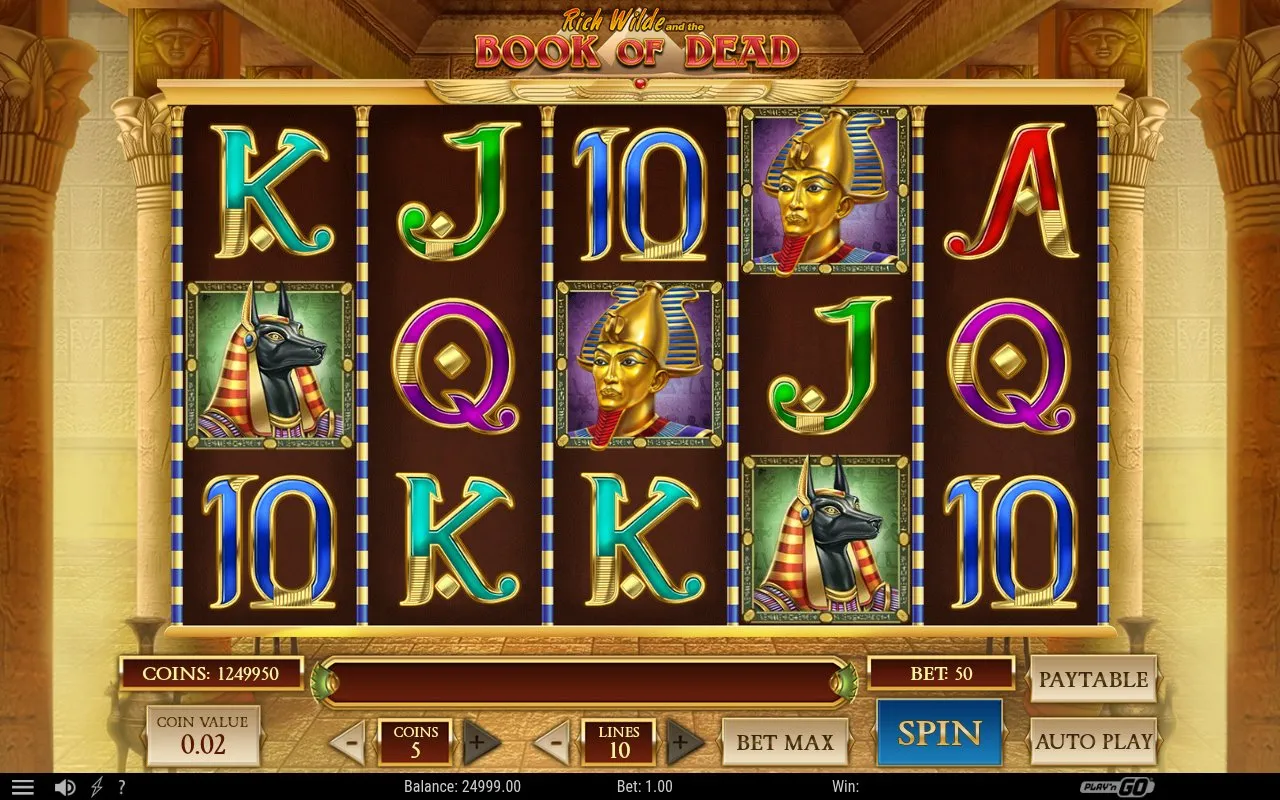
The structure is conservative by 2026 standards. Five reels and three rows, ten paylines that scale down to one if you want (though most players leave all ten on, because the bonus trigger is scatter-driven and indifferent to how many lines are active). The Play'n GO demo defaulted to 50 coins as the total bet across all lines; on a live Canadian operator the coin denomination scales from a 0.01 floor to a 100.00 ceiling, with most iGO-licensed brands capping somewhere lower than the theoretical top.
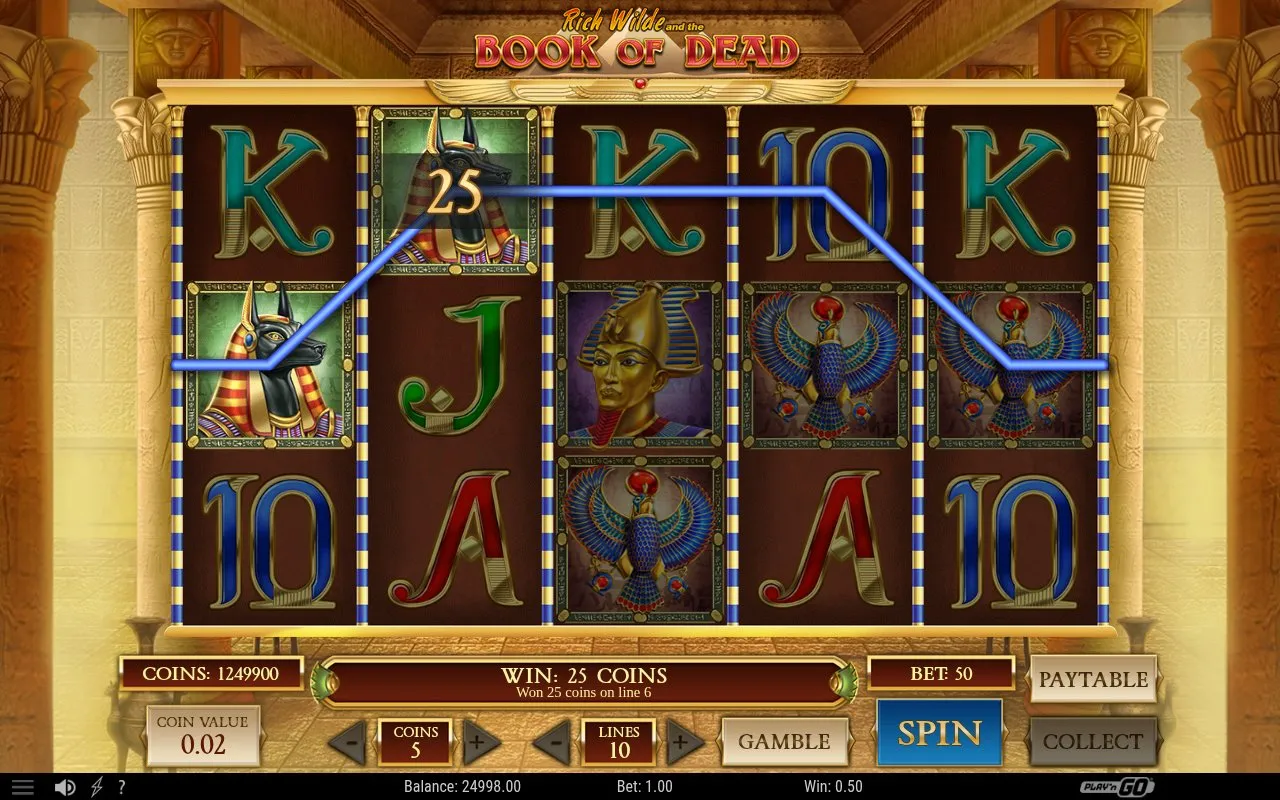
The grid is uncluttered. The high-pay roster (Rich Wilde, the pharaoh mask, the Anubis and Horus heads) reads at a glance, and the lows are stylised 10-through-Ace card ranks rather than abstract gems or fruit. Wins resolve left to right starting on reel one. No cluster, no all-ways evaluation, no cascade. The simplicity is part of why this title has aged so well: a player who understood line slots in 2010 can read a Book of Dead screen without a tutorial.
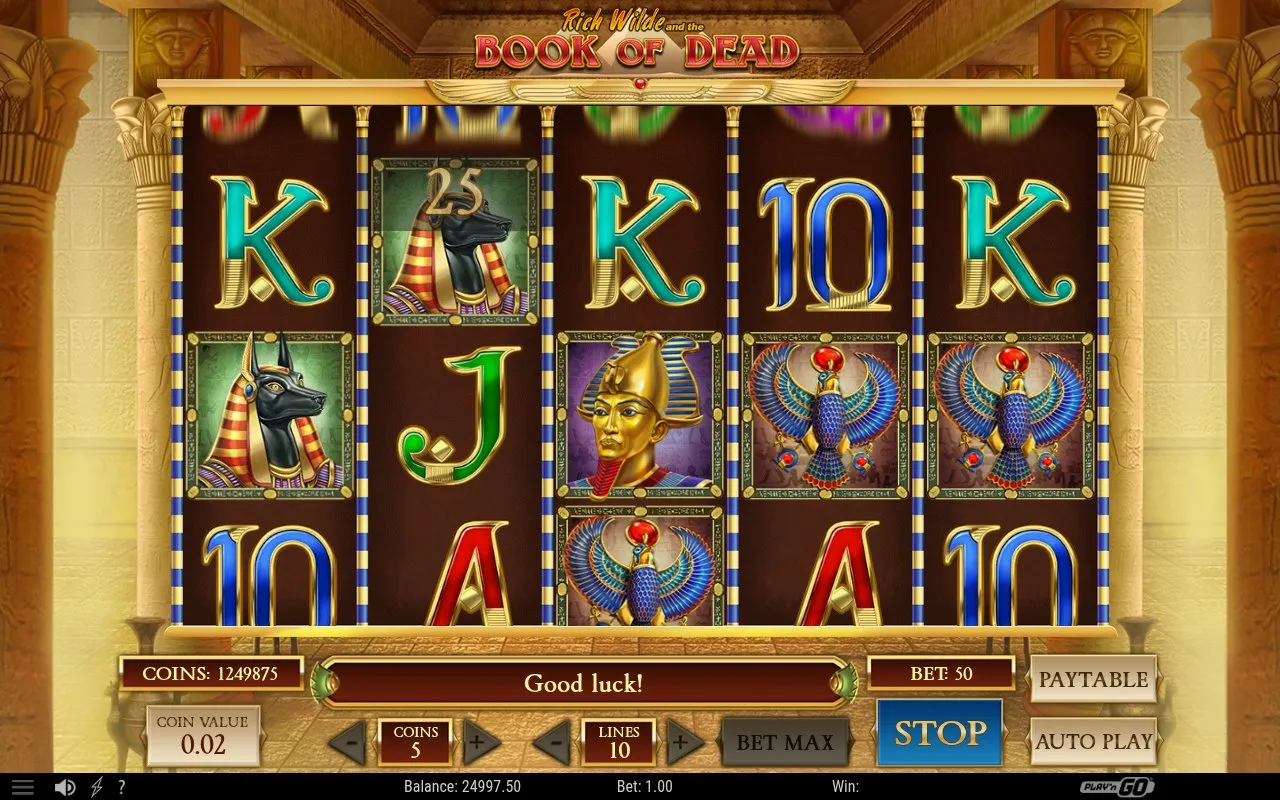
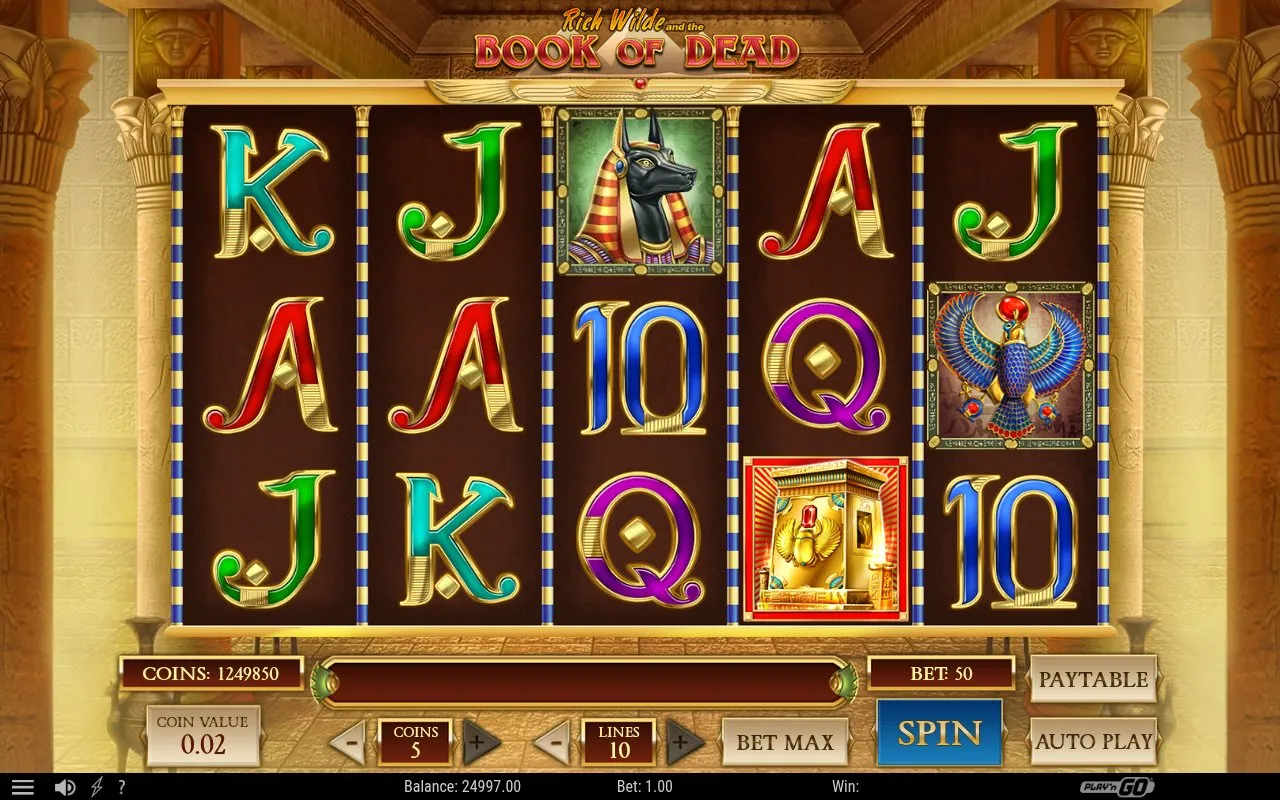
The 96.21% Build, and the Four Lower-RTP Returns You Don't Want
Play'n GO publishes Book of Dead in five certified return profiles. The canonical build is 96.21%; the documented alternatives are 94.25%, 91.25%, 87.25%, and 84.18%. The spread between the top and the bottom of that list is almost twelve full percentage points, wider than the variance between most providers' entire catalogues. That's the figure the marketing pages compress out of sight.
Which build an operator runs is a decision negotiated at integration, and the certified mathematics is what eCOGRA, GLI, or iTech Labs sign off on for that specific configuration. In the AGCO-regulated iGaming Ontario environment, an operator's licence conditions oblige it to disclose game return information on request. In offshore jurisdictions the disclosure norm is uneven, and the lower builds turn up more frequently than most players expect.
The 250 spins I sat through can't tell me which build the Play'n GO showcase demo is serving. The behaviour was consistent with a 96-handle high-variance slot, but a few hundred spins is statistical noise against any of these five returns. The reliable check is the operator's compliance certificate, not your own bankroll curve.
One Golden Book, Three Jobs
The Book symbol is doing the work of three icons. It substitutes for any paying symbol on a line as a wild, pays anywhere on the reels as a scatter, and three or more on the same spin trigger the free spins round. Compressing that much function into one image keeps the symbol set short and the bonus logic legible, and it means a single Book landing in the right reel can finish a line win and inch the session toward a feature trigger on the same spin. There's a small side effect: during long unfeatured stretches the Book still contributes to small base-game wins through its wild role, which slows the bankroll bleed slightly compared with titles that separate the wild and scatter into distinct symbols.
Expanding-Symbol Free Spins: Ten Spins, One Chosen Reel-Filler
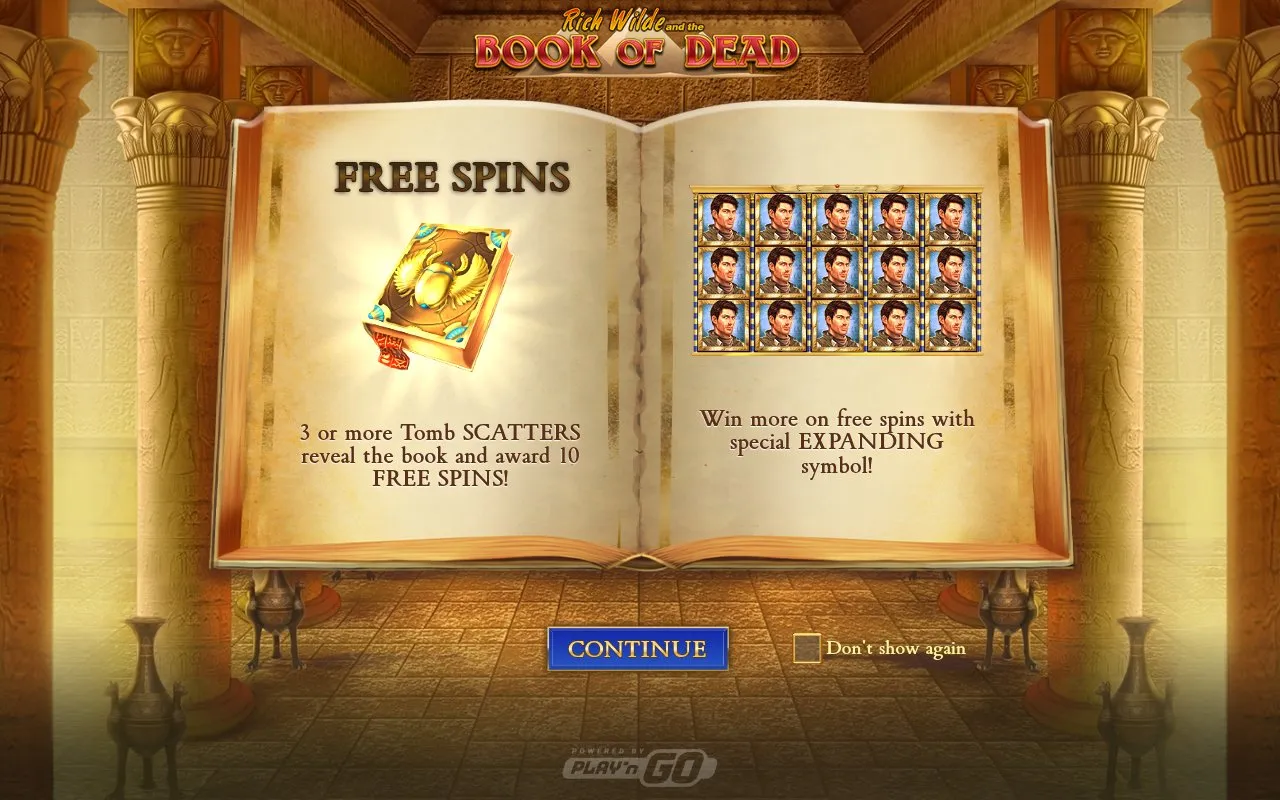
The bonus is a single-path round. Three or more Books on a base-game spin award ten free spins, and before the round begins one regular symbol is chosen at random to act as the expander for that round. After any winning evaluation that includes enough copies of the chosen symbol, it stretches to fill the reels it lands on and pays as if those reels were stacked. The bonus can retrigger if more Books land during the free spins, which is the path to the published 5,000× cap.
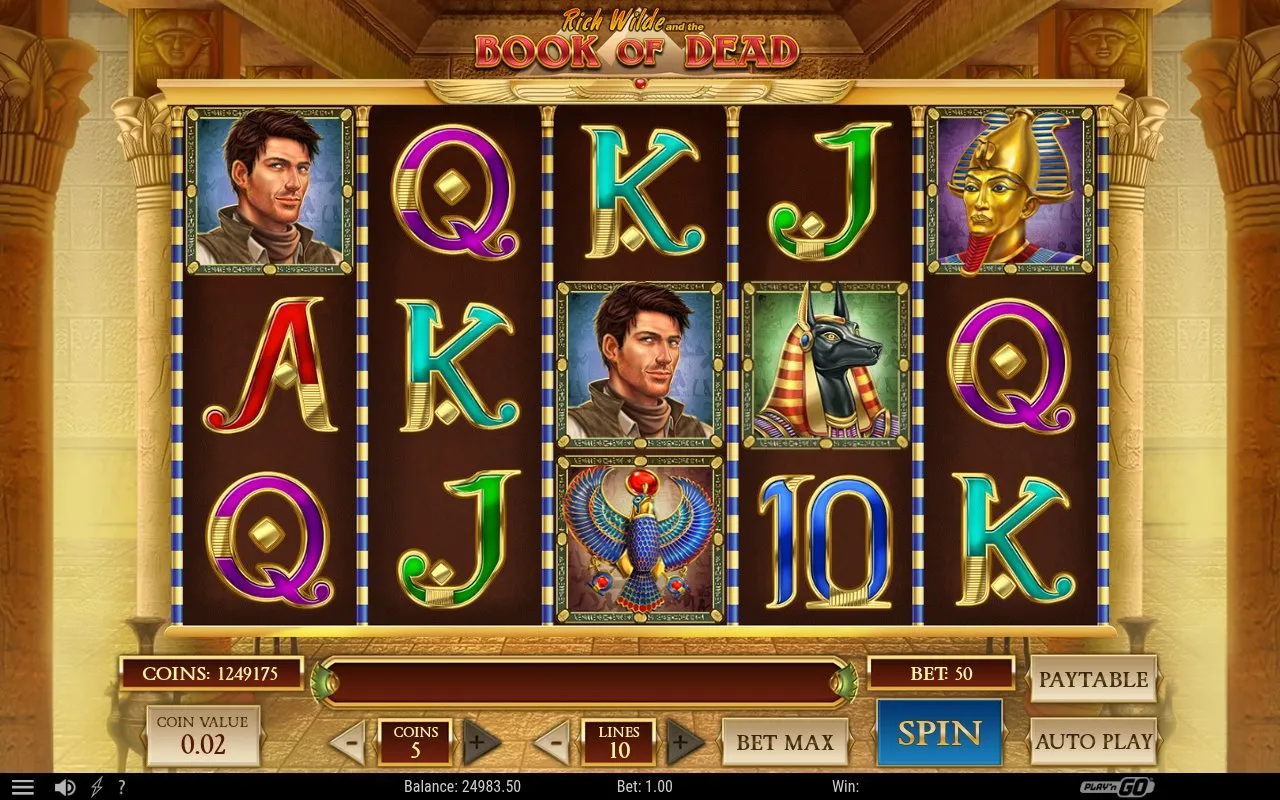
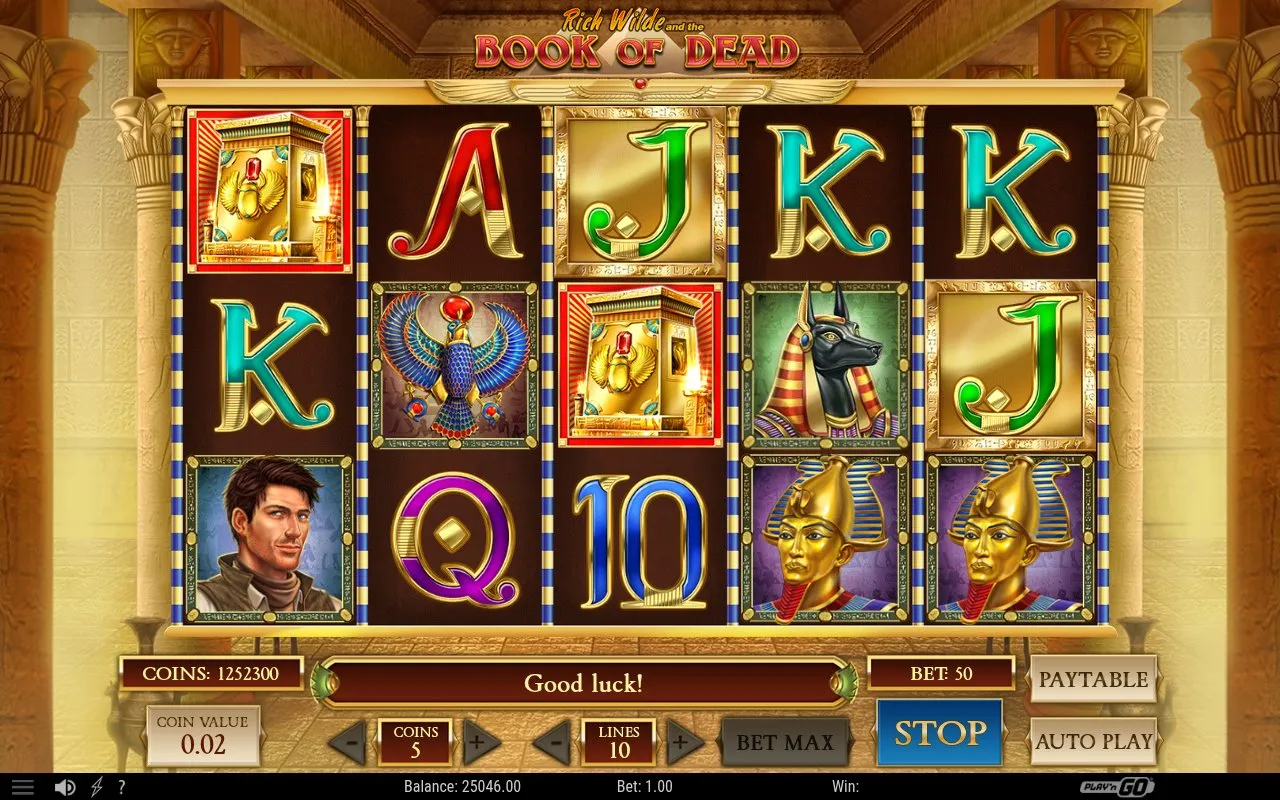
Well into the run, the feature triggered, with several spins of expanding reels following. The bonus contribution to the bankroll was small; the closing stretch did most of the lifting, with a 250-credit base-game cluster and a smaller hit a few spins later. The expander assignment matters more than the trigger frequency: a high-pay expander (Rich Wilde or a pharaoh) can fill multiple reels for a meaningful multiple. A low-card expander often resolves the ten spins for less than the trigger cost back. That asymmetry is the entire reason the published maximum sits at 5,000× and not higher or lower.
One caveat worth stating once. The 5,000× ceiling is a structural property of the math model, not a frequent outcome. Play'n GO's own probability disclosures for similar book-format titles place top-end hits in the millions-to-one range. Treat the cap as the upper bound and budget against the expected bonus average instead.
Reading 10/10 Volatility From a 250-Spin Run
Play'n GO's internal scale rates Book of Dead at 10/10 for volatility, which maps to level 6 on the 1-6 scale most Canadian comparison sites use. My session lines up with that rating: blocks of ten to twenty spins on sub-stake or zero returns, occasional small line wins on the high-pay symbols, two visible balance recoveries, and one full bonus trigger that contributed to the positive close.
For bankroll planning, the working floor is around 200× your spin stake if you want to give the bonus a fair number of attempts to land once on average. At CAD 1.00 a spin that's a session budget of CAD 200; at the demo's 50-coin default, scale proportionally to whatever coin value your operator deploys. A smaller stake serves the distribution better. More trigger attempts beat fewer, larger ones, every time.
The Gamble Add-On Sits Outside the Game's Certified RTP
Any base-game win can be sent to the gamble screen instead of collected. Pick a colour (red or black) to double, or a suit to quadruple. Either way the gamble runs as a separate wager that sits outside the slot's certified RTP calculation. Using it doesn't move the 96.21% headline figure or any of the four lower builds.
If you gamble on this title at all, gamble small base-game wins where the loss is acceptable. The colour guess is close to even-money before house edge, so on expectation the cost is the edge itself. The suit guess is negative-EV by construction. Sending a free-spins payout to the gamble screen is hard to defend either way.
AGCO-Certified Book of Dead vs Its Offshore Twins
The AGCO and iGaming Ontario framework certifies the operator's deployment of a third-party game. It doesn't compel the operator to deploy the highest-return build available. In practice, the Ontario-regulated versions of Play'n GO titles I've audited tend to run the 96.21% Book of Dead profile by convention. The AGCO doesn't mandate it. The auditable artefact is the operator's compliance certificate, which lists the game's certified return per integration.
Offshore deployments are where the four lower builds (94.25% down to 84.18%) show up more frequently, sometimes on operator skins that look indistinguishable at the lobby level from regulated Canadian brands. The check is the same on either side of the line: read the certificate, confirm the build, then size the stake. CAD bet ranges at iGO-licensed operators commonly begin near 0.10 per spin with all ten lines active and reach a 100.00 ceiling at the top, with individual brands capping below that. The in-game info panel shows symbol payouts in coin units; multiplying by your coin value tells you the actual CAD figure, and that's the number to read before any session, not the marketing-page summary.
Book of Dead FAQ
- Q: How do I tell which Book of Dead RTP build my operator is running?
A: Open the in-game info panel or paytable. Ontario-licensed brands are required to disclose certified return there. If the displayed figure isn't 96.21%, the deployment is one of the four lower-RTP builds (94.25%, 91.25%, 87.25%, or 84.18%). When the panel is unclear, the operator's published compliance certificate is the canonical source. - Q: Is Book of Dead high-variance enough to budget a full session around?
A: At Play'n GO's published 10/10 internal rating, yes: the volatility is at the top of the scale. A working bankroll floor is around 200 times your per-spin stake to give the free spins bonus a fair number of attempts. At CAD 1.00 a spin that's CAD 200; scale to your coin value. Stake size affects trigger attempts more than win size, so smaller bets serve the distribution. - Q: Does the gamble feature affect the slot's certified RTP?
A: No. Sitting outside the certified RTP means using the gamble screens changes neither the 96.21% nor any of the four lower builds. The colour wager is essentially a coin flip before house edge; the suit wager pays 4× on a one-in-four guess. The defensible use is small base-game wins where the loss is acceptable; sending a free spins payout into the gamble screen is harder to justify on expected-value grounds.