
First Person Lightning Roulette Slot – Free Demo
Provider:
Evolution
First Person Lightning Roulette is Evolution's RNG version of their live show: single-zero European roulette with a Lightning layer that strikes 1 to 5 random numbers per round and assigns each a multiplier between 50x and 500x. Those multipliers pay only on straight-up single-number bets. I ran…
Play First Person Lightning Roulette demo
A live show stripped down to RNG and a multiplier grid
Evolution put this out in mid-2019 as the solo counterpart to their live Lightning Roulette show. The bones are identical to a standard European table with 37 pockets and the full bet menu, only with the Lightning multiplier system layered onto every round and the live dealer removed. An RNG settles each round before the wheel animation runs, so the visible spin is a replay of an outcome the software already locked in. There is also a GO LIVE button welded into the corner of the interface for when the solo grind stops scratching the itch.
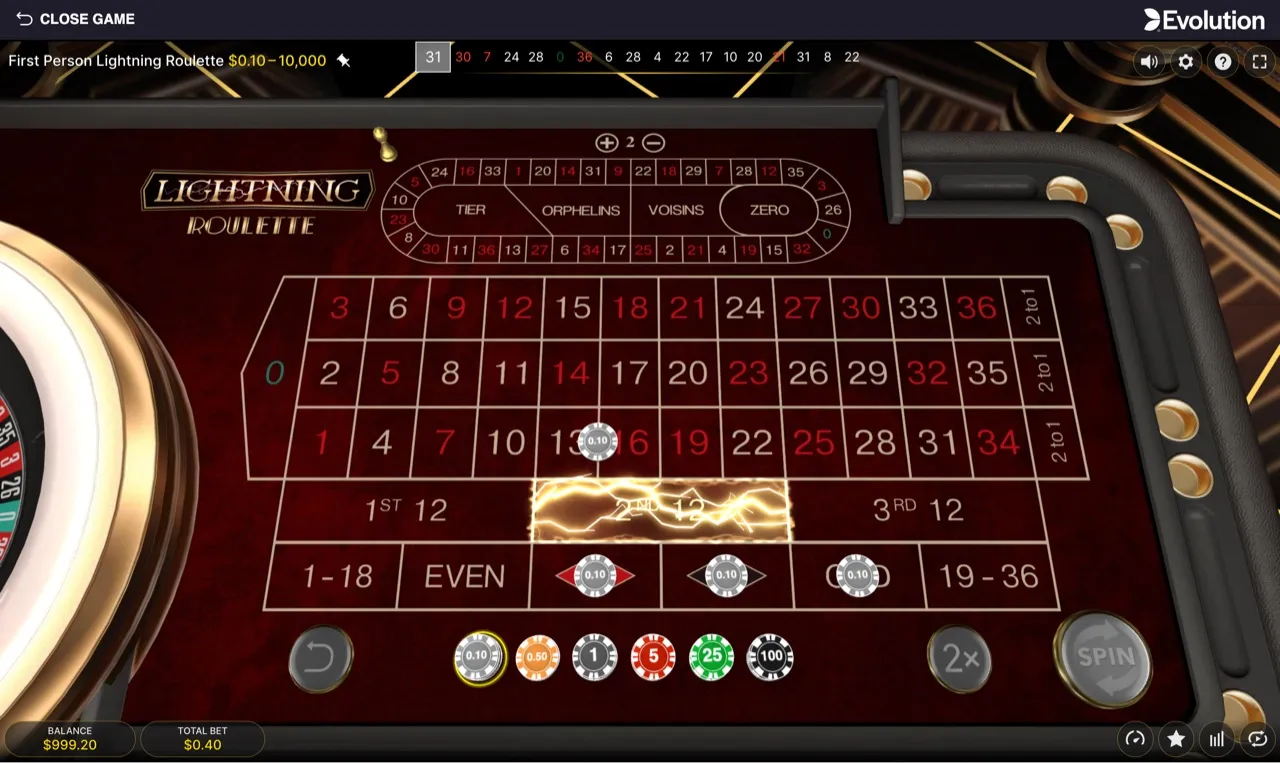
I opened at $999.20 with a Lightning bolt cracking across the betting grid mid-round. The early play was small straight-up spreads at ten cents a number, enough to see the multipliers operate at low cost. Within a few minutes I had used the balance-double button (a client convenience that doubles the play balance without a win) and was sitting at $2,000. From there the session went 132 rounds across about 25 minutes. It peaked at $2,103.70 and finished on a final all-in that emptied the balance to $0.
Minty's Final Note: First Person Lightning Roulette ran the full advertised Lightning system for 132 rounds of my session and never paid the headline multiplier. Across the whole sitting, not one struck Lucky Number coincided with any of my straight-up bets, while every win I collected on a number paid at the trimmed 29:1 base instead of classical roulette's 35:1. That gap is the slot's pricing for the 500x ceiling, and it is real money out of every base straight-up hit. The presentation is excellent and the bridge into the live show is genuinely useful. The published 97.10% straight-up and 97.30% other-bet RTP figures sit competitively on paper. The realistic Lightning experience is multipliers blazing on numbers you don't own while the balance grinds away on the trimmed base payout. The 500x figure plays as marketing scenery more than session economics. Treat the multipliers as scenery that occasionally pays and set a hard session limit before you start. The format then becomes a high-variance spend with competent pace control. Bet it expecting the multipliers to land for you and the math will be unkind well before $2,103.70 becomes $0.
132 Rounds of Lightning Strikes, Zero on a Covered Number
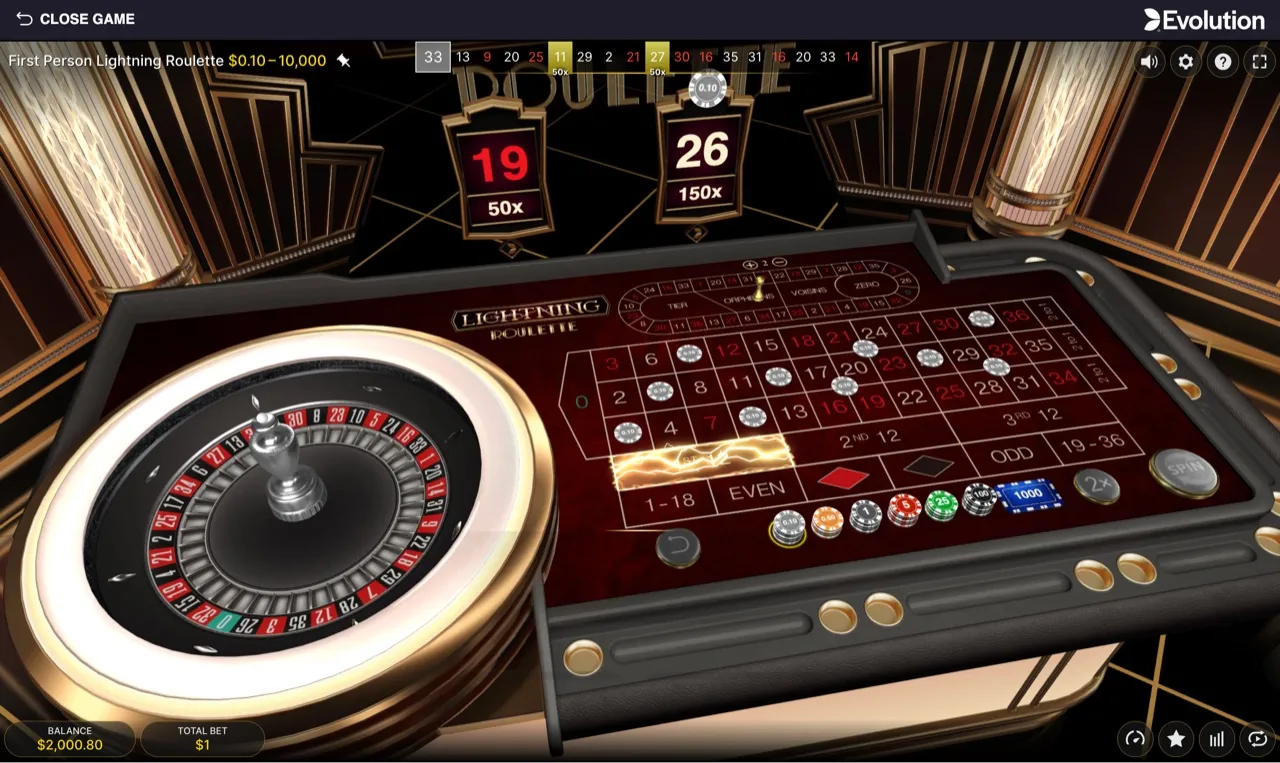
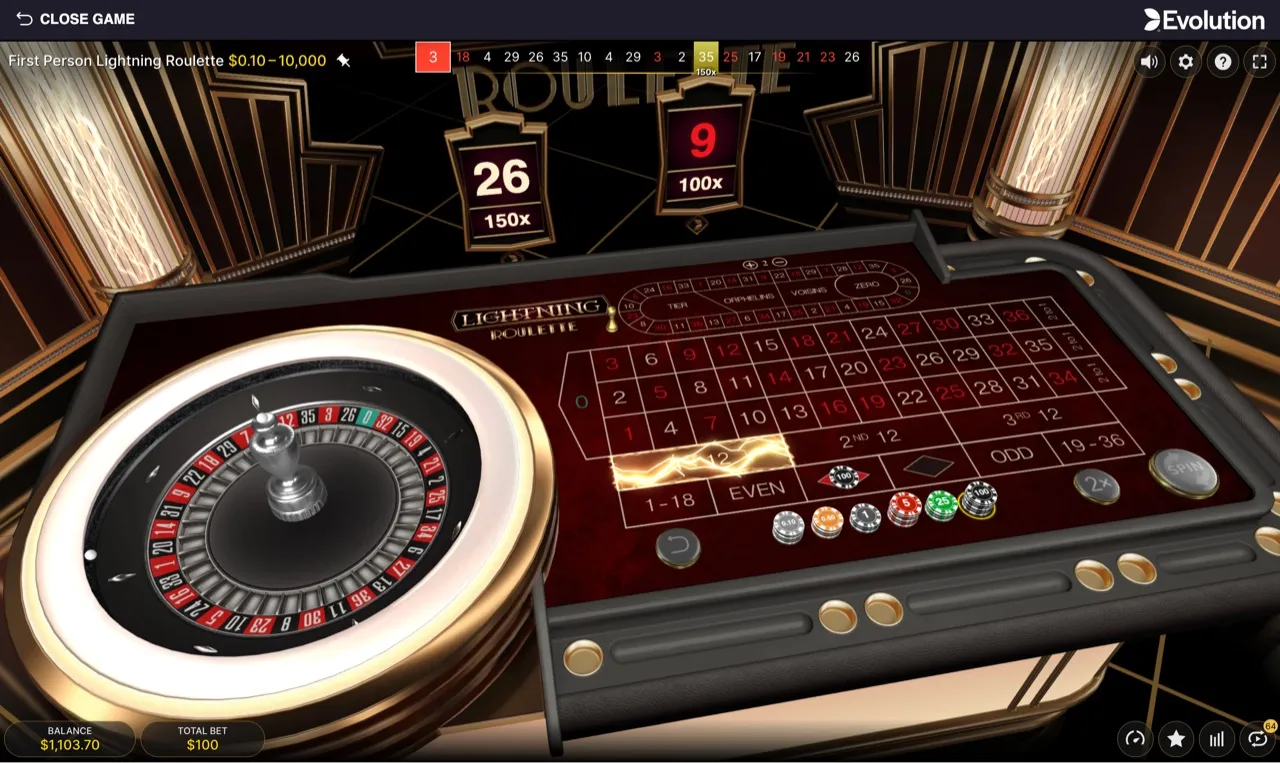
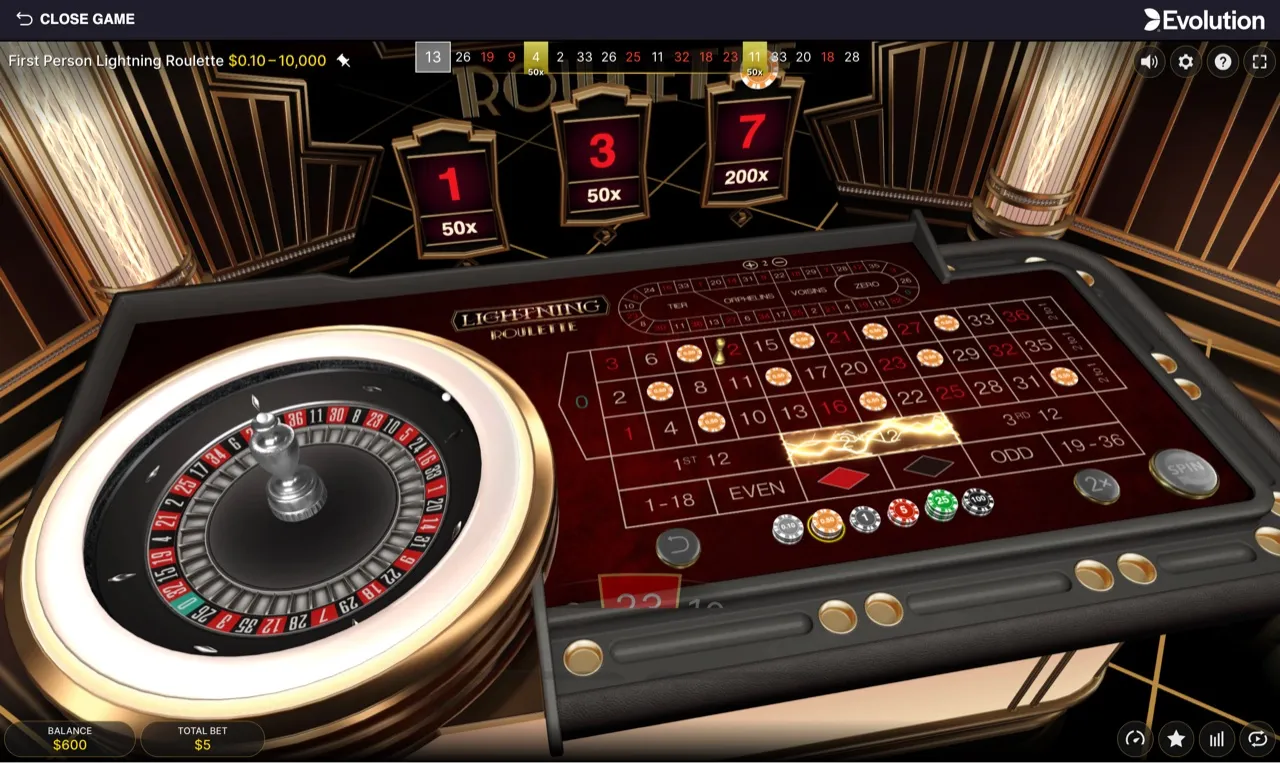
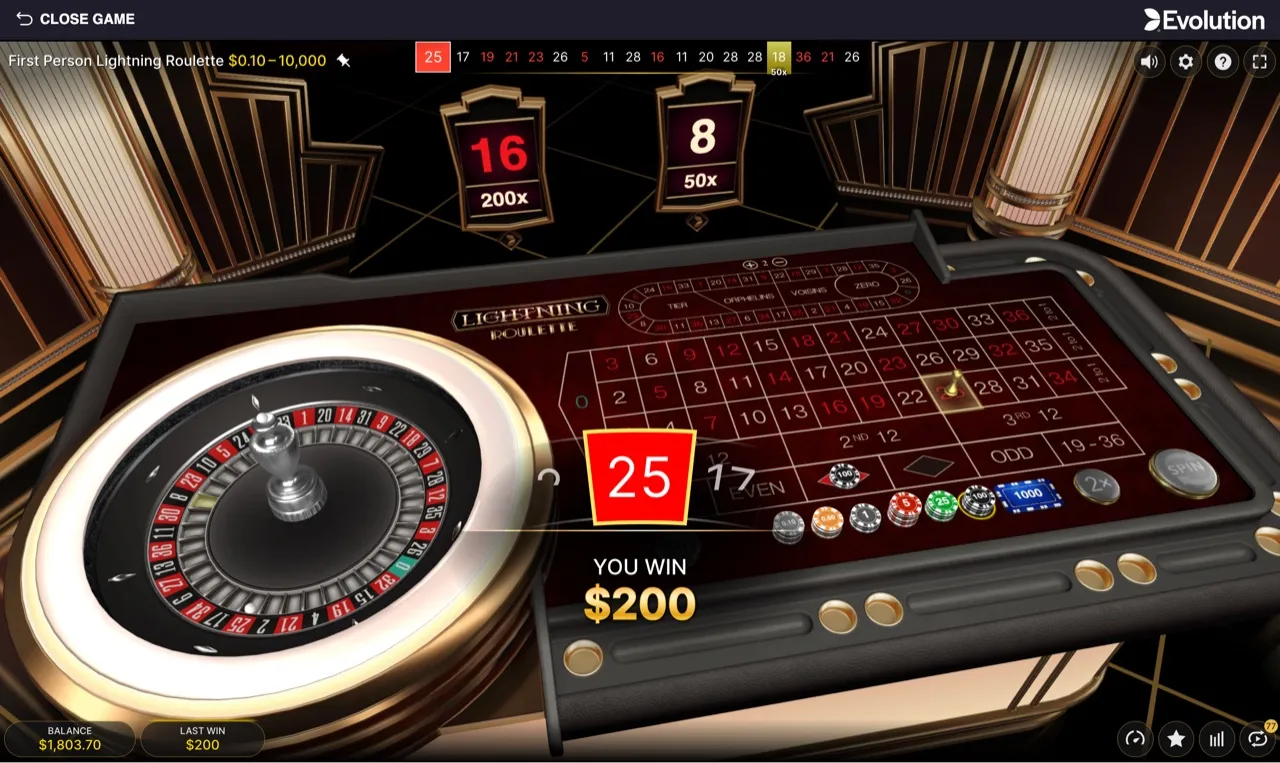
The Lightning phase fires after bets lock and before the wheel turns. A short animation cuts to a strip of multiplier cards above the table, each branded with a Lucky Number and a multiplier value pulled from the multiplier ladder that climbs from 50x up through 500x. I saw all five rungs across the session. 50x cards were the staple. 150x and 200x came up on most rounds, and the 500x ceiling showed up only a few times in the 132 rounds I played. On a round where one of the struck Lucky Numbers wins the spin and you have a straight-up bet on that number, the multiplier replaces the base payout. Every other round, the lights are atmospheric.
What no marketing copy will tell you is what the slot actually feels like when none of those Lucky Numbers ever coincide with the spots you covered. Across my 132 rounds, that count was zero. Lightning struck on every single round. Not one of those struck numbers landed under a straight-up bet I had on the felt. I ran small straight-up spreads at ten cents a number for the first dozen rounds. Lit cards every round, none of them on my numbers. Later in the session I tried $5 straight-ups on different number families and got the same answer. The 500x figure on the marketing page is structurally real. Its realistic frequency in a casual sitting is indistinguishable from never, at least over my session.
Why a Winning Straight-Up Pays $15 on a $5 Stake
The small straight-up wins I did catch paid at the trimmed base rate. A ten-cent stake on a winning number returned $3, and a $5 straight-up that hit returned $15. That is 29:1, the structural payout that funds the Lightning multiplier pool. Standard European roulette pays 35:1 on the same bet. The six-position gap between the two is the price of admission to the Lightning system, and it gets taken out of every base straight-up hit you collect.
If the Lightning system does pay you on a round, the gap flips into a windfall. A 50x Lightning multiplier on a $5 straight-up returns $250 instead of $180. A 500x Lightning multiplier on the same bet returns $2,500. Across an extended session, the long-run economics of the trade-off come out of Evolution's published 97.10% straight-up RTP and 97.30% other-bet RTP. Those are the theoretical figures the math is built around. Operators ship the title under different build flags, so the figure applied at your casino lives inside the game's own Game Info menu. Open it before any real-money stake.
$100 on Red: A 78-Round Even-Money Grind
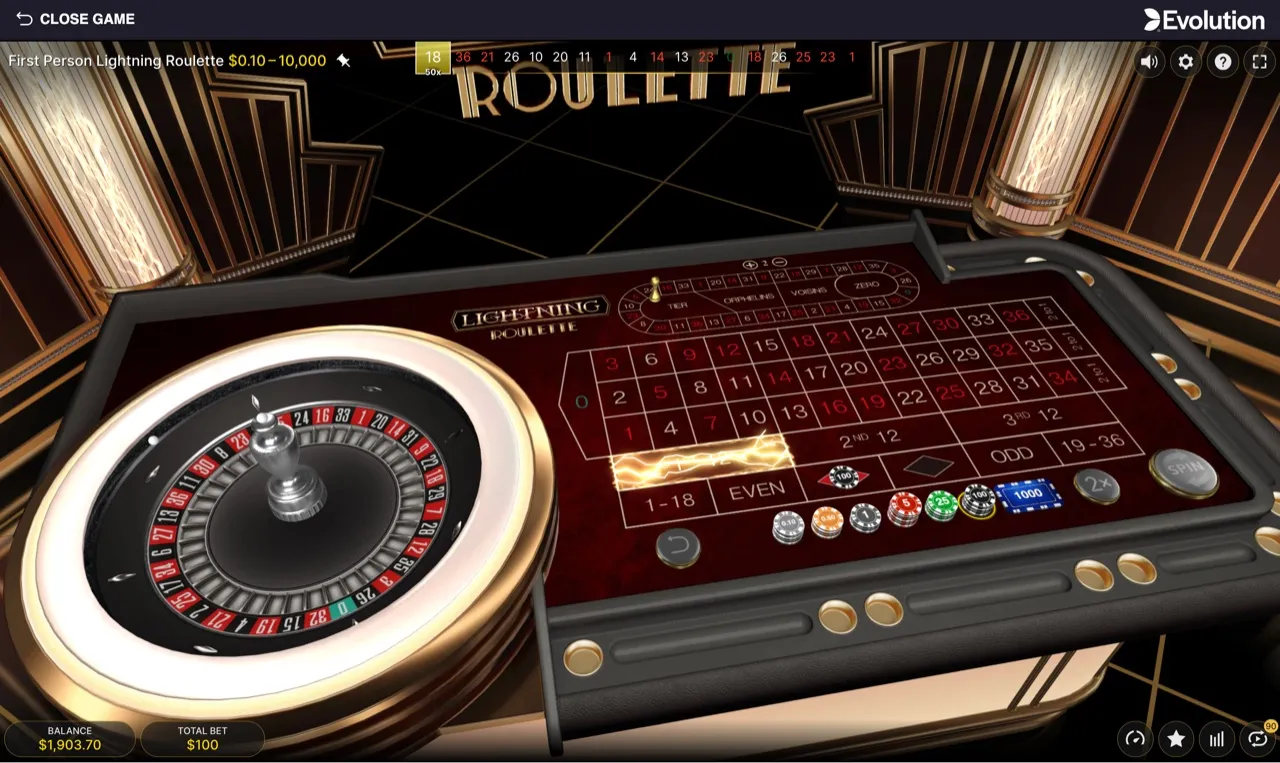
The middle of my session was a long run of $100 on red. Outside bets stay completely outside the Lightning system. Every wager that covers more than one number pays at standard European rates regardless of which numbers get the Lightning treatment. So the $100 red run was a clean even-money test, with the Lightning cards continuing to fire harmlessly on numbers I didn't have.
78 rounds of $100 on red came in at 35 wins and 43 losses. Each win returned the $100 stake plus a matched $100 payout, and each loss took the $100 outright. The session peak of $2,103.70 came partway through that run on a recovery streak. The drift afterwards is the math finding the negative expectation that 37 pockets (with one of them green) builds into every outside bet on European roulette.
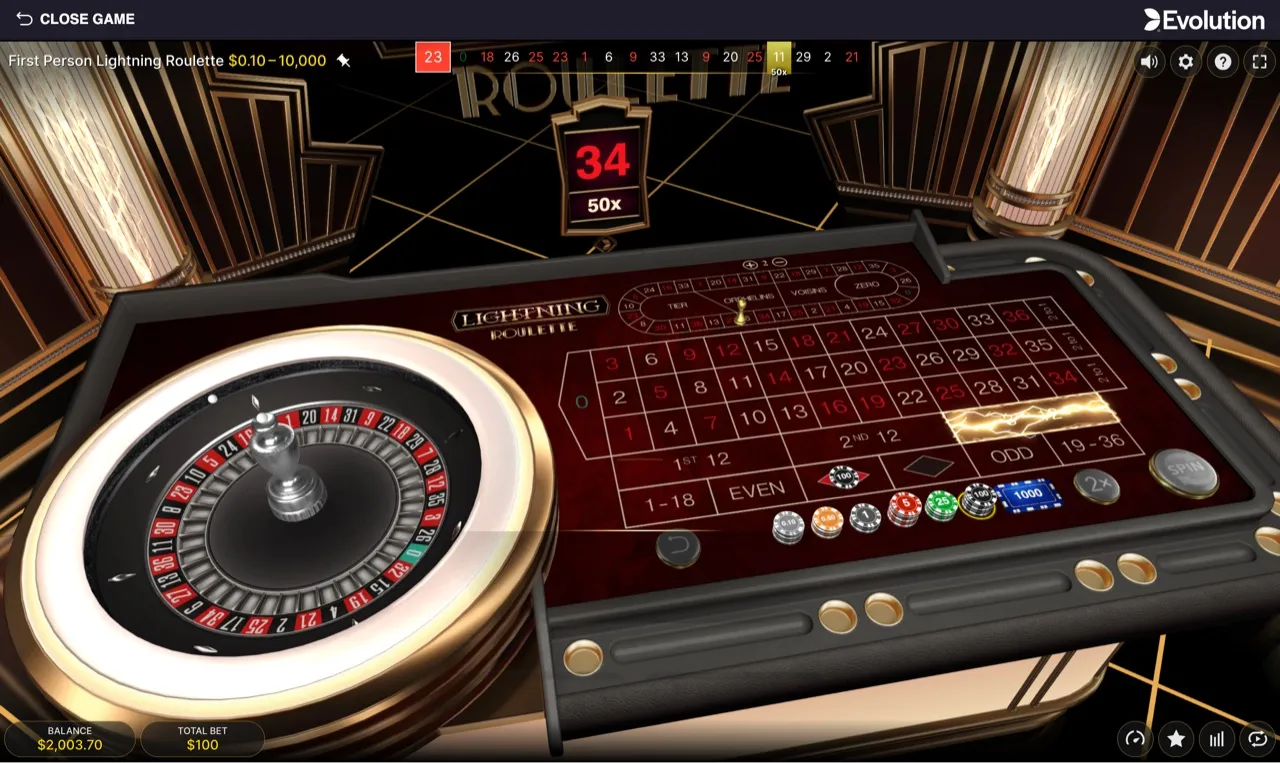
From $2,103.70 to Zero on a Final All-In
By the time I was deep in the $100 red run I was bouncing between $1,800 and $2,100. The peak hit at $2,103.70 on a settled win, then the next four or five spins dropped me back toward $1,600. I switched to $5 straight-ups for a stretch to see whether tighter coverage and more frequent number-spotting would catch a Lightning hit. It did not. A few base 29:1 payouts kept me afloat, but the absence of any multiplier-paying round meant the small wins couldn't outrun the small losses.
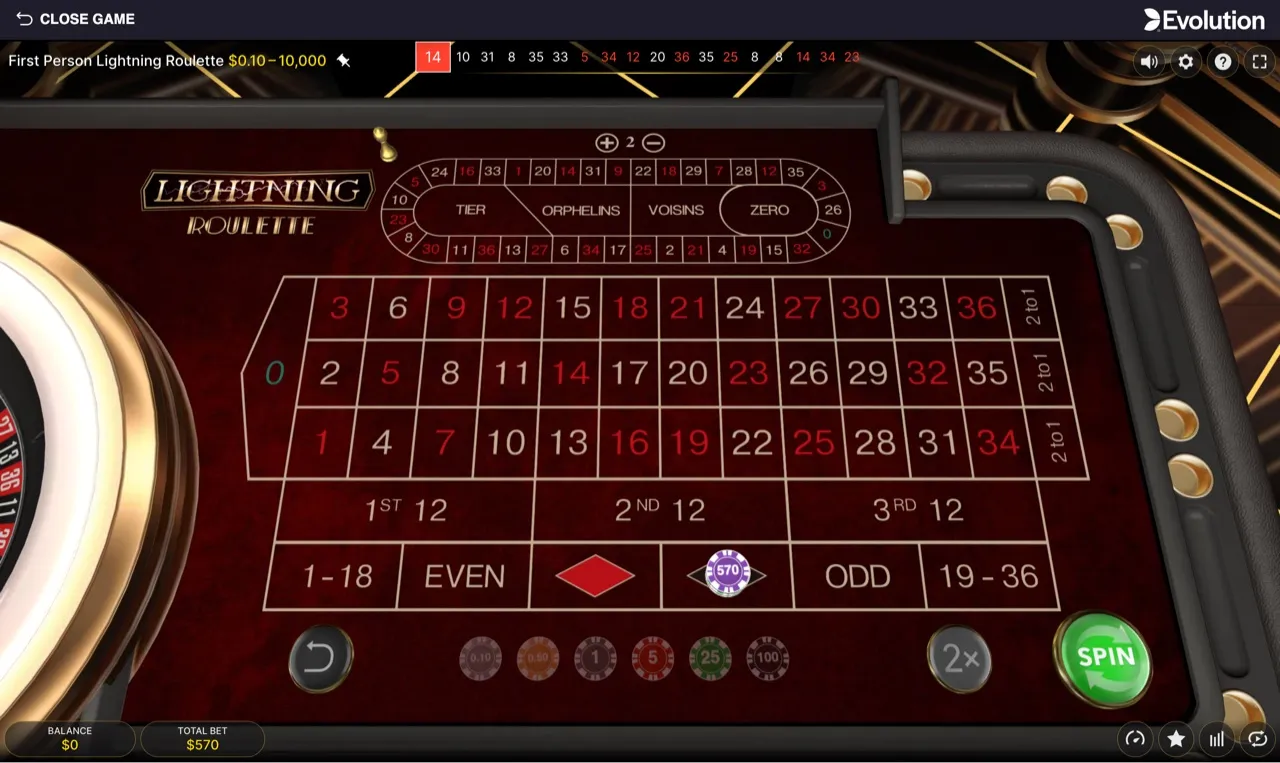
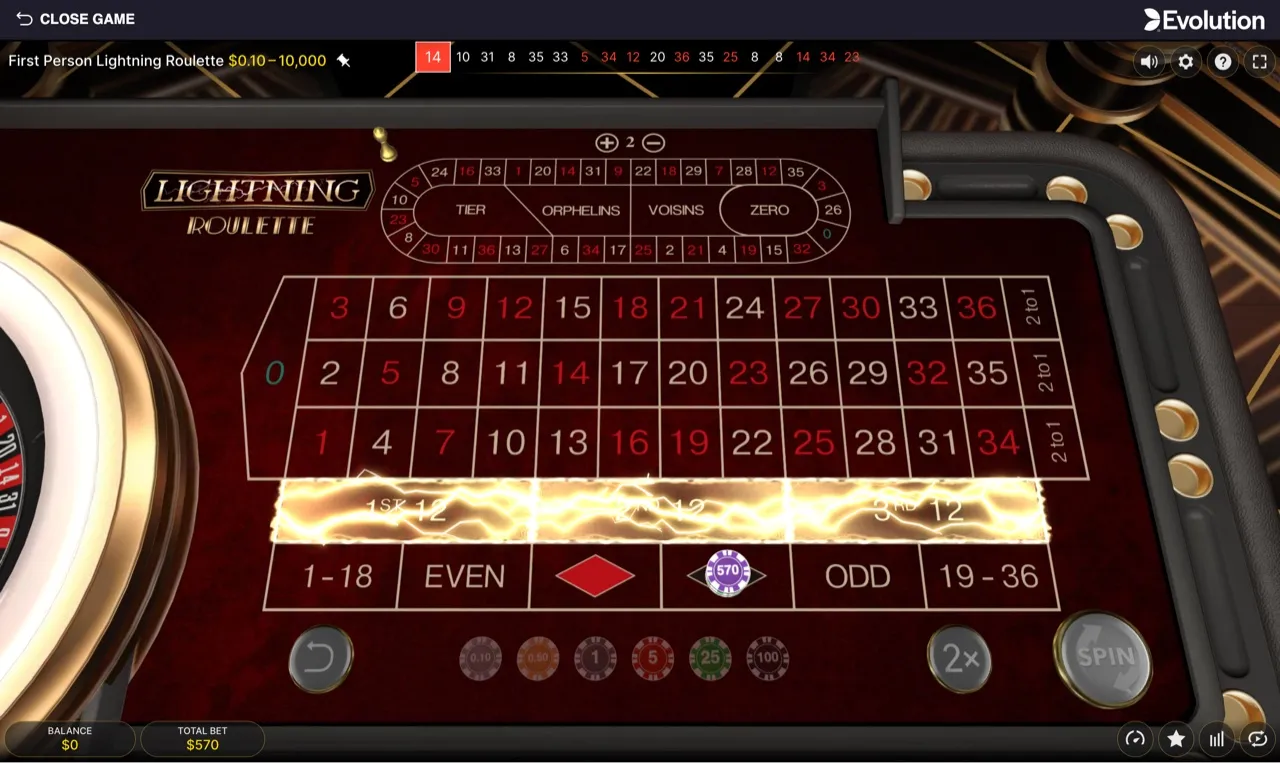
The final round emptied the screen. Lightning fired across what looked like every position on the grid at once. The wheel turned. The ball settled, and the round closed at $0. That image was the slot's real face. A lit Lucky Number on a number I had not covered, with the multiplier still glowing on screen as the wheel settled.
Favourite Bets and the Racetrack Earn Their Keep
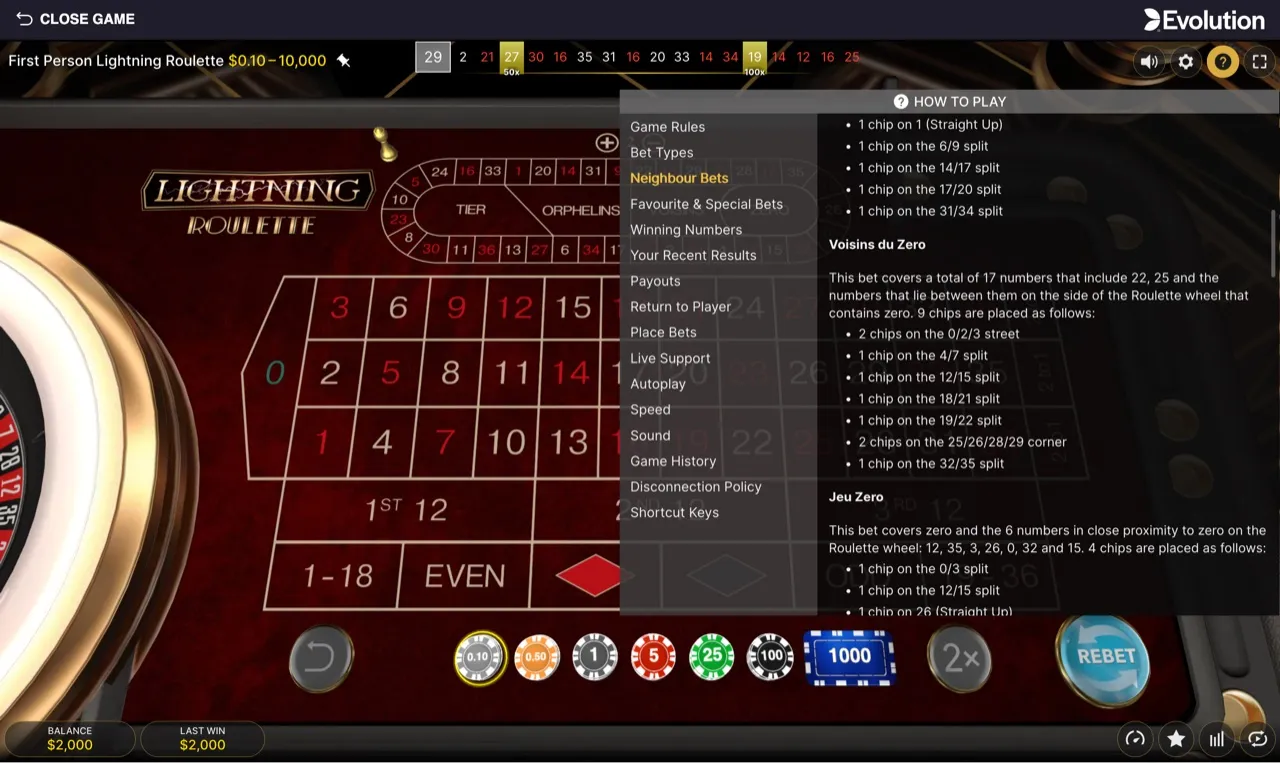
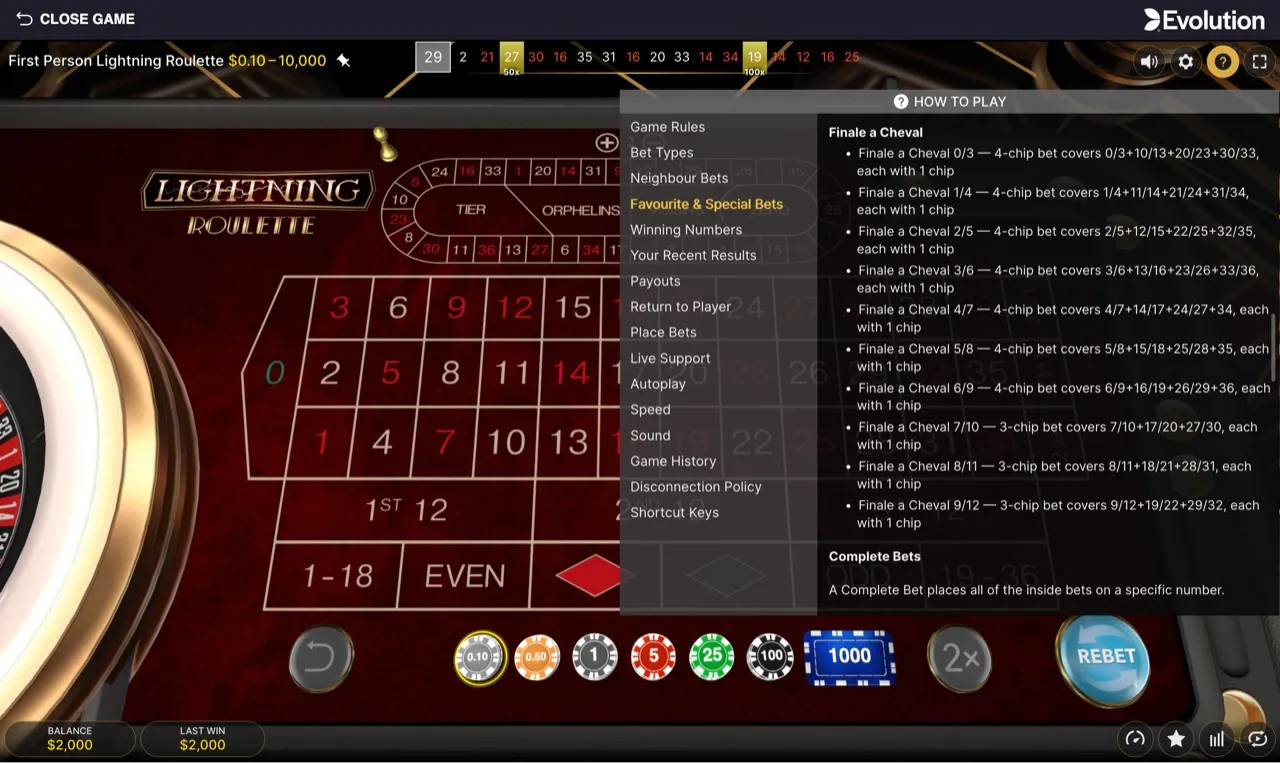
The interface is dense, the way a roulette table always is. Above the grid sits the racetrack oval for neighbour bets. Voisins du Zero covers the 17 numbers spanning the wheel's green end and Tiers du Cylindre takes the 12 numbers opposite. Orphelins picks up the eight not in either family, while Jeu Zero gathers the seven closest to the zero pocket. The racetrack lets you place a coordinated cluster bet in one tap; trying to lay the same coverage on the inside grid takes a dozen chip placements.
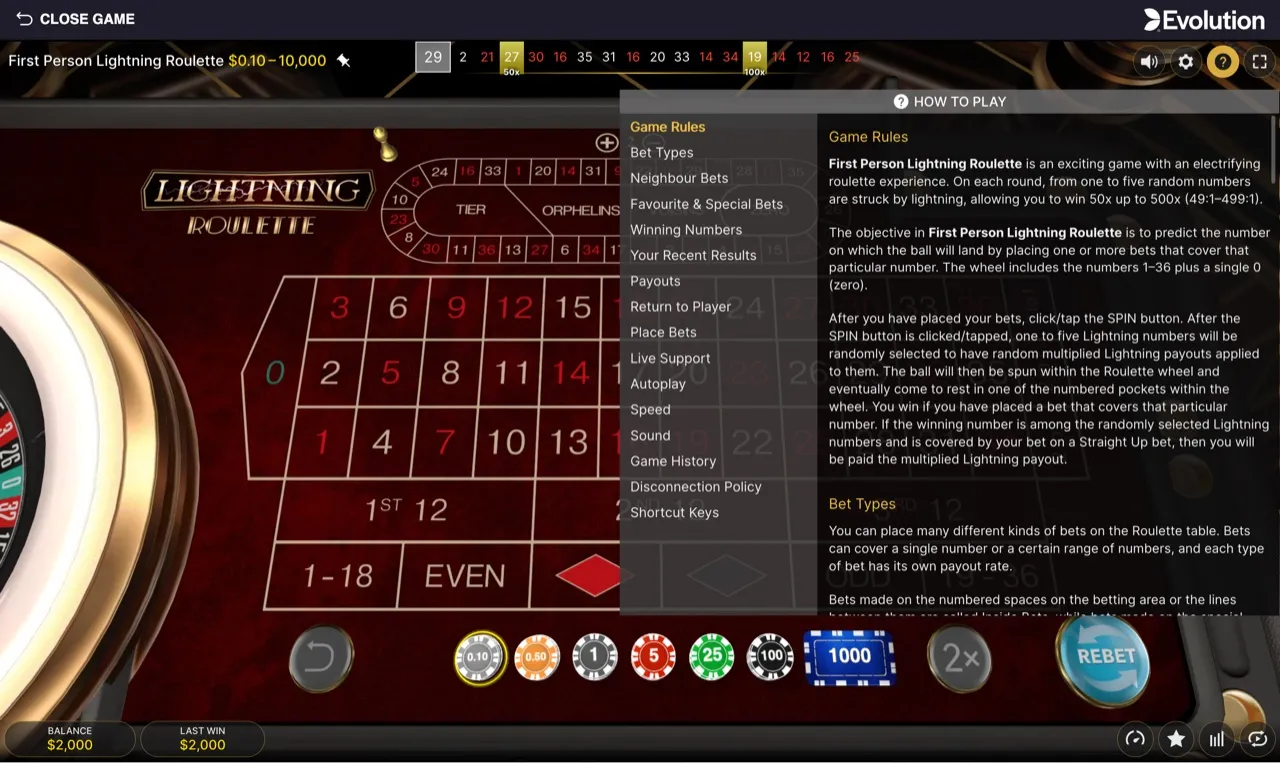
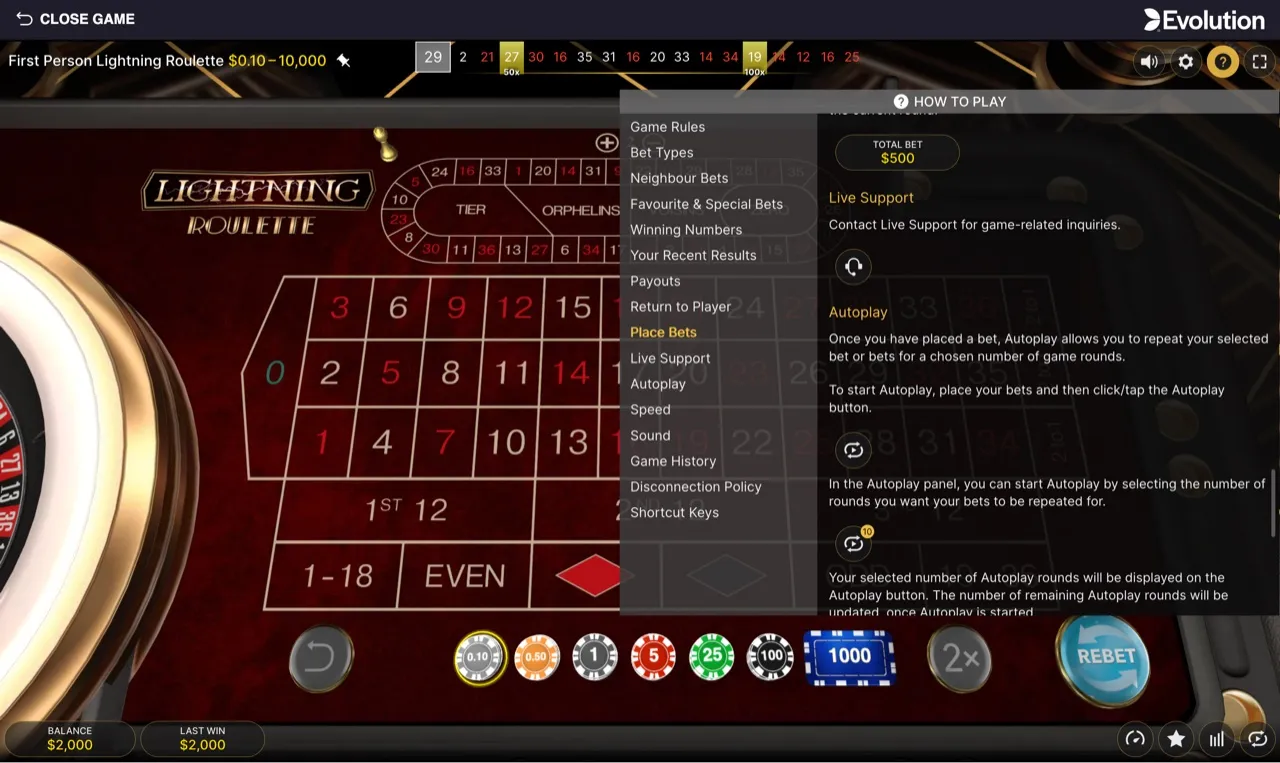
Favourite Bets is the feature I didn't expect to use and ended up leaning on hard. It lets you save up to 30 named bet combinations and recall any of them with a single button. Build a $5 straight-up spread on your eight preferred numbers and save it; from then on rebuilding that exact spread takes one tap instead of eight. Autoplay locks in a fixed bet for stretches of up to 100 rounds with the Lightning system still firing each round. Combined with the post-result Rebet & Spin / Double & Spin buttons and a selectable game speed, the interface lets you cover ground fast once you've decided what you're testing.
First Person Lightning Roulette FAQ
- Q: How many Lucky Numbers does each round produce, and which multipliers can they carry?
A: One to five Lucky Numbers get picked at random after bets lock, with the RNG handing each one a multiplier from the five-step ladder that tops at 500x. The count and the values land on screen before the wheel begins to turn. - Q: What are the table limits and chip denominations?
A: Bet sizes start at $0.10 per spot and run as high as $10,000. The chip ladder climbs from a 10-cent chip to a $100 chip. A high-value plaque turns up once the balance pushes into the high four-figure range. Operator-specific caps sit on top of those engine limits. - Q: Does the Lightning multiplier apply to any bet outside straight-up positions?
A: No. The Lightning multiplier is locked to single-number coverage. Multi-number inside bets and outside bets all pay at the classical European rates (17:1 down to 5:1 on the inside, 1:1 or 2:1 on the outside). Only a single-number wager on one of the lit Lucky Numbers unlocks the multiplied Lightning payout, which can climb as high as 499:1. - Q: What racetrack and special bets does this version include?
A: The racetrack carries all four classic neighbour spreads under their French names, and the Special menu hosts the Finale family and Complete bets alongside them. Favourite Bets stores up to 30 of your custom bet patterns under named slots, so a complex multi-chip spread becomes one button on the next round. - Q: How does the First Person edition differ from the live Lightning Roulette table?
A: Mechanically they're different but mathematically identical. First Person decides each round through an RNG with no dealer or video feed, while the live show settles every spin on a physical wheel filmed in a studio. Both formats follow identical single-zero European rules and the same Lightning multiplier mechanic. The interface also hosts a GO LIVE shortcut that drops you straight onto the live show's table for when you want a human presenter pacing the rounds.