Slingo Rainbow Riches Slot – Free Demo
Provider:
Gaming Realms
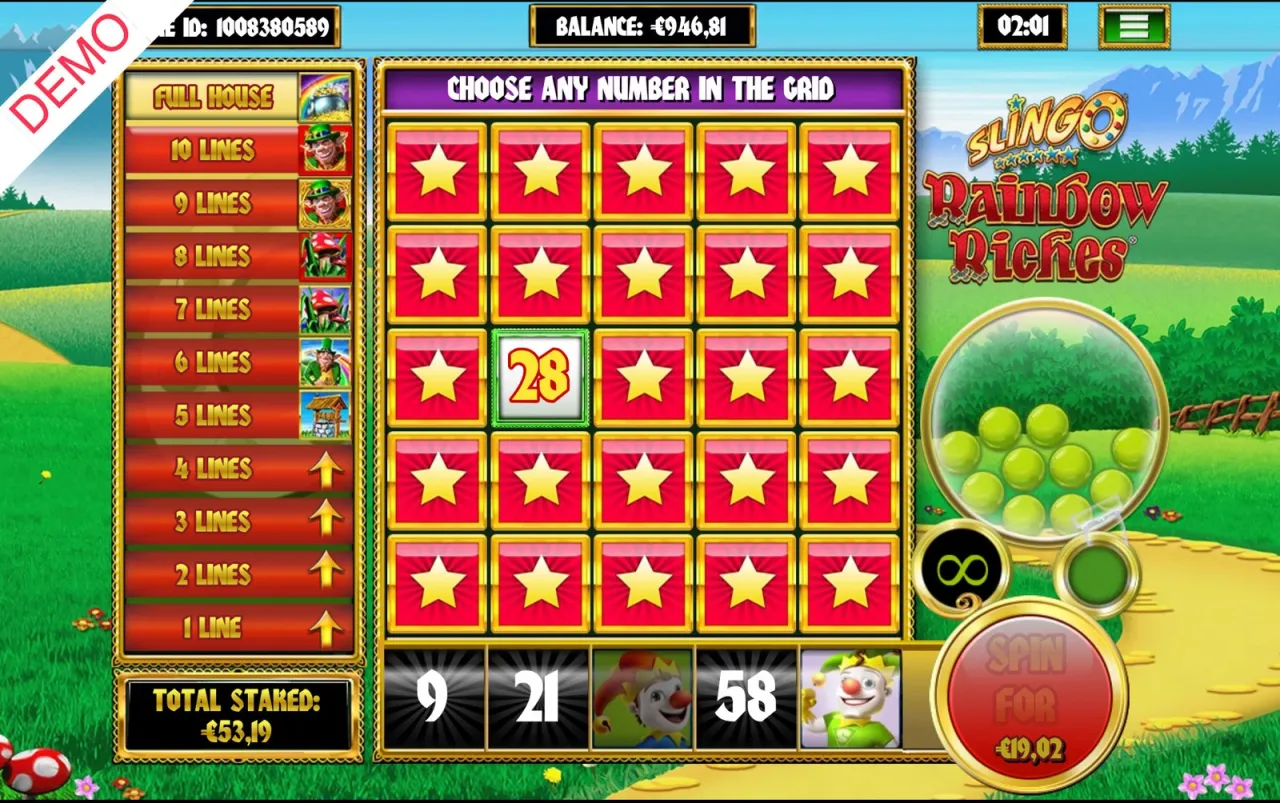
The game stopped and asked whether I was sure before it would sell me a spin for 19.02 against a 1-credit stake. That was the last rung of a ladder starting at 0.20, and the rules print neither the formula behind those prices nor any ceiling on them — only that they track the grid and the prizes…
Play Slingo Rainbow Riches demo
Two lines out of ten spins
Ten base spins of Slingo Rainbow Riches gave me two completed lines, and every line after that one had to be bought. Gaming Realms has been relying heavily on the single format it owns. It has been releasing Slingo game after Slingo game rather than anything fresh under its own label, and instead the firm appears to have concentrated on imprinting licensed brands onto the same grid-and-reel casing. China Shores Slingo and Slingo Starburst are two more of them, built on the same format as this one. Despite this being a very familiar game, I'm always somewhat curious to learn about new Slingo games, being such a distinctive format.
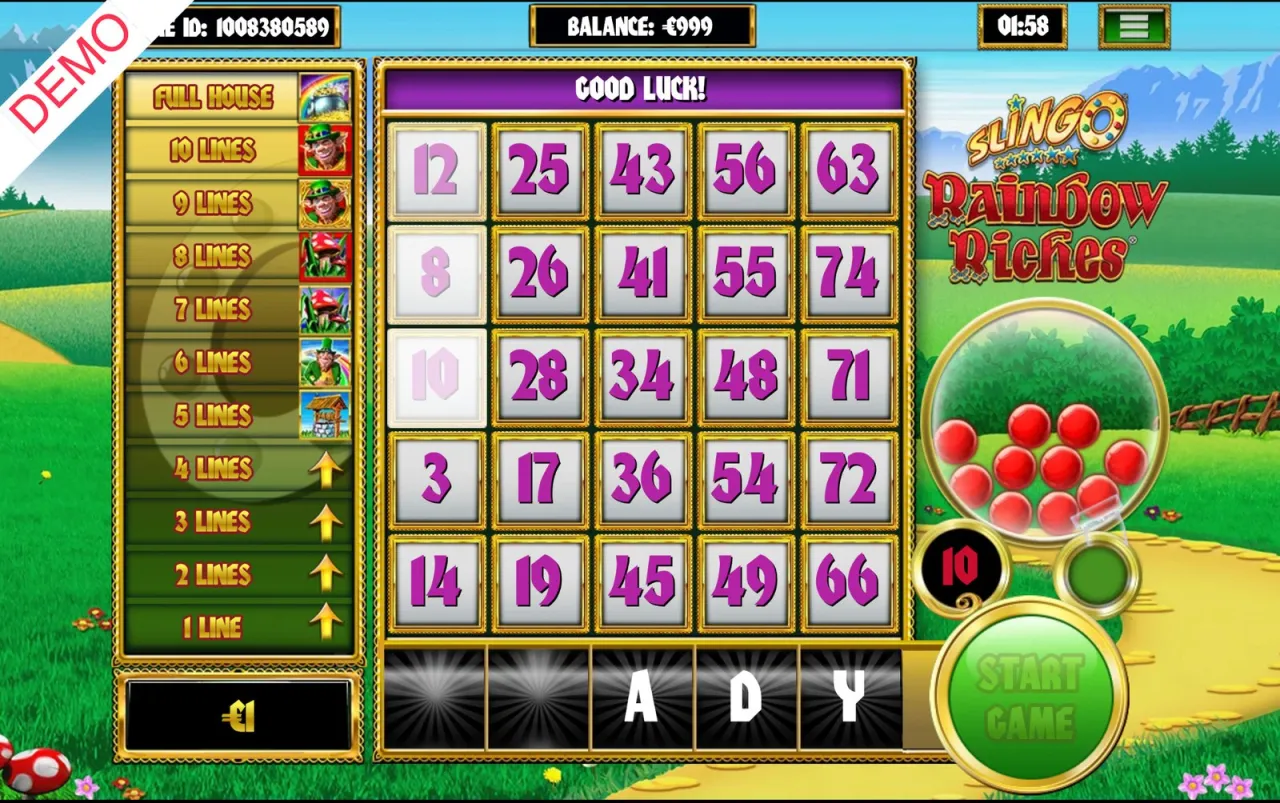
Slingo Rainbow Riches is as ordinary as a Gaming Realms game gets with a 5×5 number grid, a five-position reel beneath it and 12 win lines, and it's playable on all devices. Those twelve lines are the five rows, the five columns and the two diagonals, and completing any one of them is a Slingo. Unusually for this type of game, detail about RTP is right there in the rules. It is 95.00%, and the same 95.00% for every extra spin. Numbers that land on the reel are matched against the column directly above them and marked off the grid. That's acceptable. Both figures are qualified as being founded on optimal strategy, though, and nothing is declared for play that deviates from it.
Four symbols do all the work
Slingo Rainbow Riches contains four special symbols on the reel. My game turned up Jokers in the base spins and a Super Joker on the very last one. The Joker stamps any number in its own column, and the Super Joker stamps any number anywhere in the grid. A Joker marked 55 on my opening spin and another marked 19 later in the base game, each within its own column. The Devil blocks a symbol, and the Free Spin adds a spin and is stripped from the reels once the game is on extra spins. No free spin symbol landed at any point in my game. The rail beside the grid holds eleven prizes, ranging from 1 Line to 10 Lines and then Full House. Two of them were lit red on the rail when the ten base spins ran out. There are twelve win lines but eleven prizes, because the final number on the grid always finishes at least two lines. My line count climbed 2, 3, 4, 6, 8, 10 and then full house, so several of the eleven were passed over on the way. There is no cash paytable at all: the rail displays symbols against line counts, not cash values. The bonus values are the only awards the rules express as multiples of the stake. Not good!
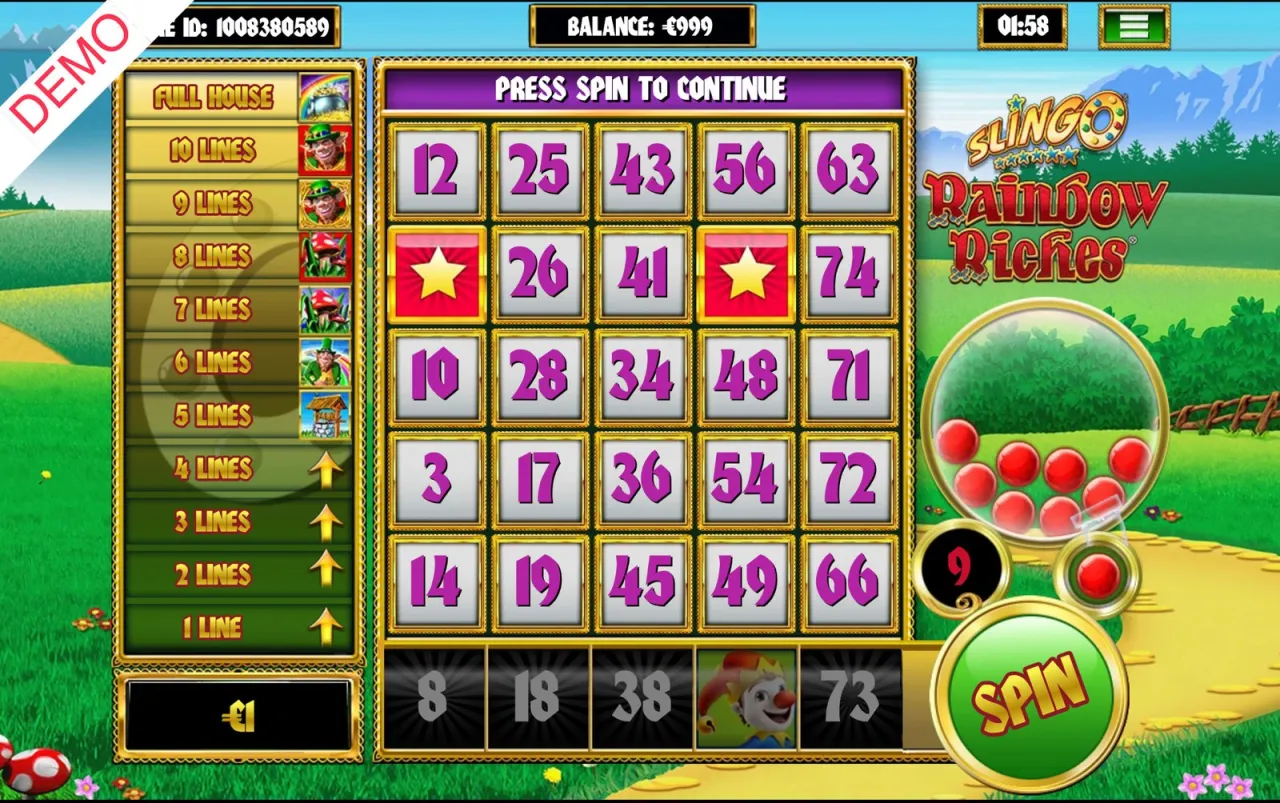
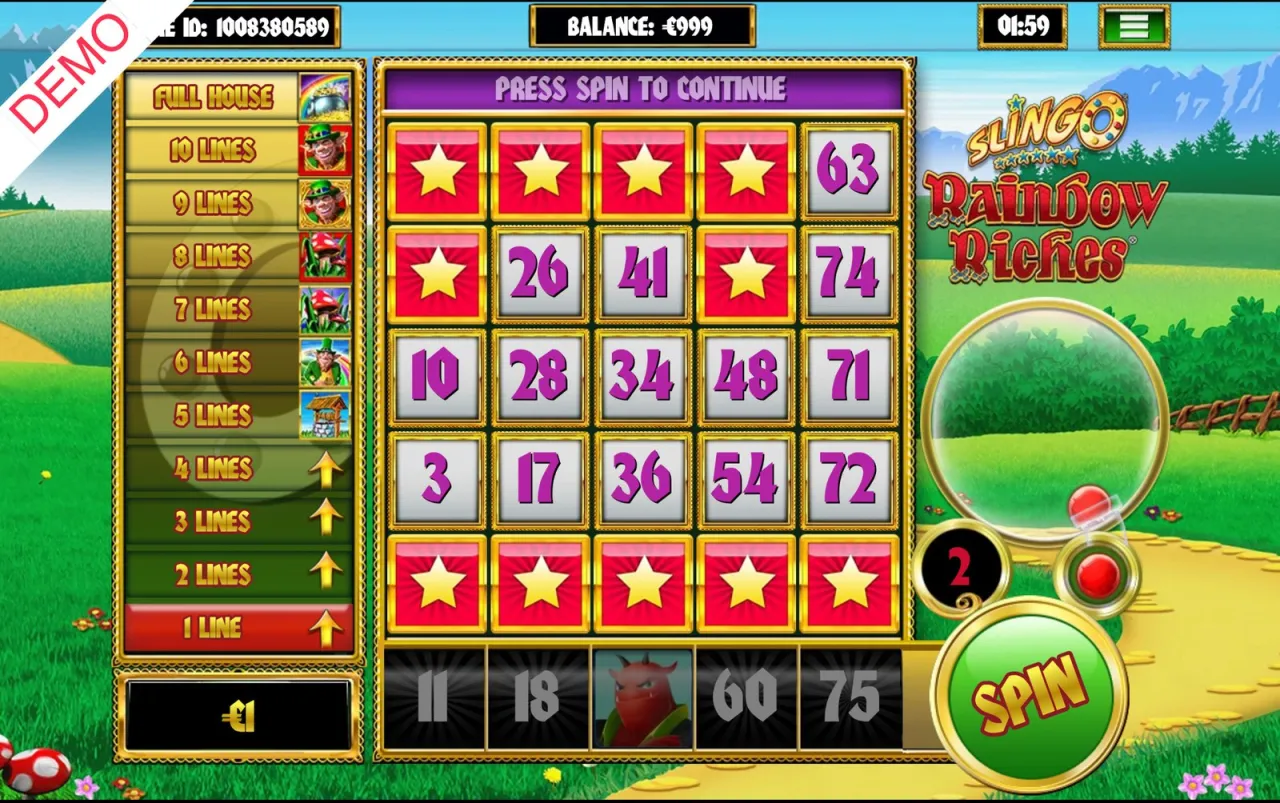
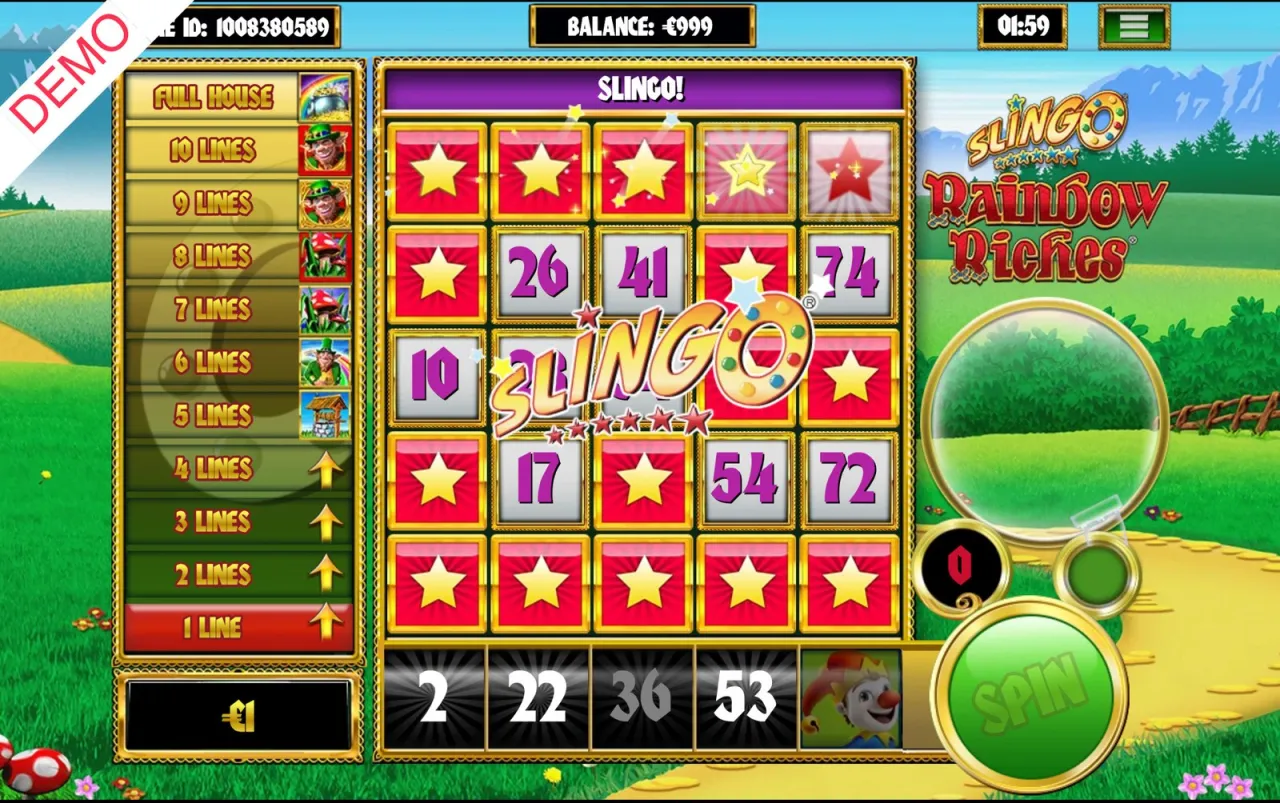
The devils drop on the centre reel only, and Joker and Super Joker placements are chosen for you, always for whatever shifts you nearest to a Slingo. A devil landed there during my base game and the spin marked nothing at all. The central square is favoured, because it rests on a horizontal, a vertical and both diagonals. Where several positions meet that criteria equally, the choice is random.
The price is printed on the button, the formula is not
The base game is ten spins. My first line came on the bottom row, and the second only arrived on the last of the ten. When they're gone the game proposes more, one at a time, with the cost of the next one displayed on the Spin button, and that cost depends on the grid placement and the potential prizes and may surpass the base stake. Neither the formula behind that price nor any ceiling on it is printed anywhere in the rules. Extra spins are only proposed when a bonus game is attainable on the next spin. The menu lets you cap how many are offered and how dear one can get, at ×1, ×2, ×5, ×10 or ×25 of the stake. The alternative is Collect, which runs whichever bonus you've already unlocked. I never used it, and the buying went all the way to a full house.
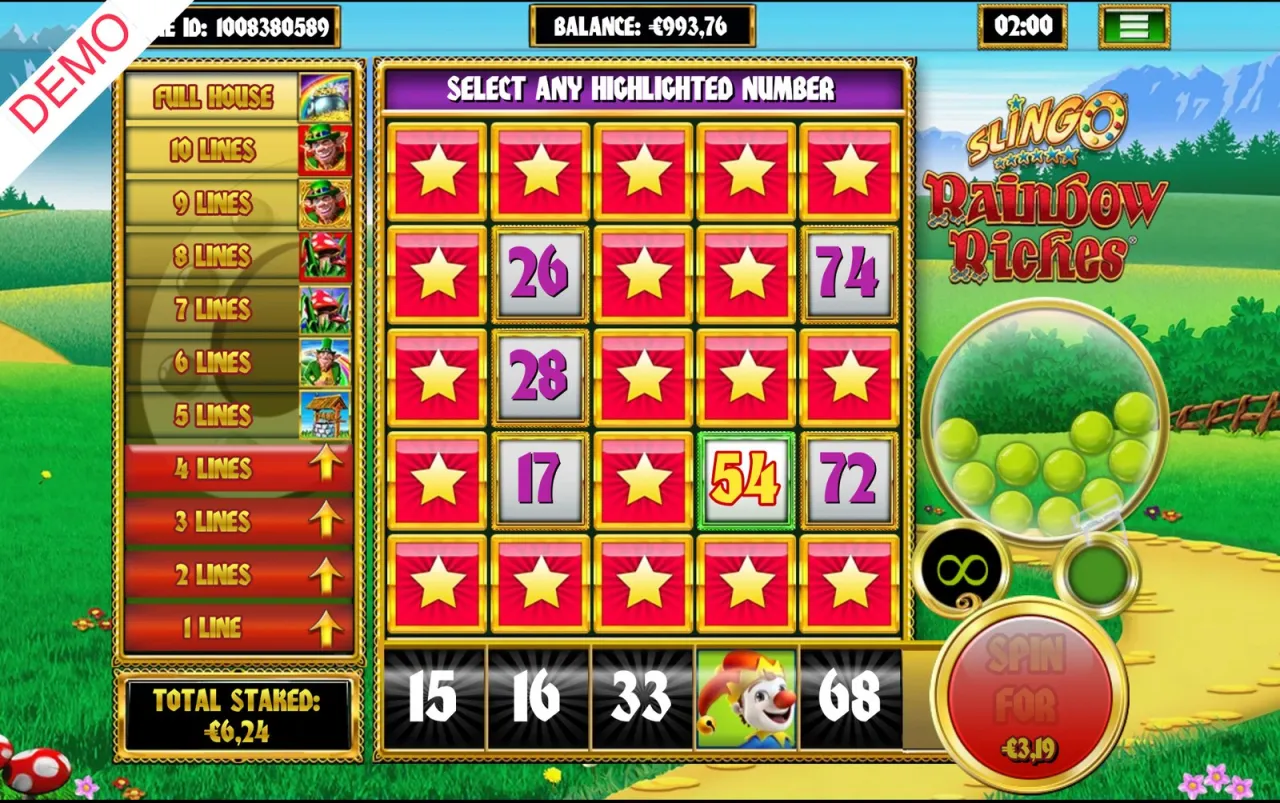
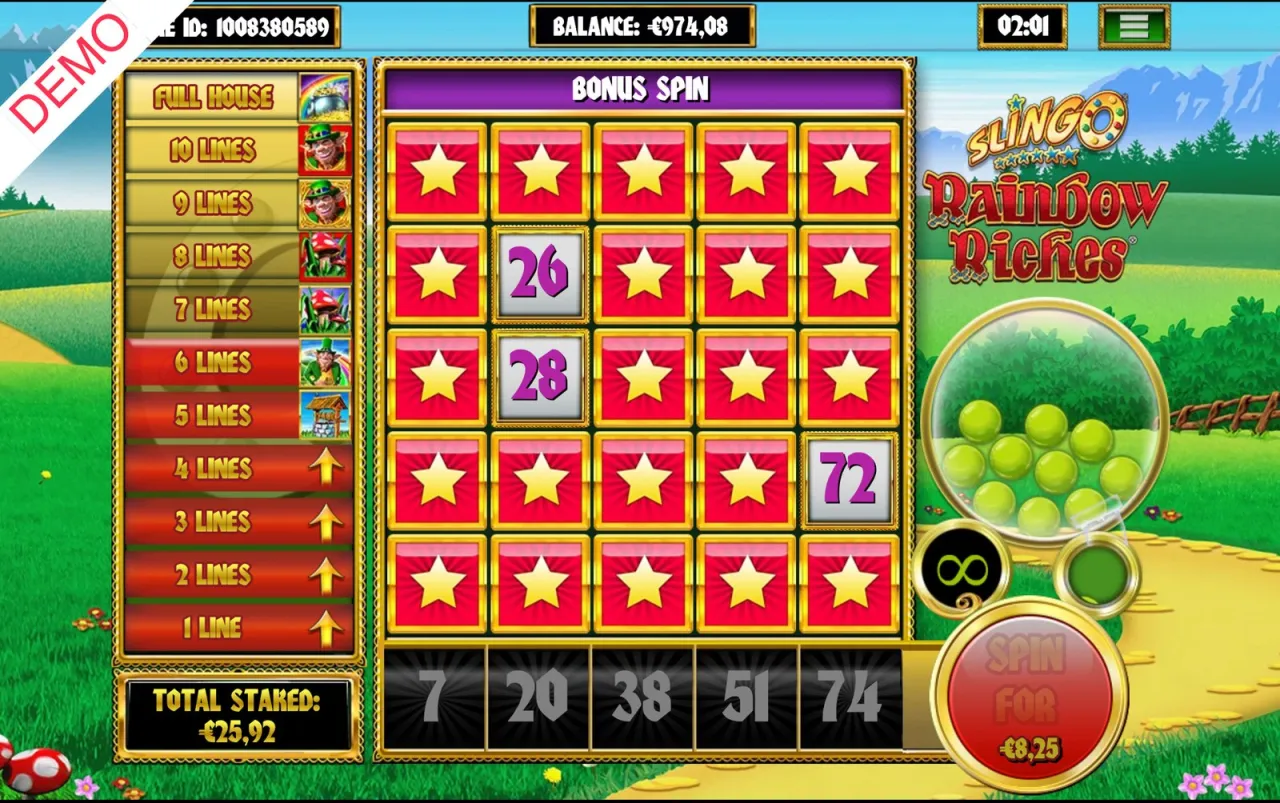
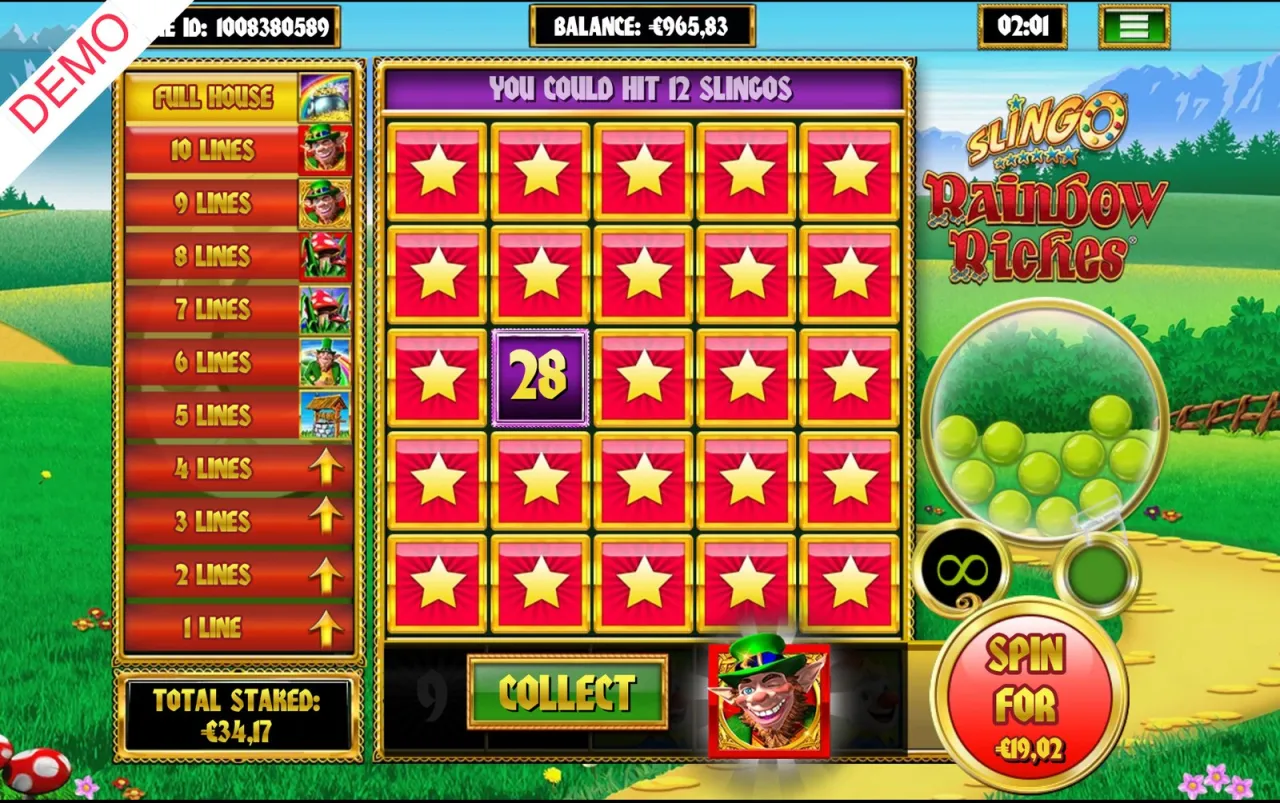
In my testing the displayed costs read 0.20, 0.20, 0.91, 3.19, 2.99, 8.25, 8.25 and 19.02 off a 1-credit stake; they didn't rise in a straight line either, and this is pretty much everything that is happening between the base game and the bonuses. Those are the prices that were captured rather than a consecutive run: the total-staked counter jumps by more than the button price in two places, so spins went by between frames.
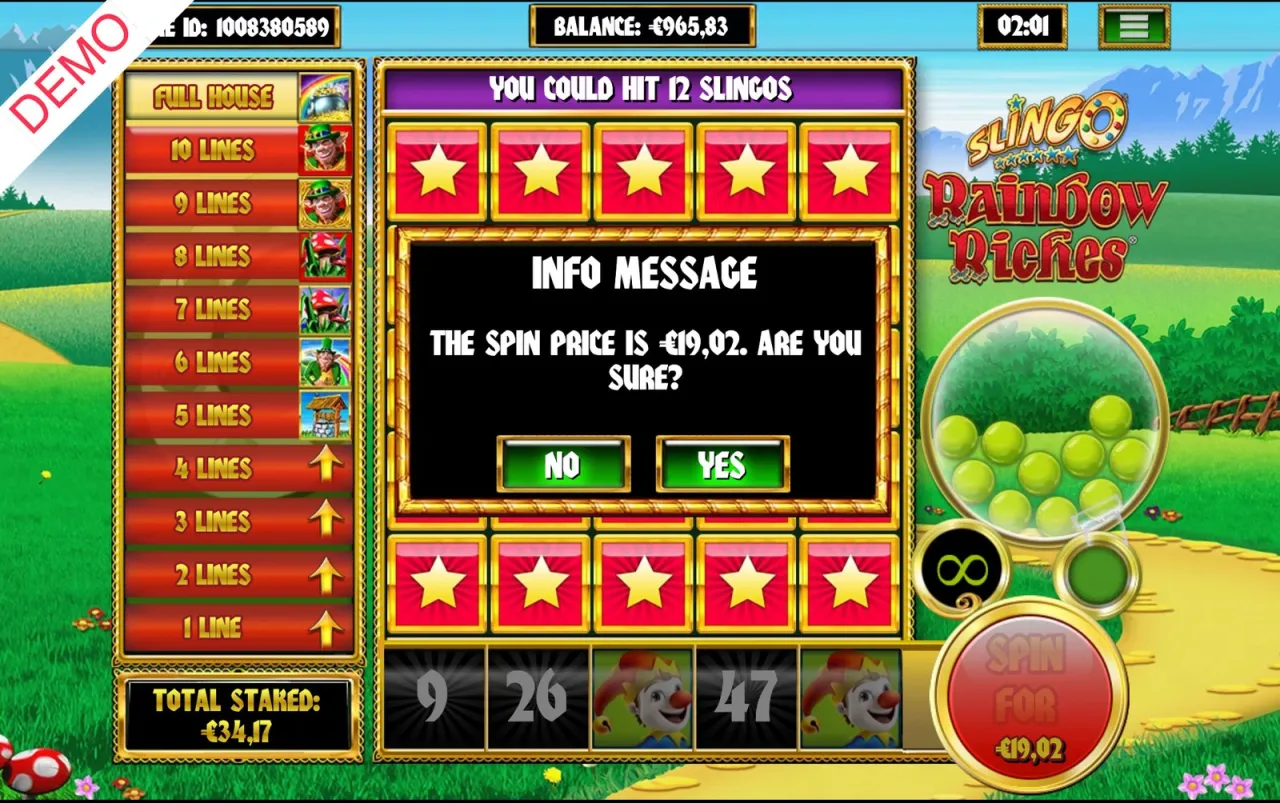
Minty’s Expert Conclusion: A full house at a 1-credit stake cost 53.19, most of it spent on the last handful of squares, and the rules print neither the formula behind an extra-spin price nor a ceiling on one.
Six bonuses I only saw in a panel
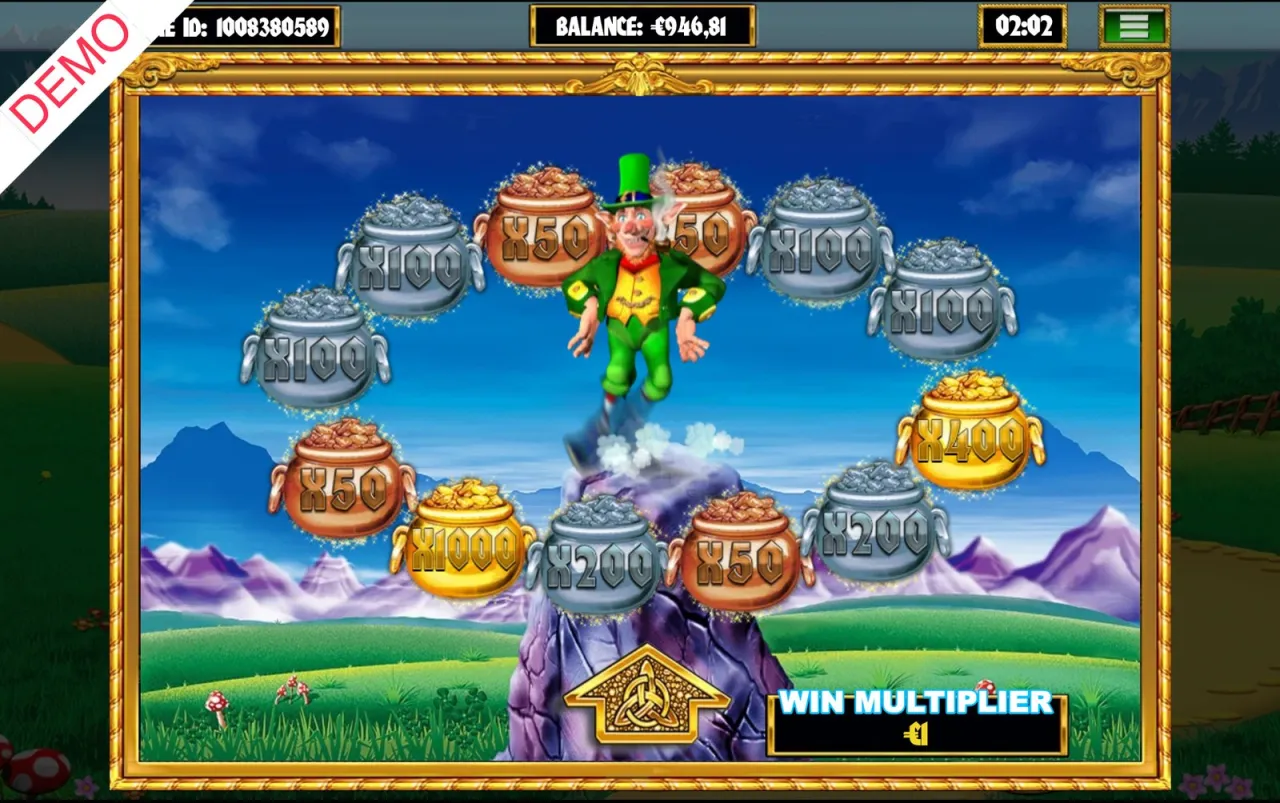
Finishing lines grants the bonus indicated by the symbol on the rail. Nothing in the rules says which line count awards which bonus, or how often any of the seven comes up. Every bonus win is multiplied by the initial stake, and there are seven of them. At my 1-credit stake the multiple and the credits paid were the same number. Wishing Well has three wells to choose from, and Cash Crop has 50 coins uncovering values over up to four rounds. Those Cash Crop rounds run ×0.5, ×1, ×2, then ×5 and ×10. Magic Toadstool and Magic Toadstool Red are three and four picks respectively, with the win trebled or doubled depending on how many picks remain when everything is uncovered. Magic Toadstool Red quadruples instead when three of its four picks are still in hand. Road to Riches and Road to Riches Red are a wheel along a path from ×8 to ×500 or from ×14 to ×1000. The wheel keeps moving you along the trail until Collect is hit. In Pots of Gold twelve pots spin and the value above the arrow pays, from ×50 up to ×1000. The rules print no weighting for those pots, for the trail or for the toadstool picks; the ranges are given and the odds are not.
Where the 53.19 went
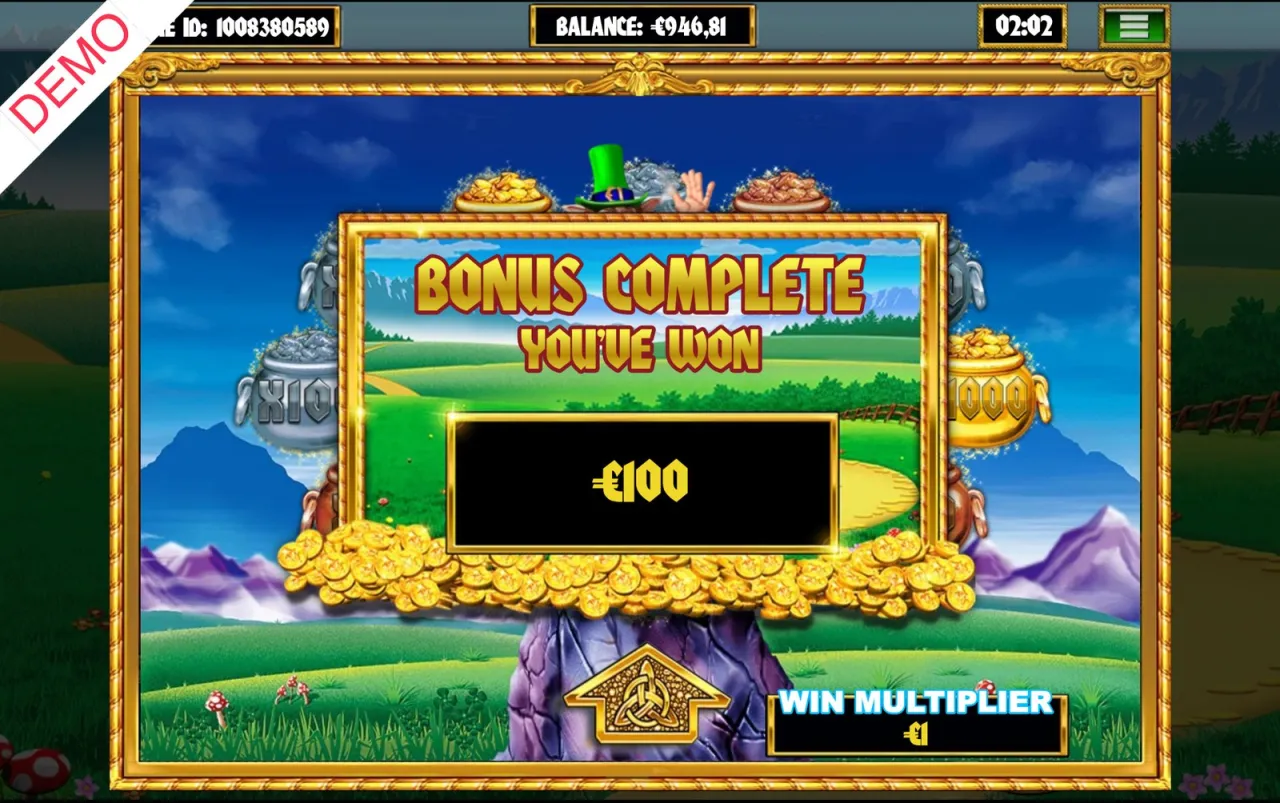
This is a very simple and typical Gaming Realms game with no cash paytable. It does have the potential for some really nice wins, though. My balance ran from 1,000 down to 946.81 before the bonus paid and finished at 1,046.81, a net 46.81. It's certainly not the worst game I've played - I bought my way to a full house for 53.19 total staked and Pots of Gold landed on ×100 for a 100-credit payout - but it does become a bit repetitive with an extra-spin stage too similar to the base game. The last spin bought a Super Joker, and 28 was the single number left on the grid. In my opinion, being told how the cost of the next spin is computed would be a massive improvement. The 19.02 spin was the only one in the game that stopped to ask whether I was sure. So would seeing any of the other six bonuses actually play out rather than being dangled in a panel between spins.