
Wheel of Fortune Ruby Riches Slot – Free Demo
Provider:
IGT
IGT sells this reel set twice. The build wired to a seven-figure progressive returns 90.33%; this one, with five fixed jackpots printed above the reels instead, returns 96.15%. Six points of return is the price of the meter, and the wheel underneath lit two pointers out of seven in both of my…
Play Wheel of Fortune Ruby Riches demo
The same machine with nothing plugged into it
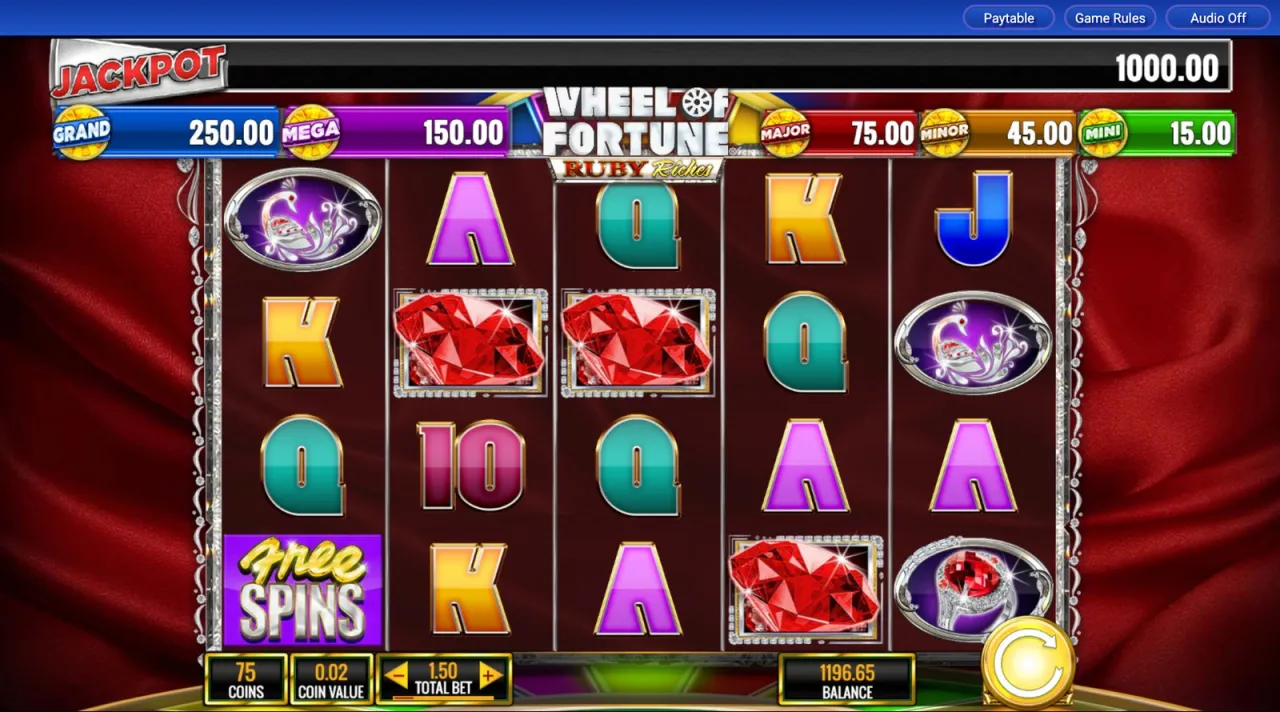
Two IGT cabinets share this reel set. One of them, PowerBucks Wheel of Fortune Ruby Riches, wires the wheel to a networked progressive seeded in seven figures. This one does not. Same rubies, same treasure chest on reel five, same coin sweep, same seven-pointer wheel — and where the other game runs a meter that climbs while you play, this one prints five jackpot values across the top of the screen and leaves them there.
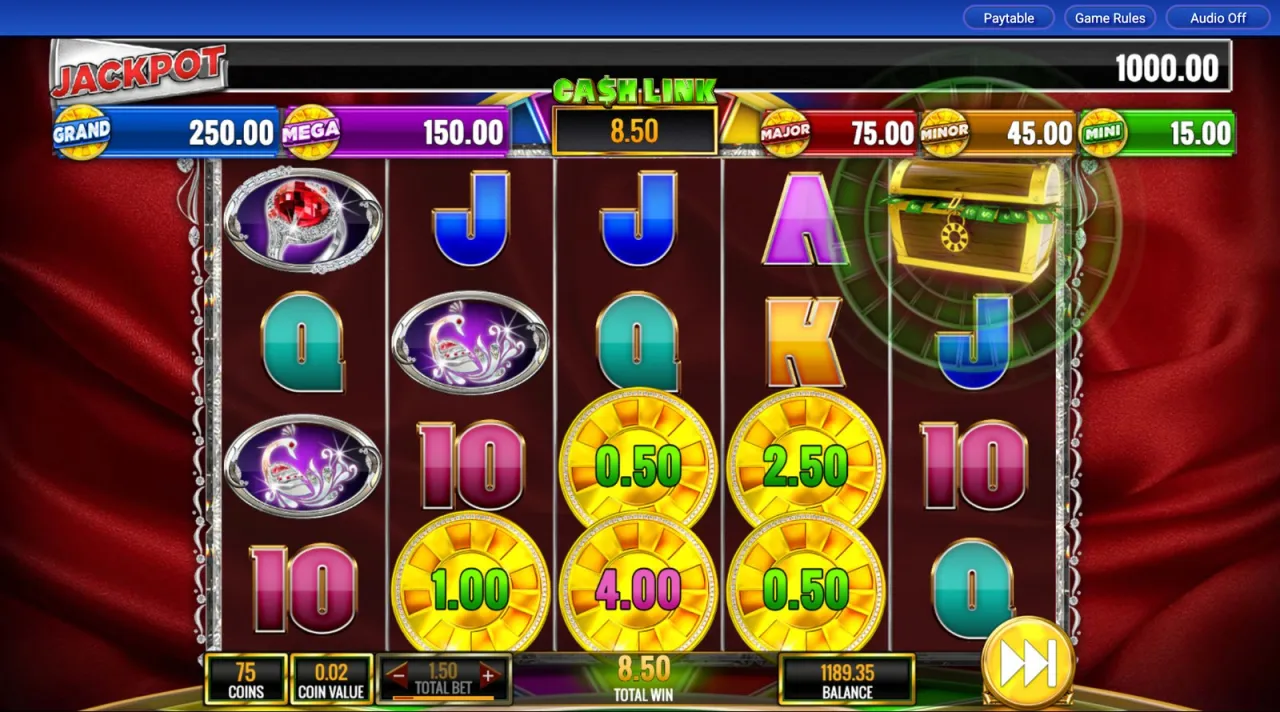
Five jackpots you can read off the screen
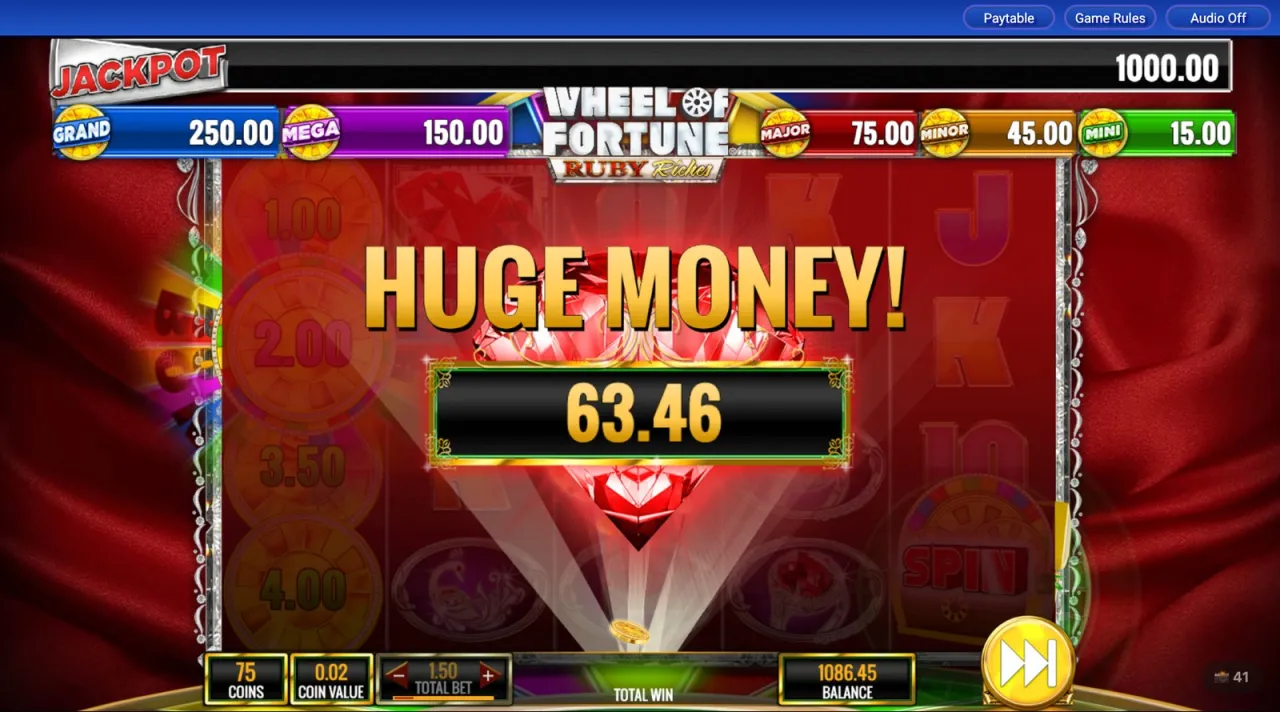
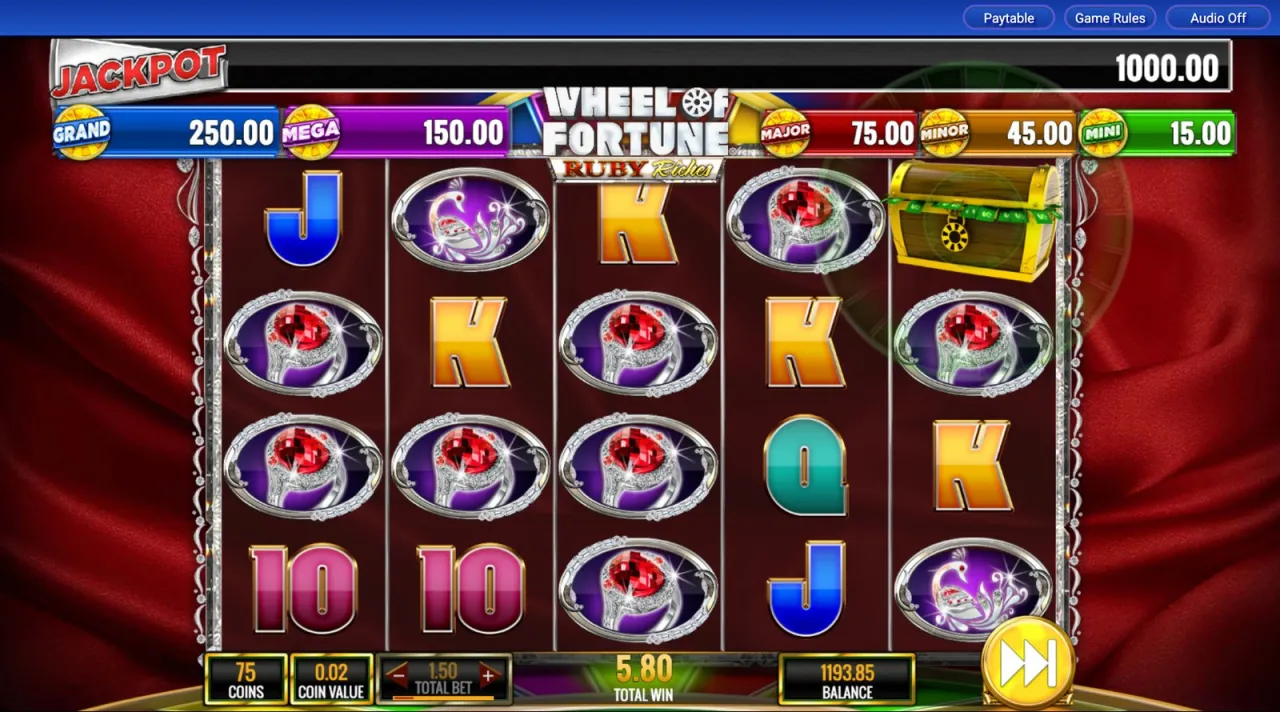
Grand, Mega, Major, Minor and Mini sit in a row above the reels with numbers next to them that do not move: at the 1.50 stake I played, 250.00, 150.00, 75.00, 45.00 and 15.00. They are stake-linked, not accumulated, so nothing is being skimmed off each spin into a pool elsewhere. The Grand is 166 times the stake and change — a figure a bonus round can actually reach.
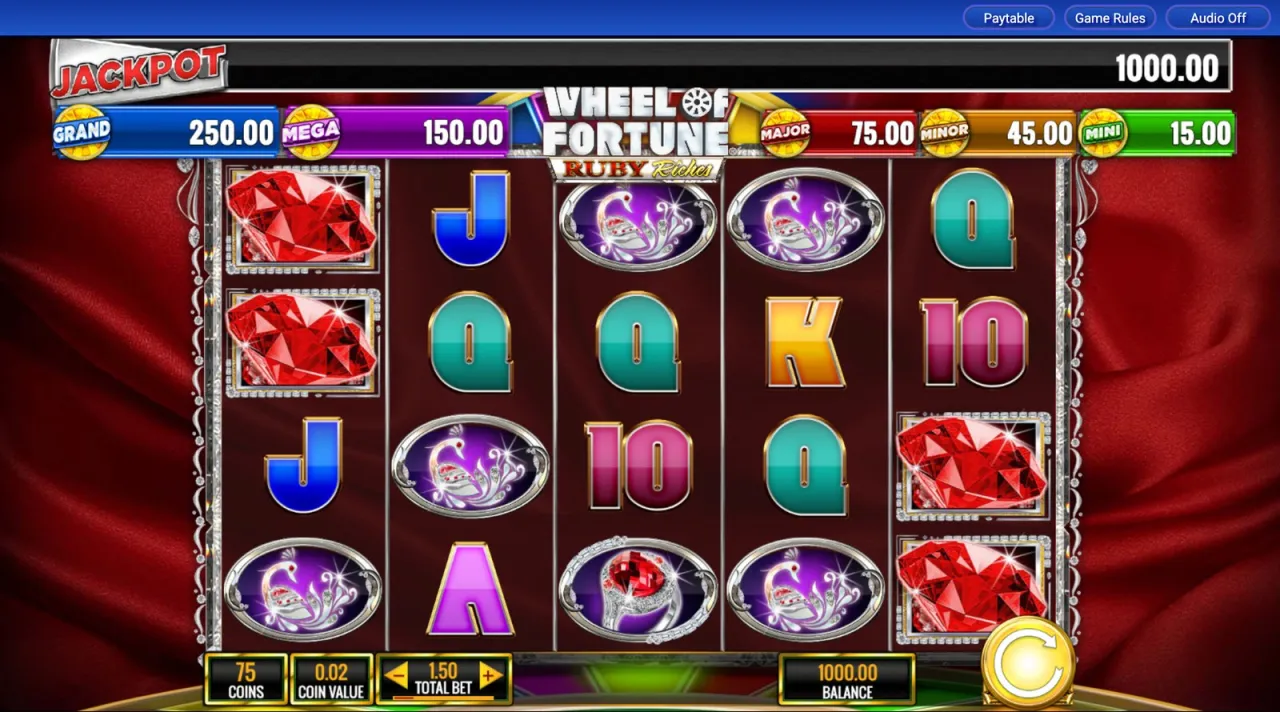
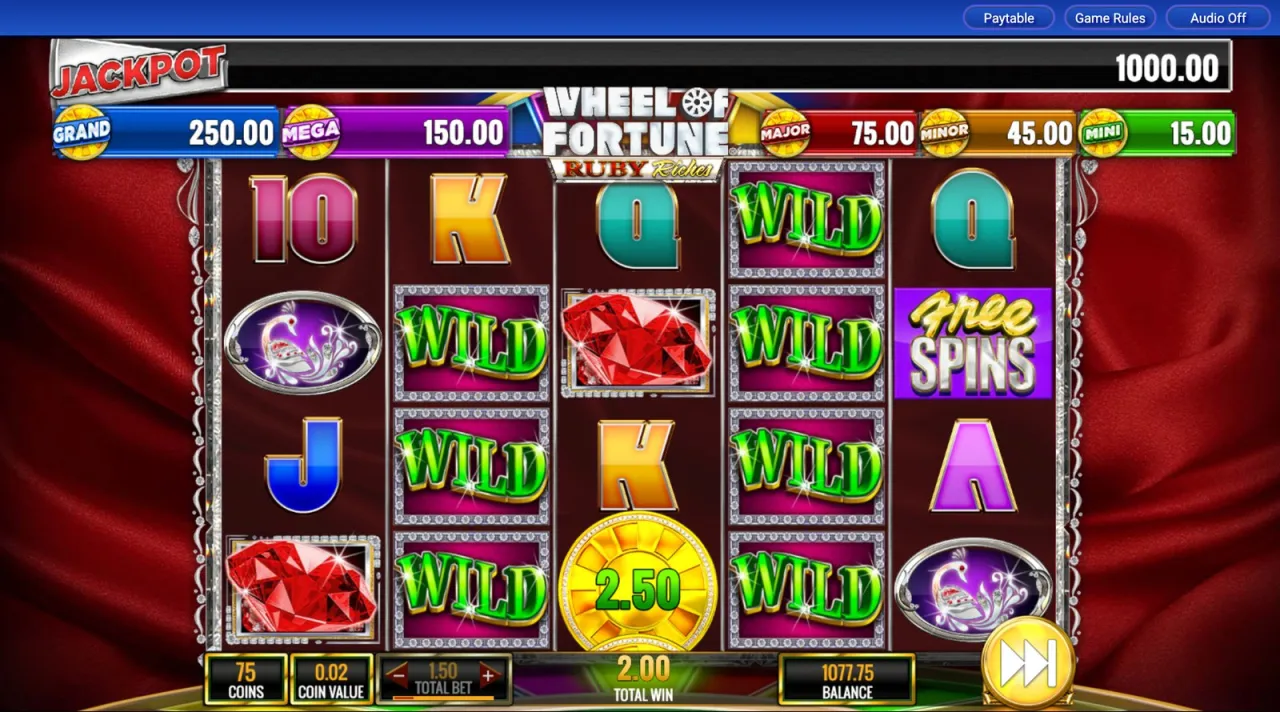
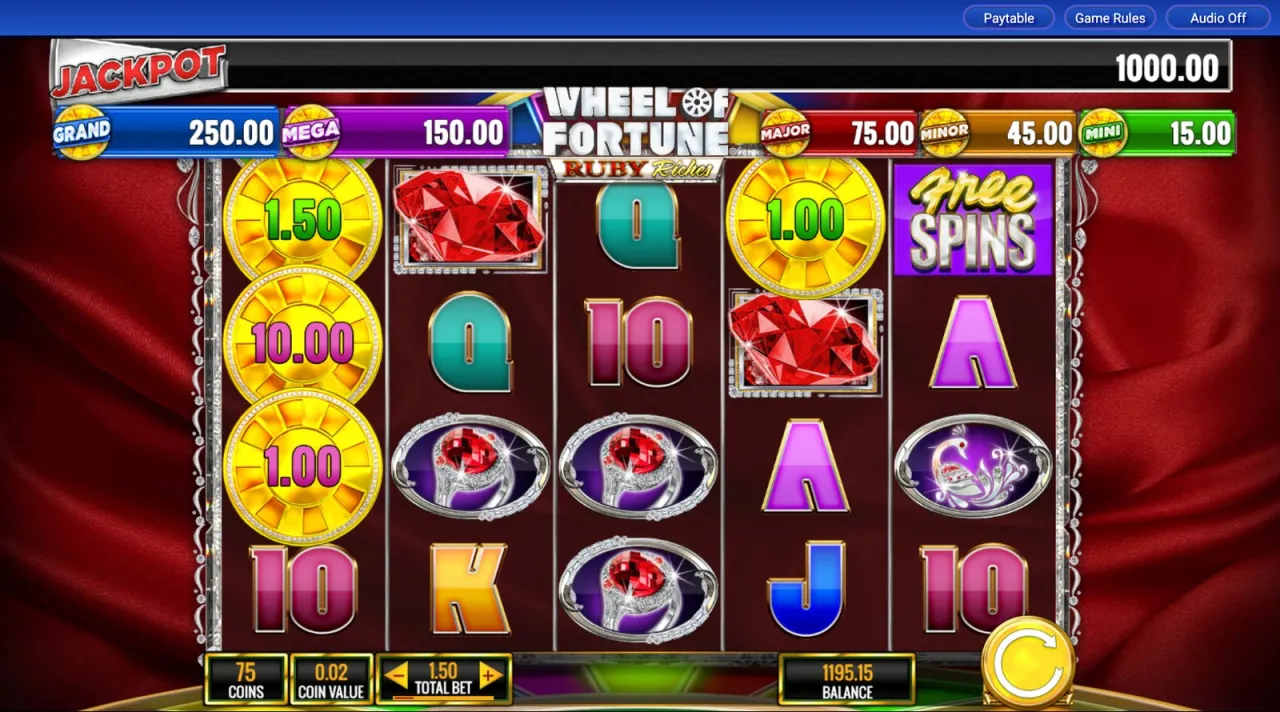
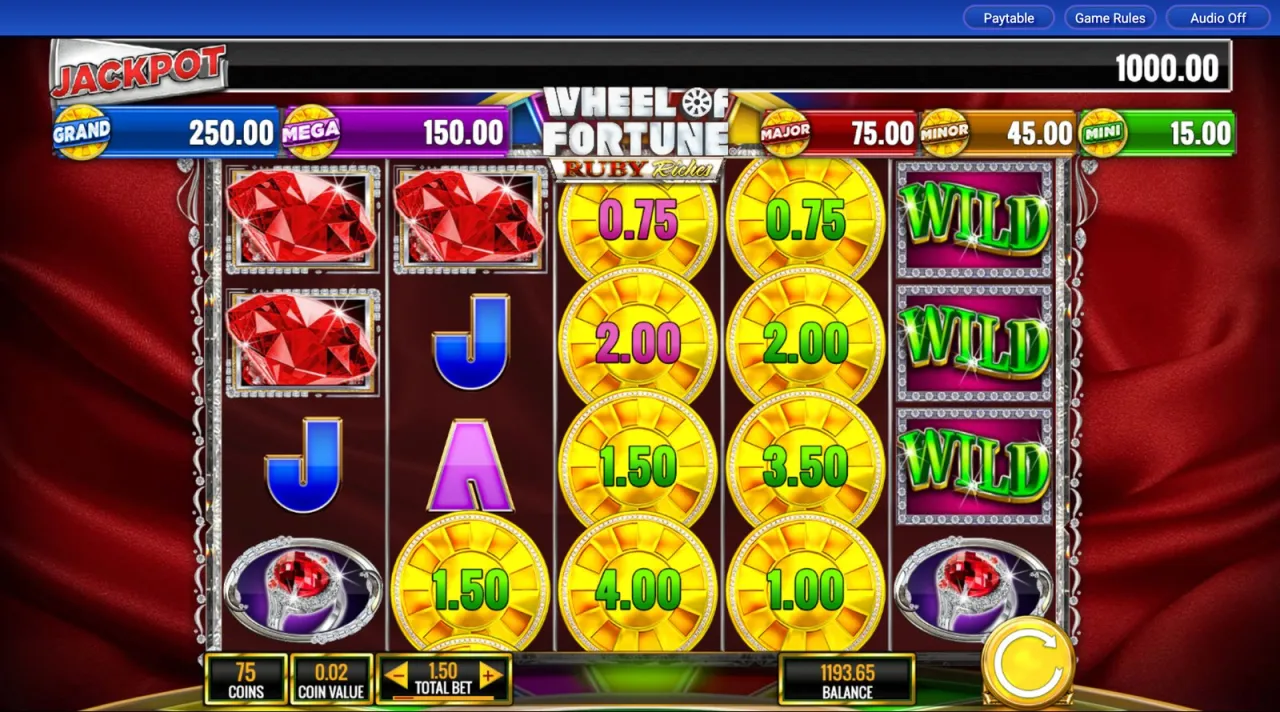
They arrive the way every other prize does. Coin symbols land on the first four reels carrying values, and a treasure chest on reel five collects everything on the grid. If a jackpot symbol is among the coins, that tier is paid, and more than one of them can land in a single sweep.
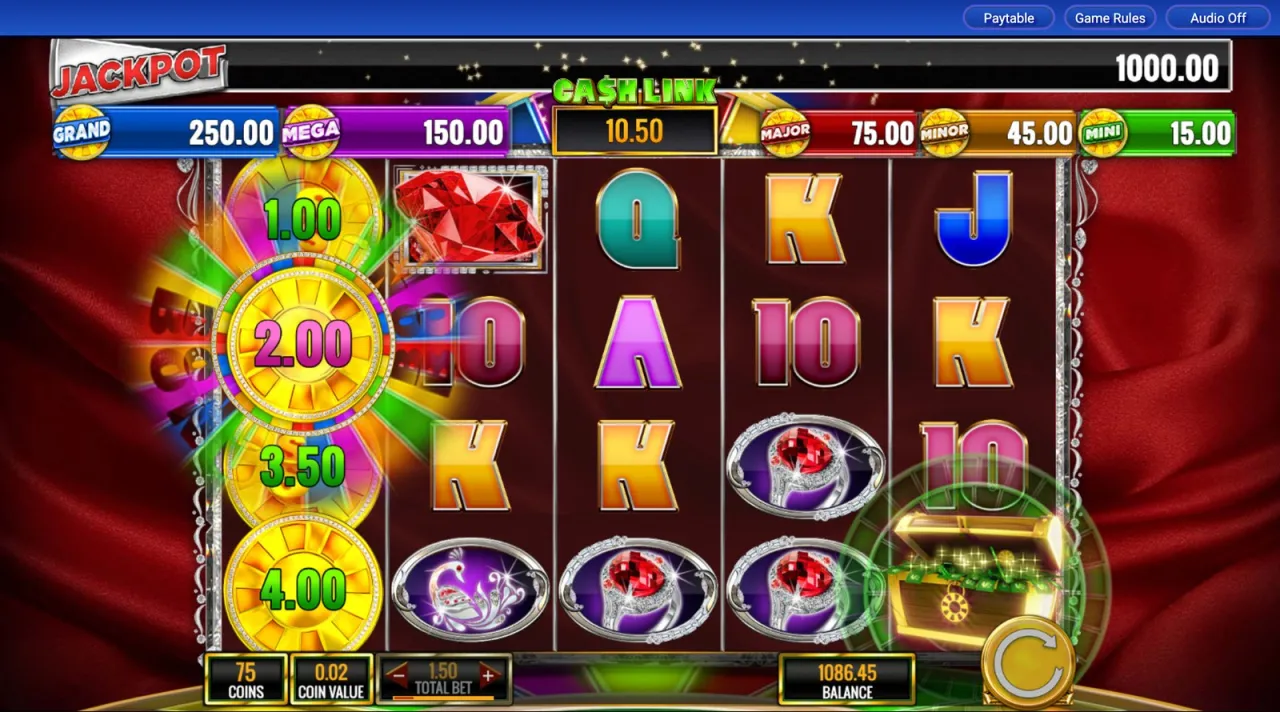
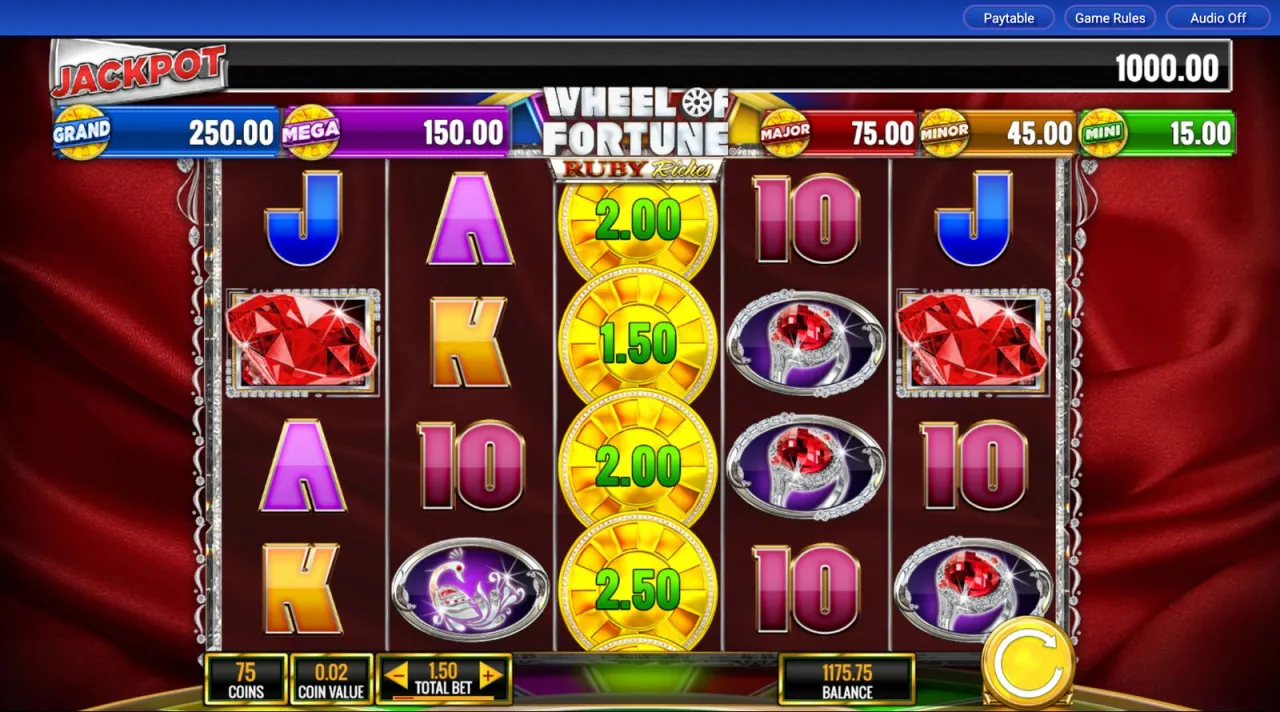
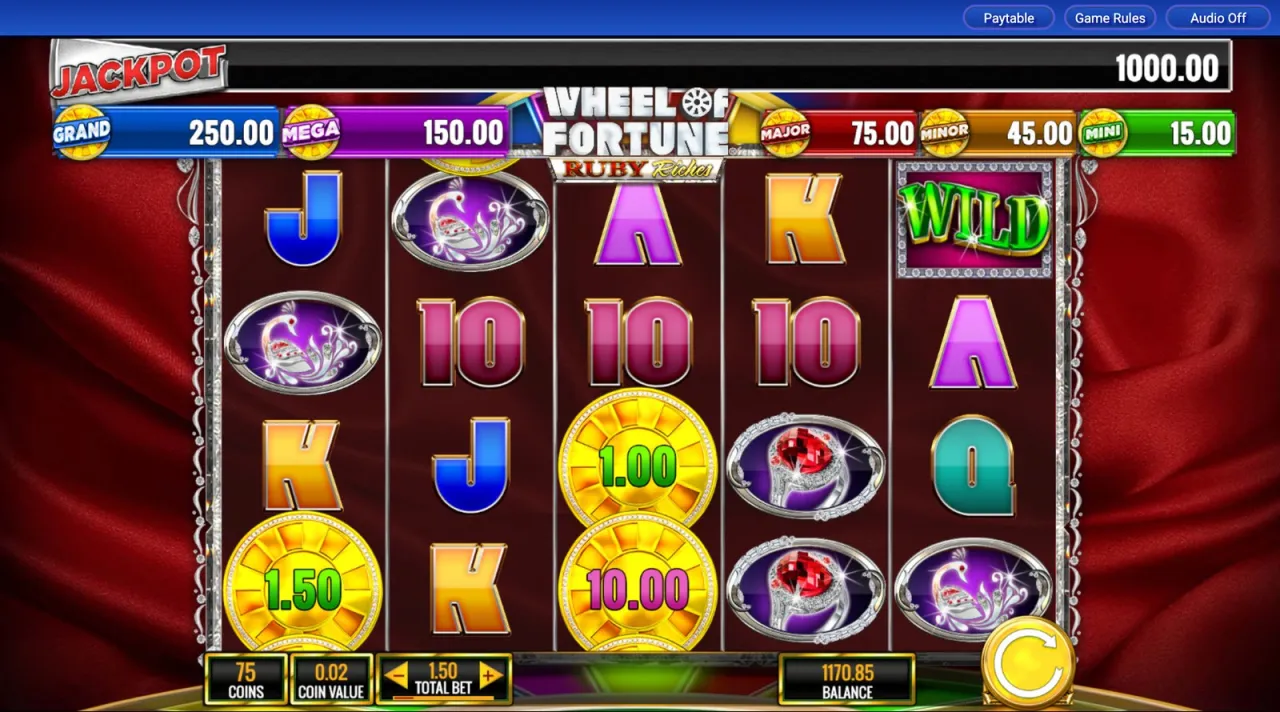
Which of the two features you get is decided by one symbol. A chest on reel five with no Wheel of Fortune coin on reel one pays the sweep on the spot. A chest with that coin on reel one sends the whole total to the wheel instead.
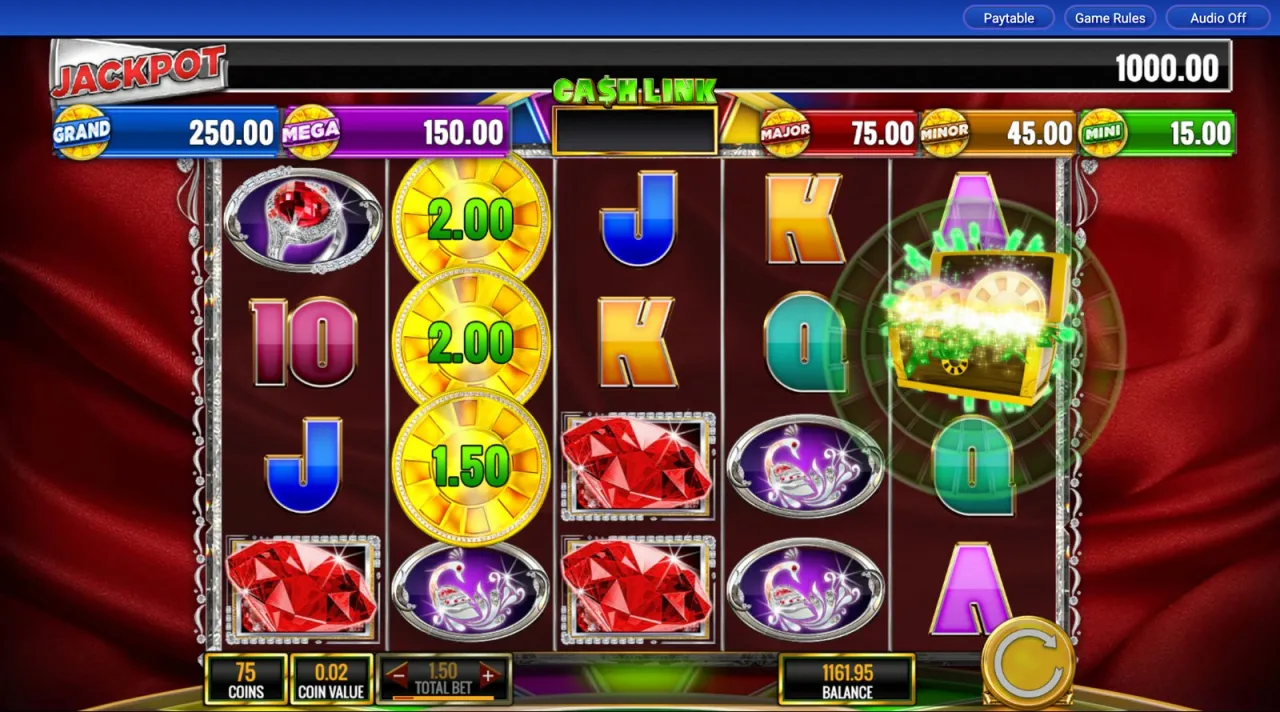
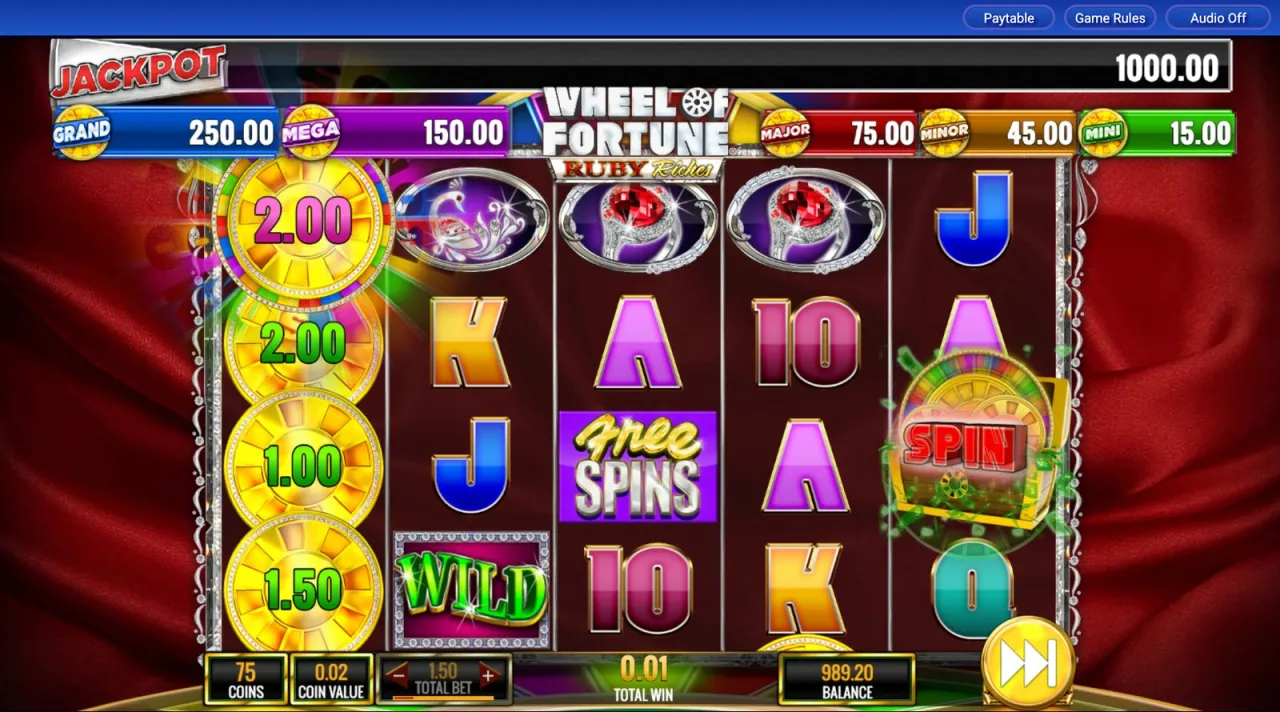
The instant version was where my best single moment came from: 63.46 off one sweep, 42 times the stake, no wheel involved.
Minty’s Final Note: Six points of return is a steep price for a lottery ticket, and this build hands them back for a game that plays the same up to the moment the wheel stops. The trade is real in one direction only: the network version can pay something this one structurally cannot, and this one pays more often on the way there. Two sessions at 1.50 lit two pointers out of seven every time, and the pointer count is the only thing on that wheel a player has any say over.
Two pointers, twice, out of seven
The wheel carries seven pointers, and how many light up is set by the bet on the triggering spin. At 1.50 the answer was two, both times the bonus came in, and in the PowerBucks session I ran at the same stake in June it was two both times as well — four wheel bonuses across two builds, four identical banners.
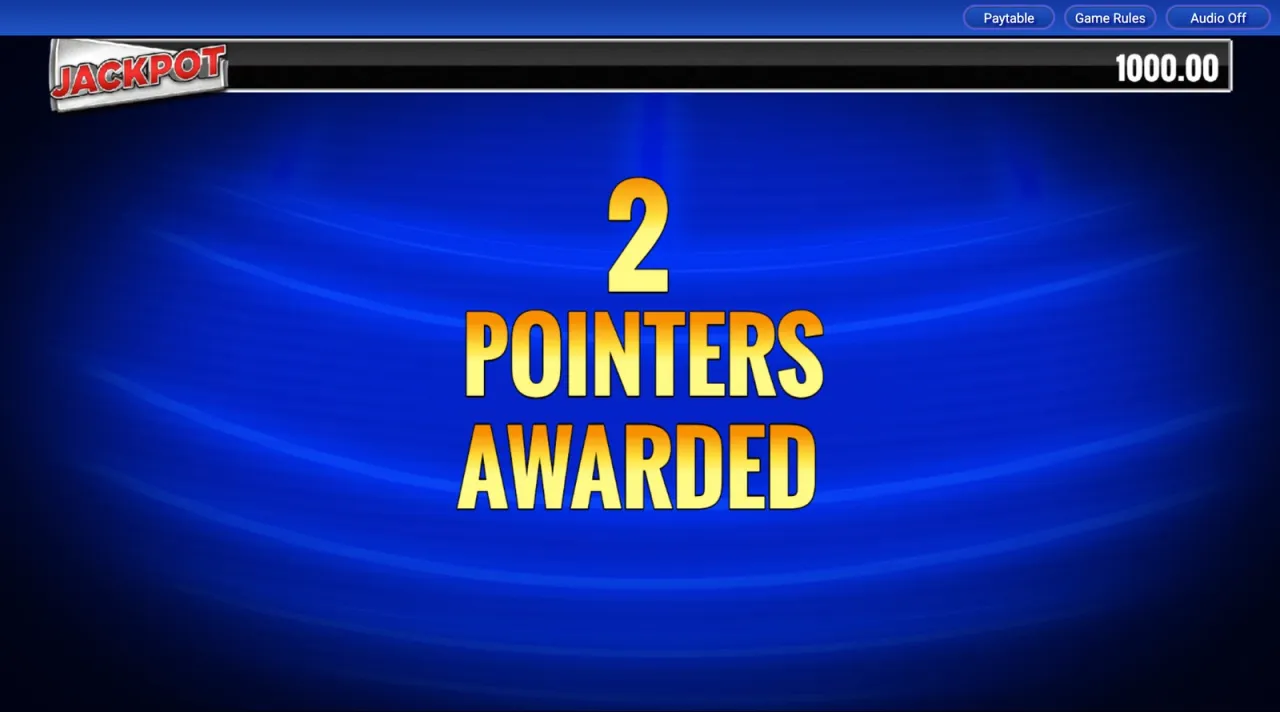
Two of seven is not a result, it is a price. The rules set the pointer count from the bet, so at 1.50 there was never a third pointer to hope for, in either build. What the rules do not print is the ladder — which stake buys a third, a fourth, a fifth — and without it a player cannot work out what the extra pointers cost. The same document is otherwise careful to say that odds never shift with bet size, then adds one exception, and the exception is the jackpot: bet more and the jackpot itself becomes likelier, which on this wheel means the narrow slices at the edges.
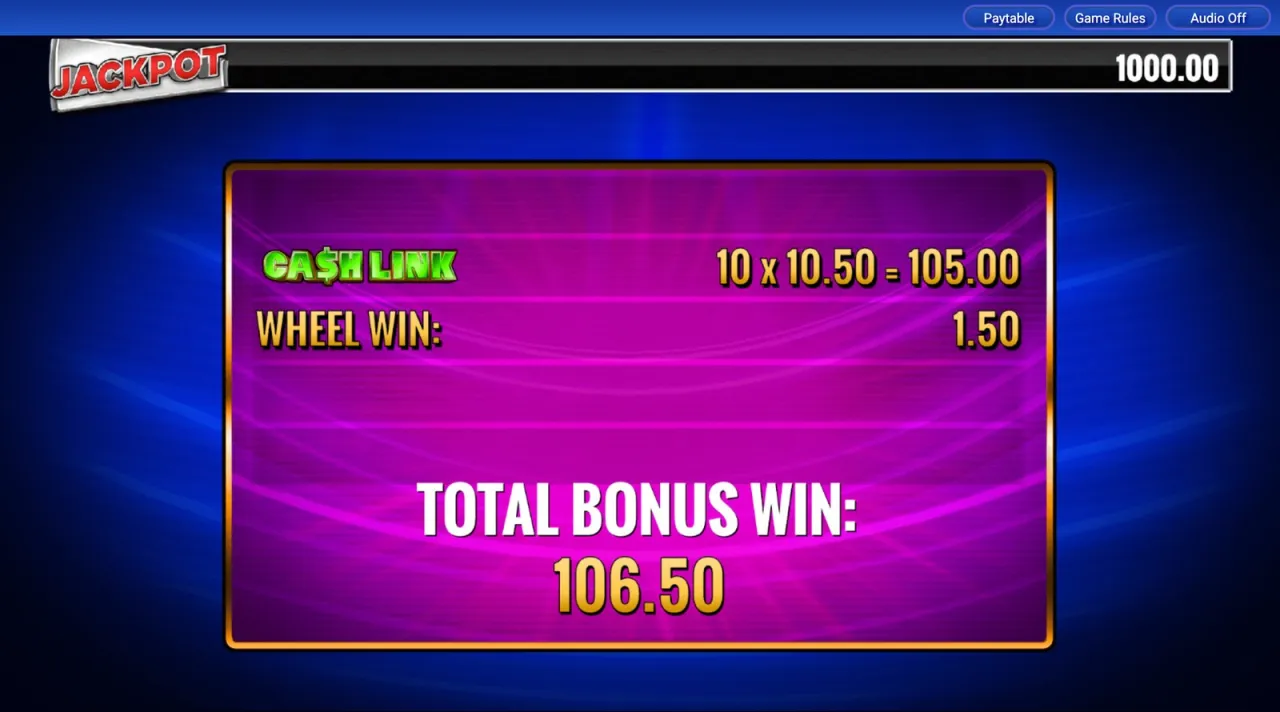
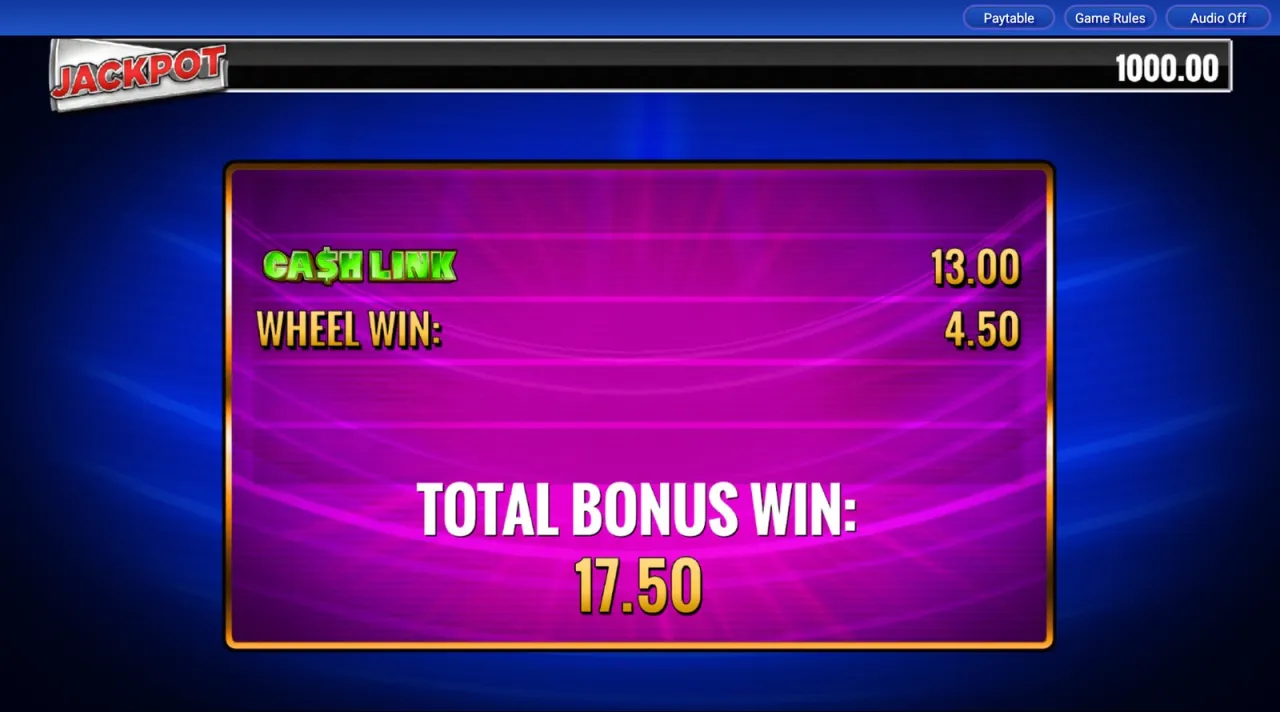
What the two pointers find is everything. The first round loaded a Ca$hLink total of 10.50 onto the wheel and one pointer landed a 10× wedge: 105.00, plus 1.50 from the other pointer, for 106.50 — exactly 71 times the stake. The second round loaded more coins, 13.00, and found no multiplier at all. It paid 4.50 from the wheel and closed at 17.50.
Six times the difference between two rounds that opened the same way, and the larger coin total produced the smaller result. Multipliers of 5×, 10× and 20× sit on their own wedges and apply only to the coin total, never to the flat prize amounts. Several at once are added together rather than compounded, so a fourth and fifth pointer would widen the net without changing the arithmetic.
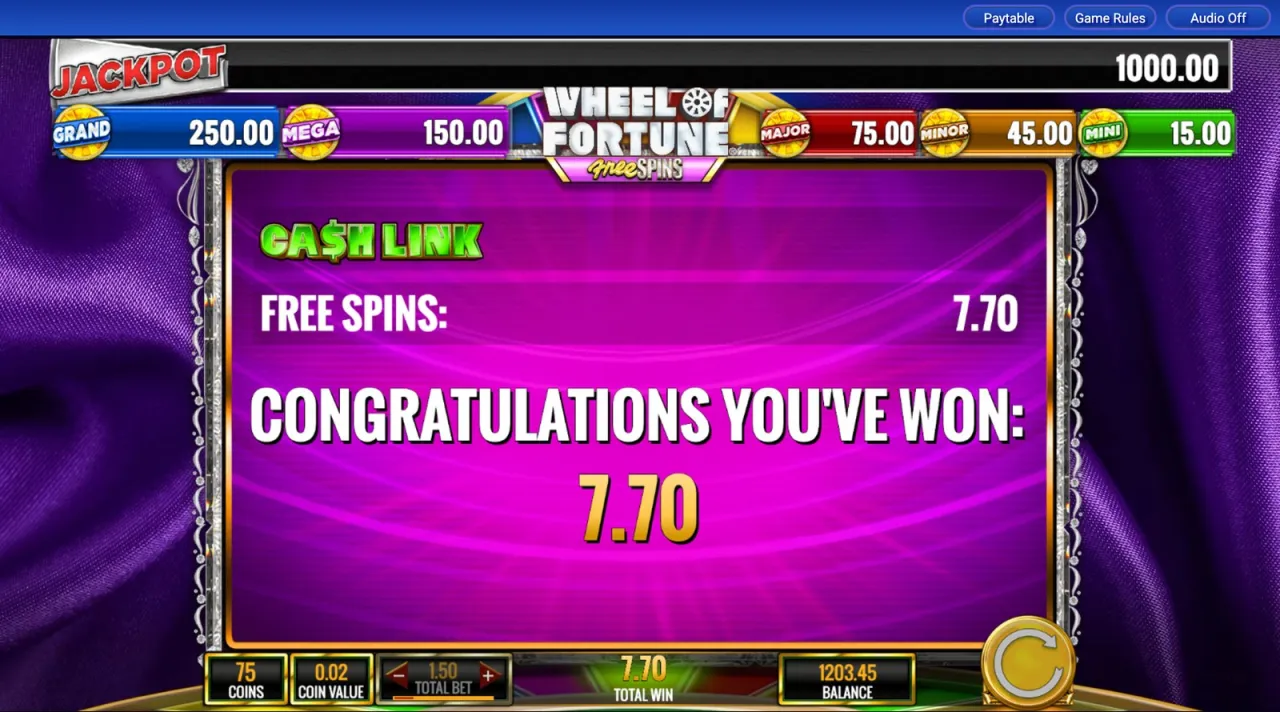
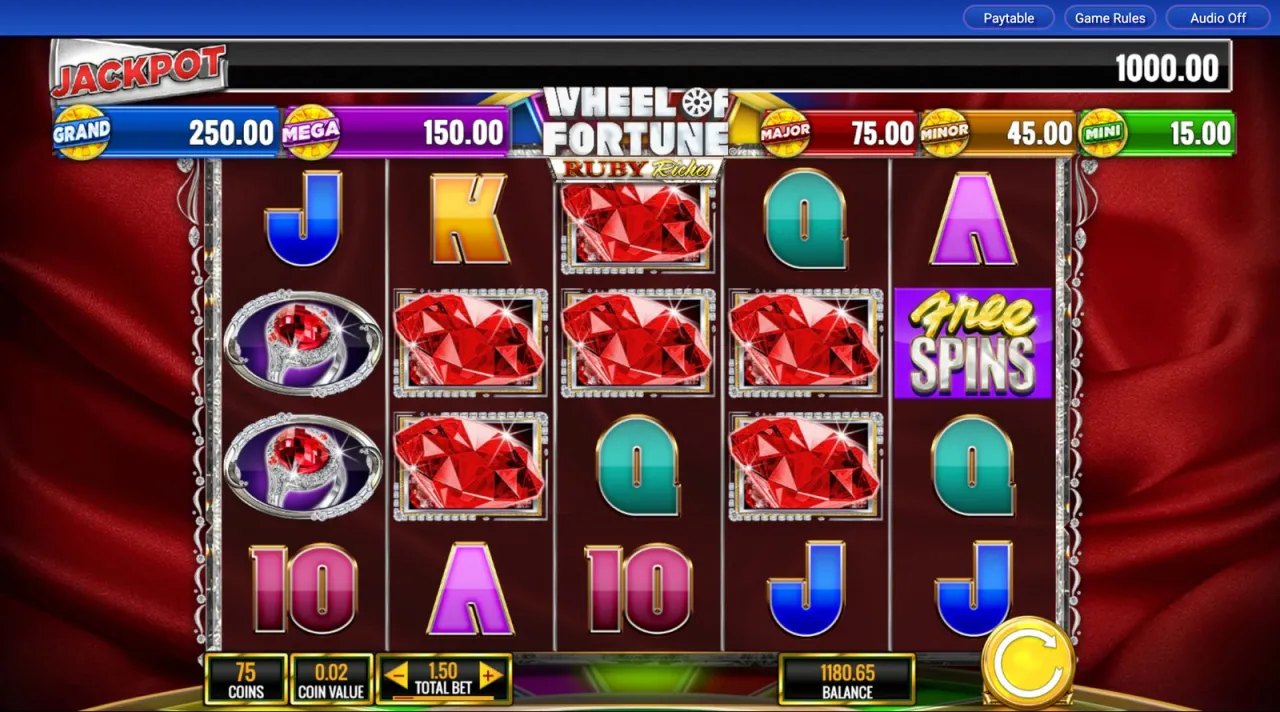
Free spins are the quiet route, and not because of how mine went. The rules list which symbol reaches which reel, and the Wheel of Fortune coin is marked base game only — so the wheel is structurally unreachable from inside the feature, whatever a given round happens to do. Coins and the chest are all that remain. Three scatters on reels one, three and five award ten spins; mine returned 7.70.
96.15 against 90.33
The published returns are 96.15% on this build and 90.33% on the network one — figures that come from the catalogue listings, not from either game's rules screen. That is worth stating plainly, because this build's rules screen carries no return figure at all: it explains what expected payback means across a large number of spins and declines to print the number. Neither does it say what the 90.33% on the other build includes, and that matters more than the gap itself. Progressive titles routinely publish a base return with the jackpot contribution excluded or counted at its reset value, which would mean some of those six points come back through the meter rather than vanishing into it.
So the honest version is narrower than the headline: the two games are listed six points apart, part of that difference is the price of the progressive and part of it is the progressive itself, and IGT does not break out which is which. Everything else about them lines up — same collector, same coin routing, same wheel ceremony, released April 2021 and March 2022.
| This build | PowerBucks build | |
|---|---|---|
| Listed return | 96.15% | 90.33% |
| Jackpots | Five, fixed to the stake | Four, networked progressive |
| Top prize at a 1.50 stake | Grand, 250.00 | Whatever the meter reads |
| Ceiling | 1,000× the stake, so 1,500.00 here | Listed as an absolute 25,000,000 |
| Pointers lit at 1.50 | Two of seven | Two of seven |
The ceilings in that last row are not quoted in the same units, which is its own small tell: one is a multiple of whatever you stake, the other a flat number that does not move whether you play at 0.75 or at 75. What the network build sells is reach, and the reach is real. The route to it is the problem — those jackpot slices are the narrowest on the wheel, and the wheel lights two pointers at ordinary stakes. Neither of my PowerBucks rounds found one, and both of my pointers there landed flat credit amounts rather than multiplier wedges, where one of two found a wedge here.
So what is the network version for?
For the ceiling, and only for the ceiling. That is the whole answer: the network build exists to sell a prize this one cannot pay at any stake, and everything it charges is charged for that. My 163 spins at 1.50 opened at 1,000.00 and closed at 1,193.65 — two wheel rounds, a free-spins round and a scattering of instant sweeps, with 106.50 of the 193.65 coming from one multiplier wedge and the rest of the evening broadly paying for itself.
The network build asks six points for access to a prize its own wheel makes hard to reach, and lights the same two pointers on the way there. At a 1.50 stake that is roughly six percent of every spin, spent on two sevenths of a wheel.