
Pinata Wins Slot – Free Demo
Provider:
Pocket Games Soft
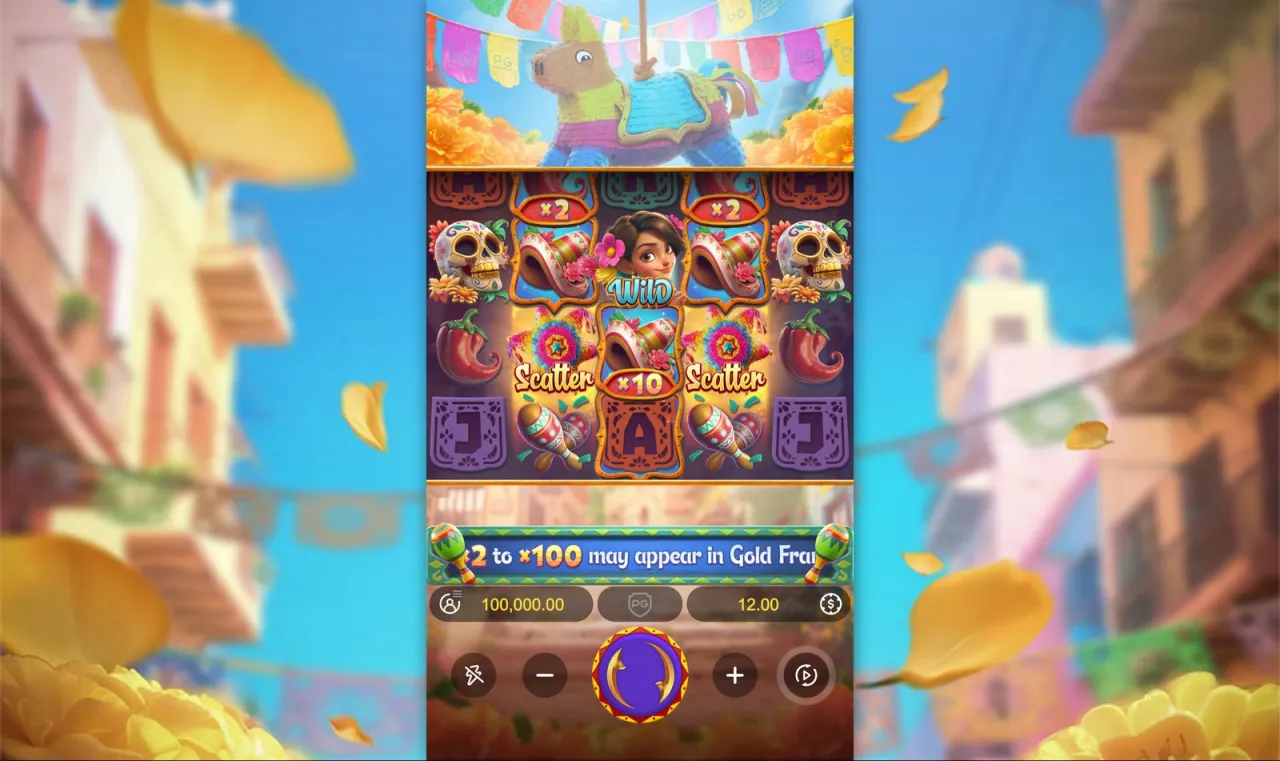
A gold frame around a symbol means a multiplier somewhere between ×2 and ×100. In the base game it pays once and disappears; in free spins it is collected into a piñata above the reels and stays there, which is how the fifteenth spin of a round ends up worth nine times the first.
Play Pinata Wins demo
Gold frames are the whole game
Every so often a symbol on the reels lands inside an ornate gold frame with a number stamped on it. The game's own ticker states the range: ×2 to ×100. That is the engine Pocket Games Soft built Pinata Wins around, and it behaves in two completely different ways depending on where you are. In the base game a framed multiplier applies to the spin it landed on and then it is gone. Inside free spins it is collected, and it stays collected until the round ends.
What the game tells you outright
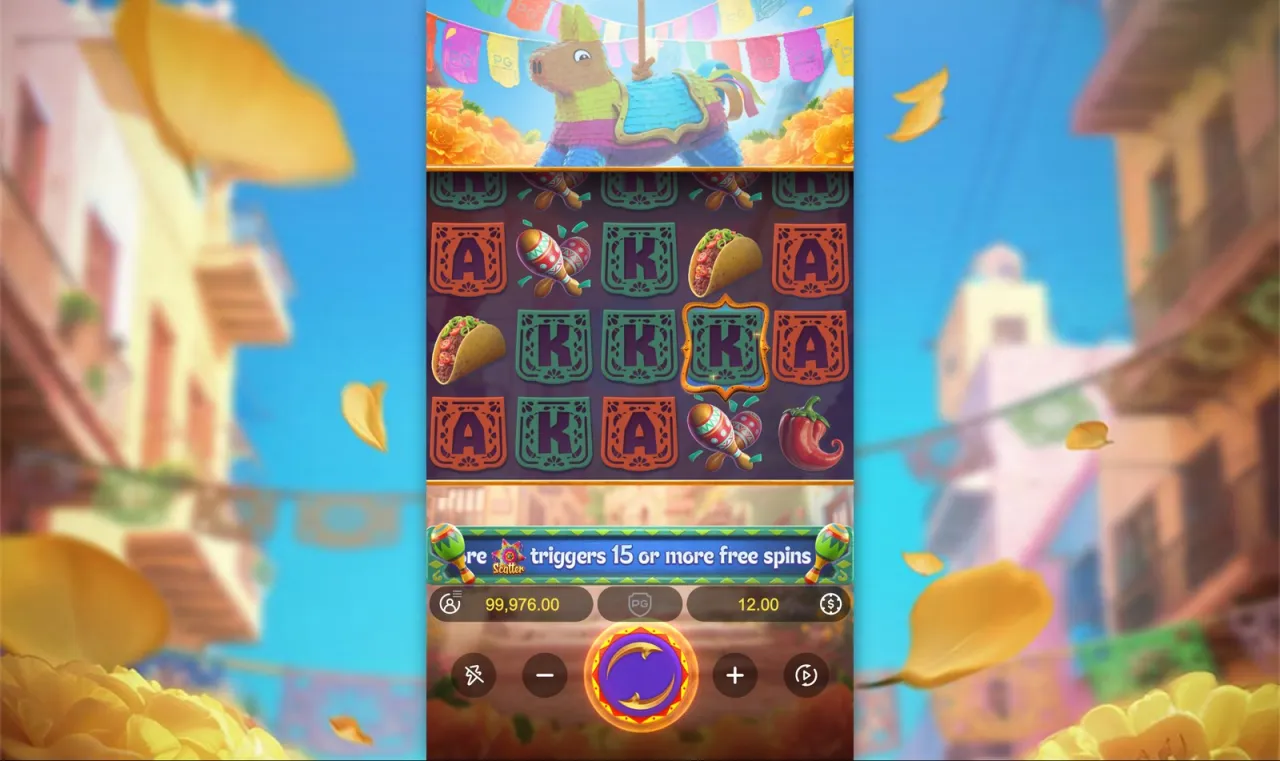
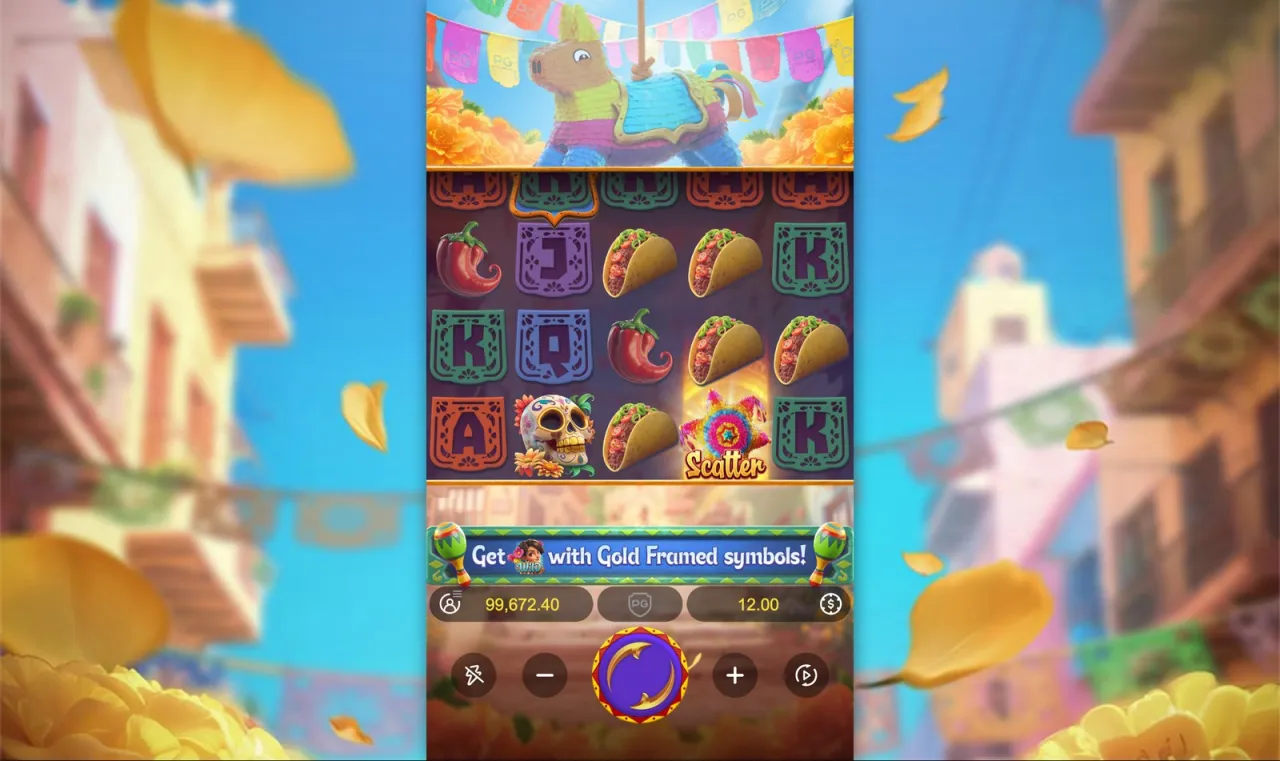
Pinata Wins does something unusual and welcome: it explains itself in a ticker under the reels rather than burying the rules three menus deep. Across a session it cycles through the three statements that matter. Multipliers from ×2 to ×100 may appear in gold frames. Wilds arrive with gold-framed symbols. Three scatters trigger 15 or more free spins. And once you are in the round, the ticker changes to the line that defines the feature: collected ×2 to ×100 remains until end of free spins.
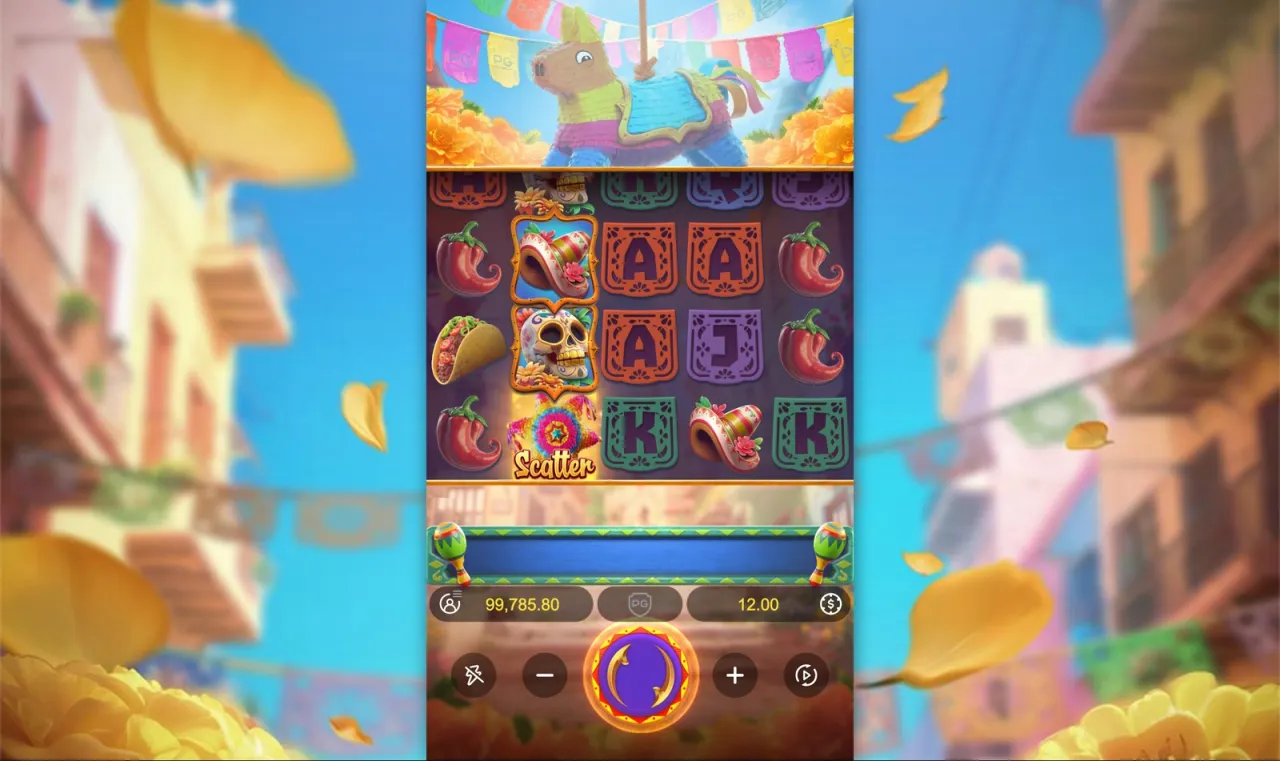
Four hundred credits down before anything happened
I ran the session at a 12.00 stake from a 100,000.00 start. The base game is a slow reader: wins land often enough to keep the balance moving in small steps — 6.00 here, 12.00 there, always announced as a Total Win that tallies everything the drop produced — but the framed multipliers that make the game interesting mostly landed on symbols that were not part of a win. By the time three scatters finally aligned the balance had drifted to 99,608.80, roughly 33 stakes into the session.
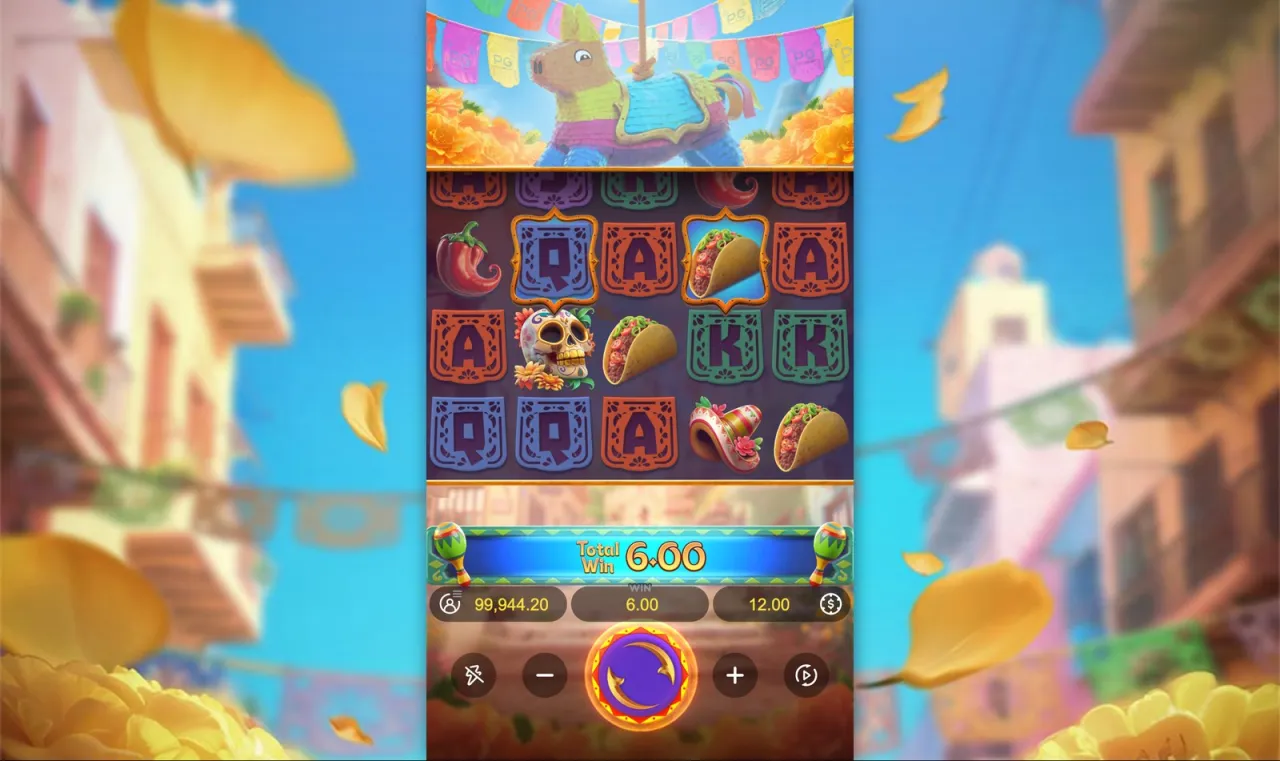
The piñata keeps score
Free spins open with 15 on the counter and a piñata suspended above the reels holding nothing. Every gold-framed multiplier that lands is collected into it, and the piñata displays the running total. Mine read ×2 with ten spins left, ×7 with seven left, and ×9 going into the final spin — and because the collected figure applies to everything that follows, the same reel outcomes are worth several times more at the end of a round than at the start. The round total climbed 261.60, then 471.60, then 1,544.40.
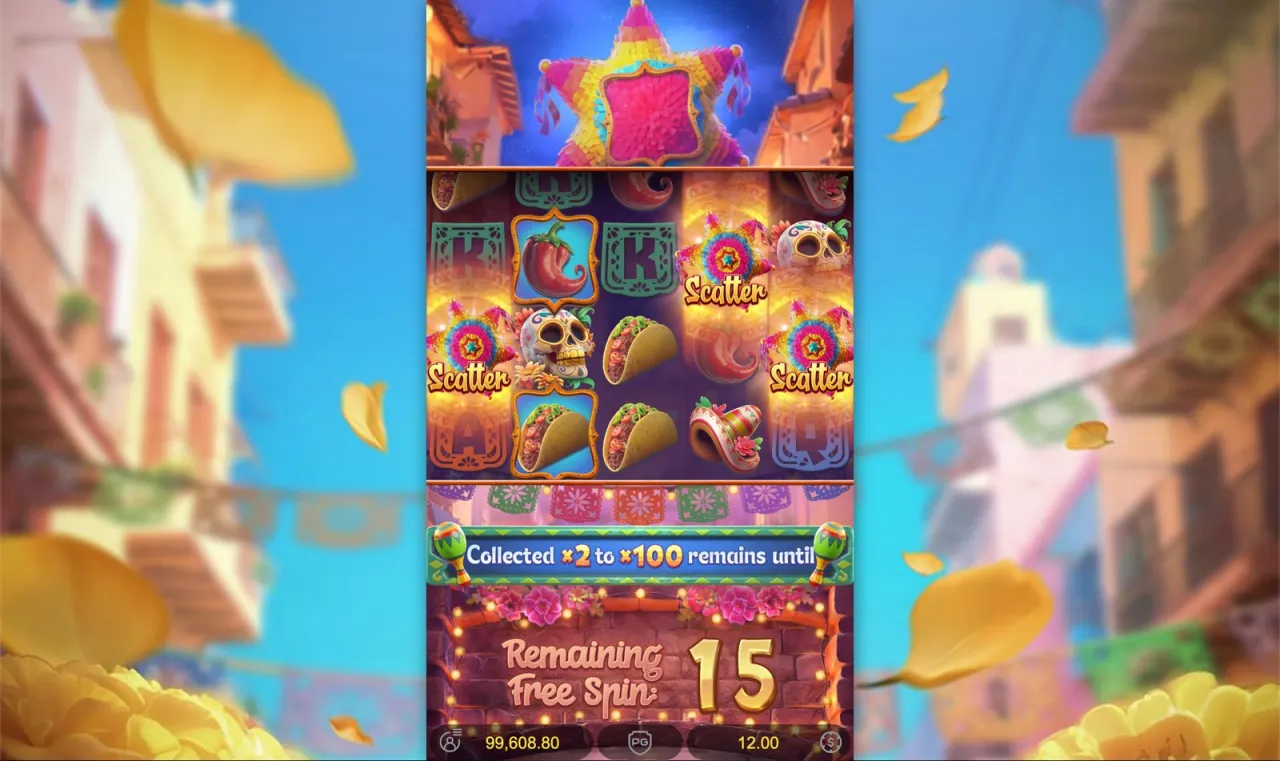
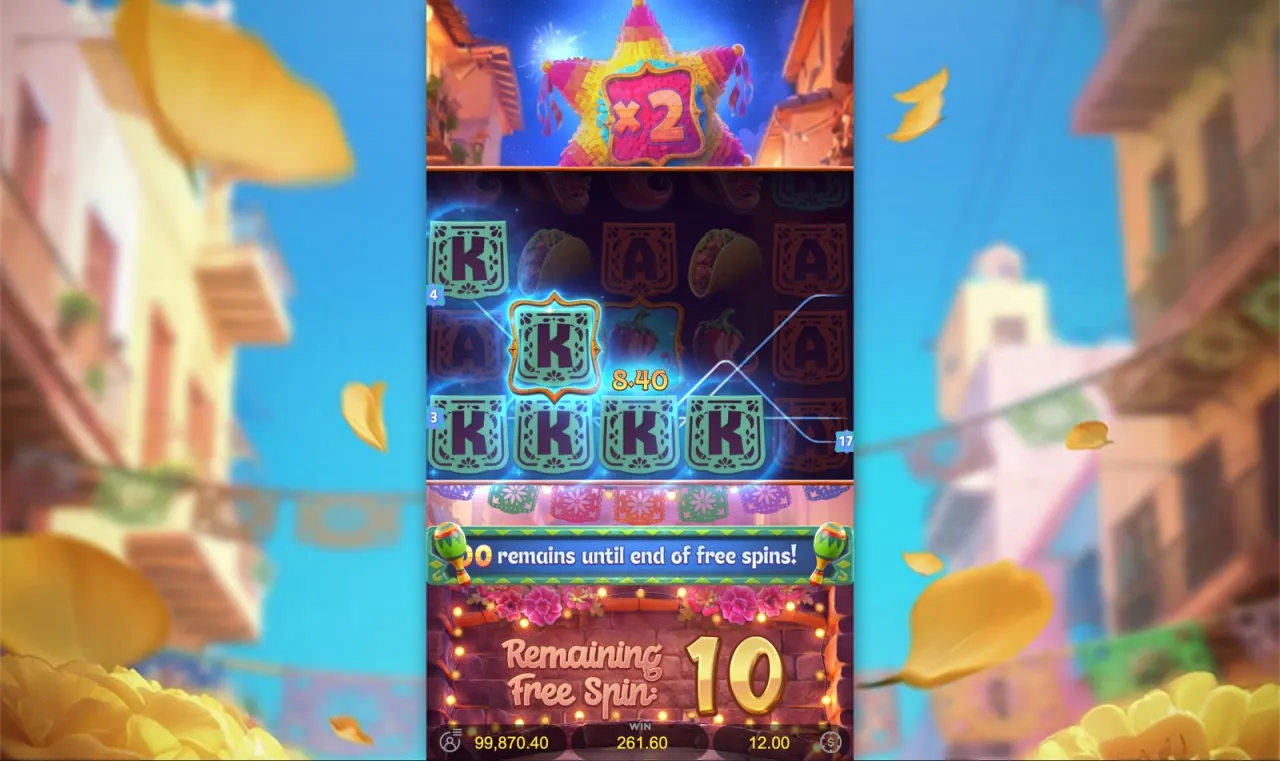
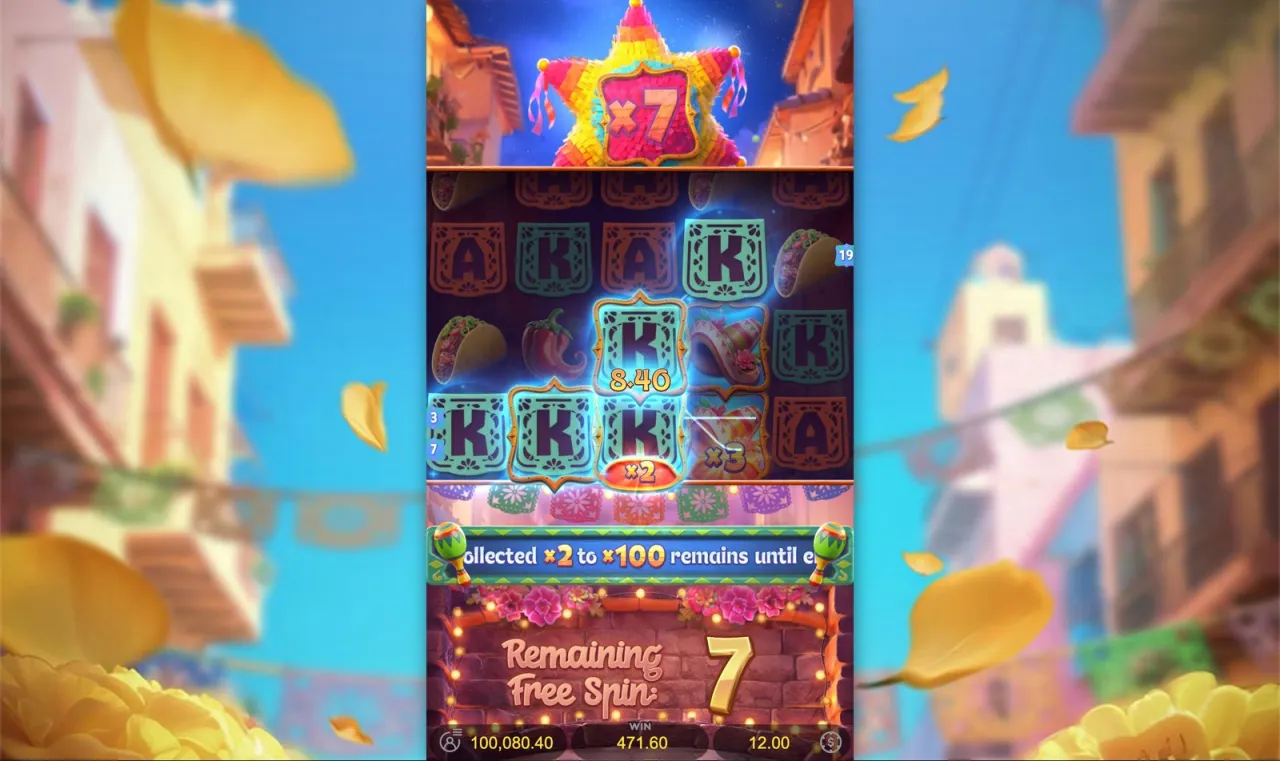
That is 1,544.40 out of a 12.00 stake, a little under 129× from one trigger, and the balance told the same story: 99,608.80 going into the round, 101,153.20 with one spin still to play.
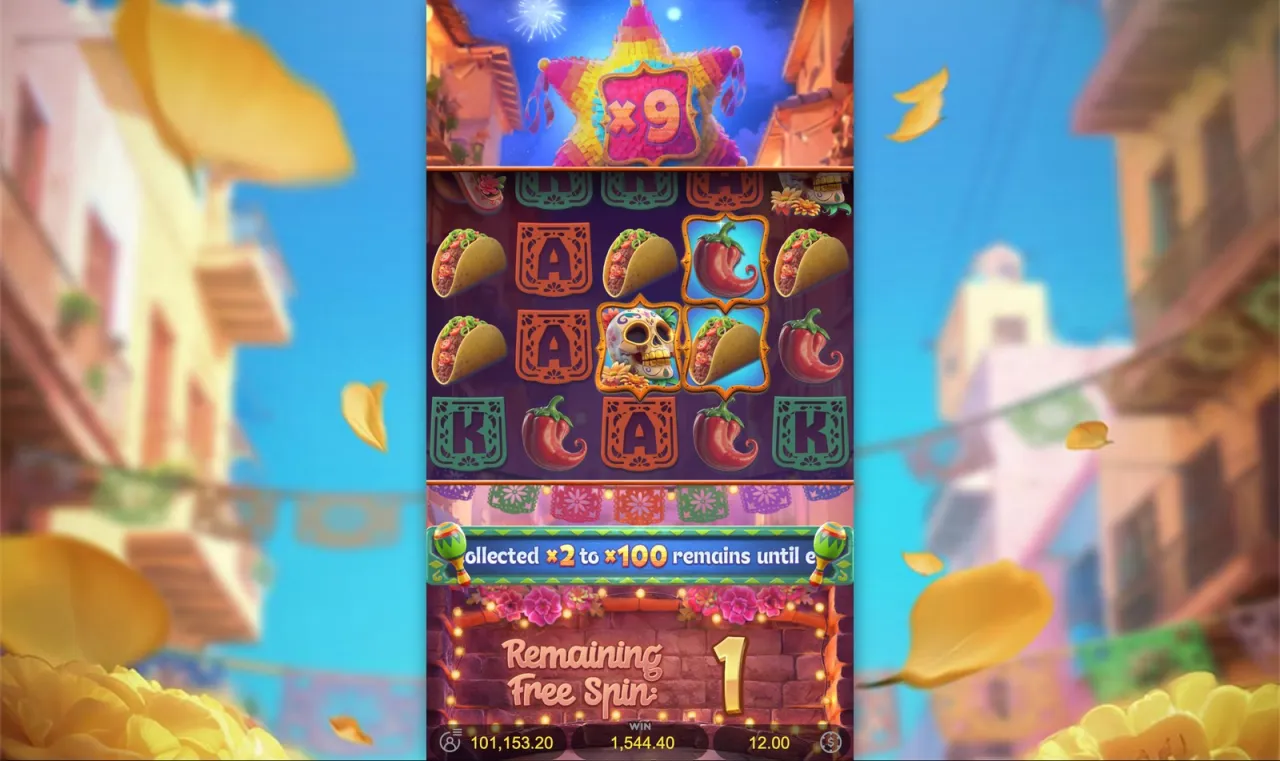
Minty’s Expert Conclusion: The collected multiplier is the reason to play this and the reason the base game feels flat — value has been taken out of ordinary spins and moved into the round the scatters open. Judge it on that alone. A ×9 piñata turned a routine free-spins round into 129× the stake; the ceiling is ×100 collected, which I did not come close to and would not plan a session around.
Where that leaves the rest of it
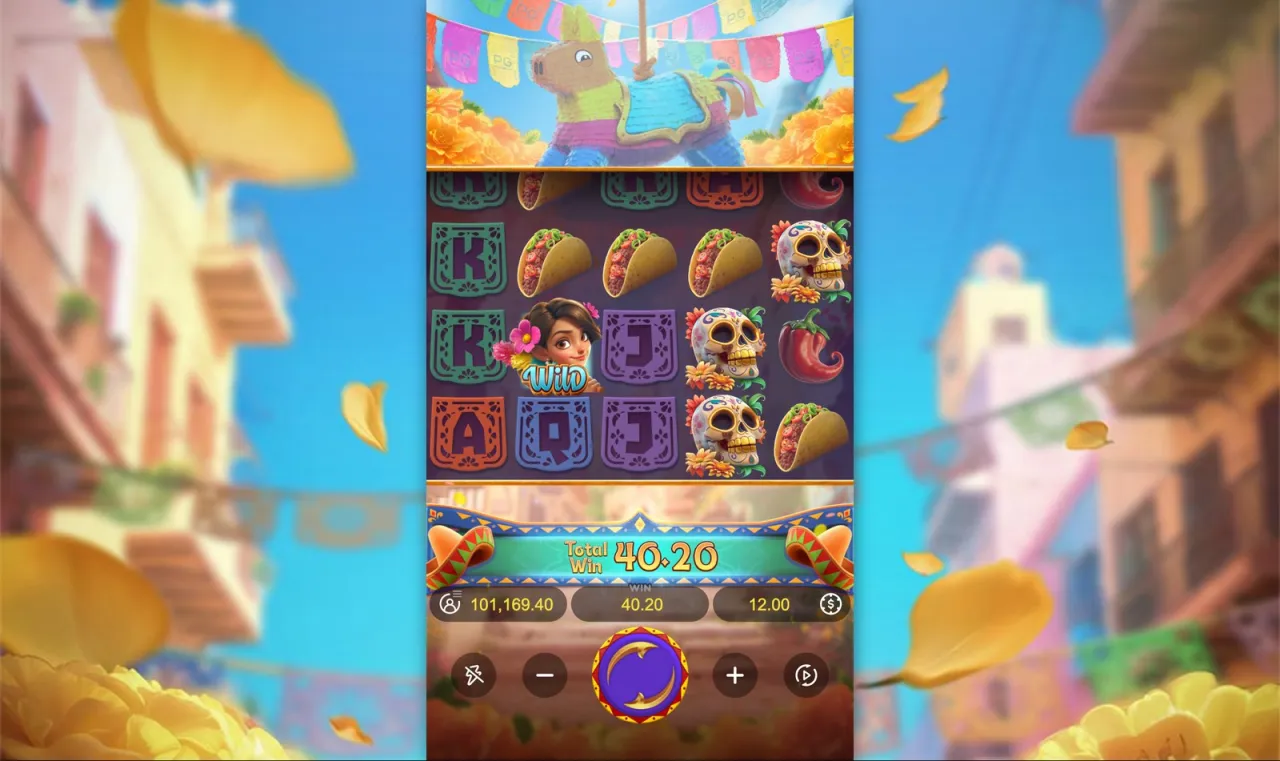
Everything outside the multiplier engine is straightforward. Tacos, chillies, maracas and sugar skulls pay as ordinary symbols above the papel picado letters, the girl is a wild, the star piñata is the scatter, and the game is drawn well enough that a stack of framed symbols reads clearly at a glance. Wins are tallied as a Total Win per drop rather than line by line, which suits a game where a single frame can multiply the lot. Returning to the base game after the round was a hard landing: 101,169.40, and back to 12.00 wins.
Worth loading?
Yes, if you accept what it is: a game that asks you to fund a quiet base until three scatters land, then pays you back in one concentrated round. My session came out ahead on a single trigger. One trigger proves nothing about the next, and the distribution this design implies is built around that. I never saw a ×100 frame land, and I have no idea what the collected total looks like when one does.