

Jammin' Jars Slot – Free Demo
Provider:
Push Gaming
I ran 444 spins on Jammin' Jars at a flat 0.40, and the run turned on a single six-spin bonus. Three jam jars dropped together, locked across the 8x8 grid, and their multipliers ratcheted up cascade by cascade and topped out at 13, closing the round at 62.20, which is 155x the stake and easily the…
Play Jammin' Jars demo
When four jars stacked, the multipliers started feeding each other
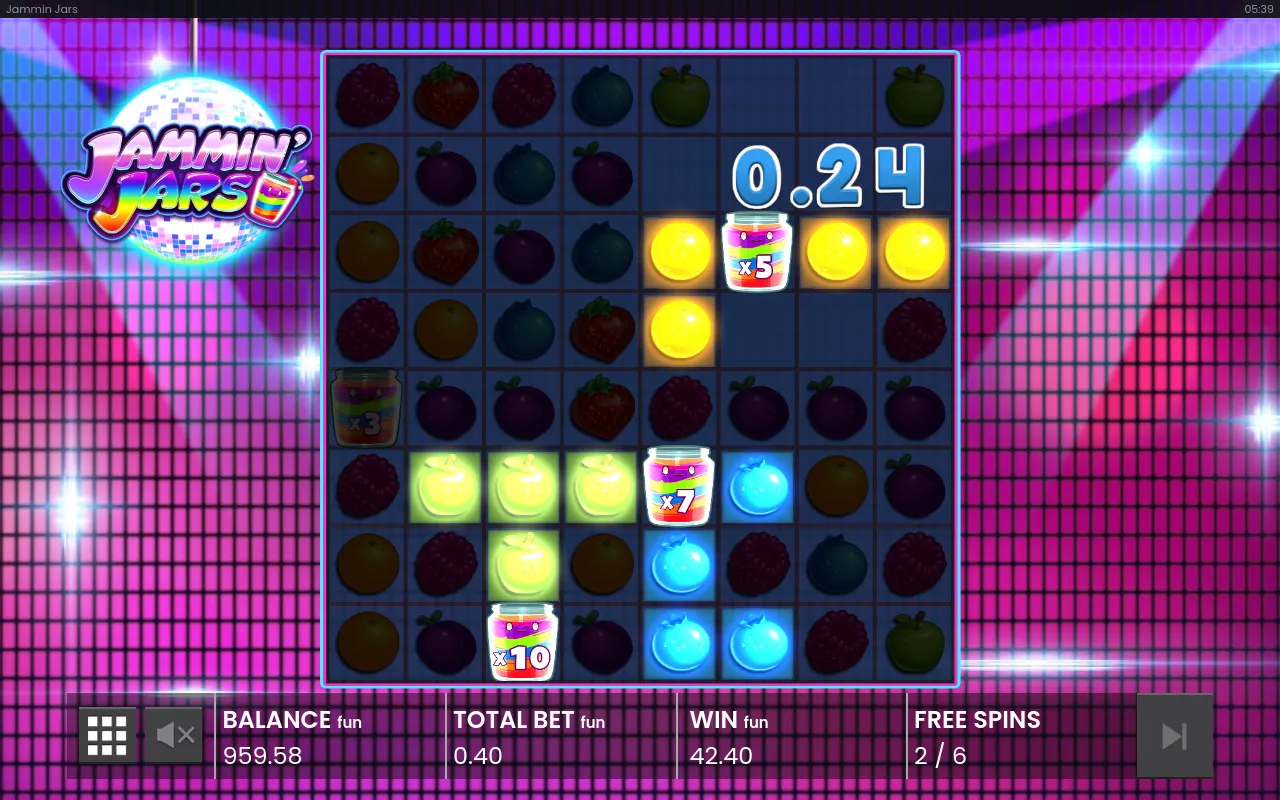
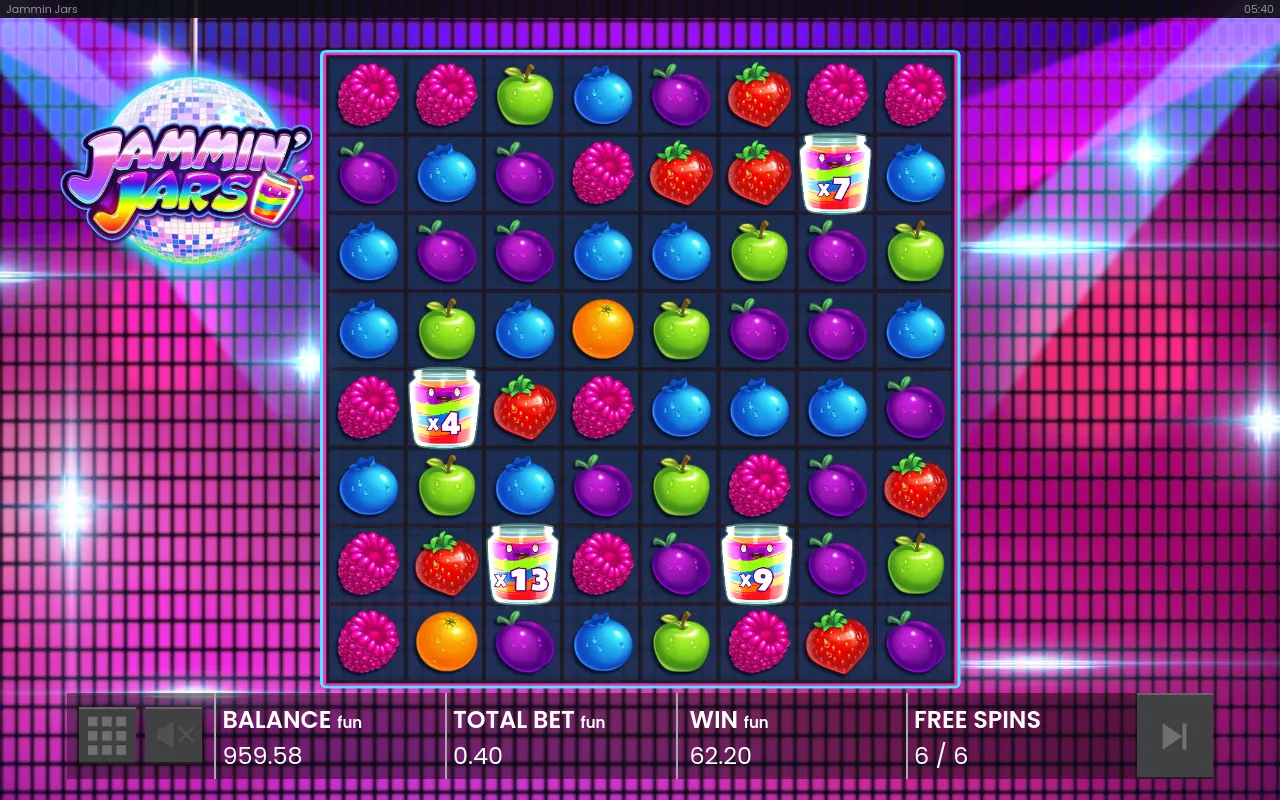
Across 444 spins at a flat 0.40, the moment that defined my Jammin' Jars run was a six-spin bonus. Three jam jars landed together, locked into place across the 8x8 grid, and from there every cluster that brushed a jar bumped its multiplier and paid at it. They climbed 5, 7, 10, 13 over the round, and by the closing spin four jars were stacked across the board with the top one sitting at 13 while the fruit cascaded through them. The round shut at 62.20, which is 155x the 0.40 I had on the spin and the biggest single result of the night by a wide margin.
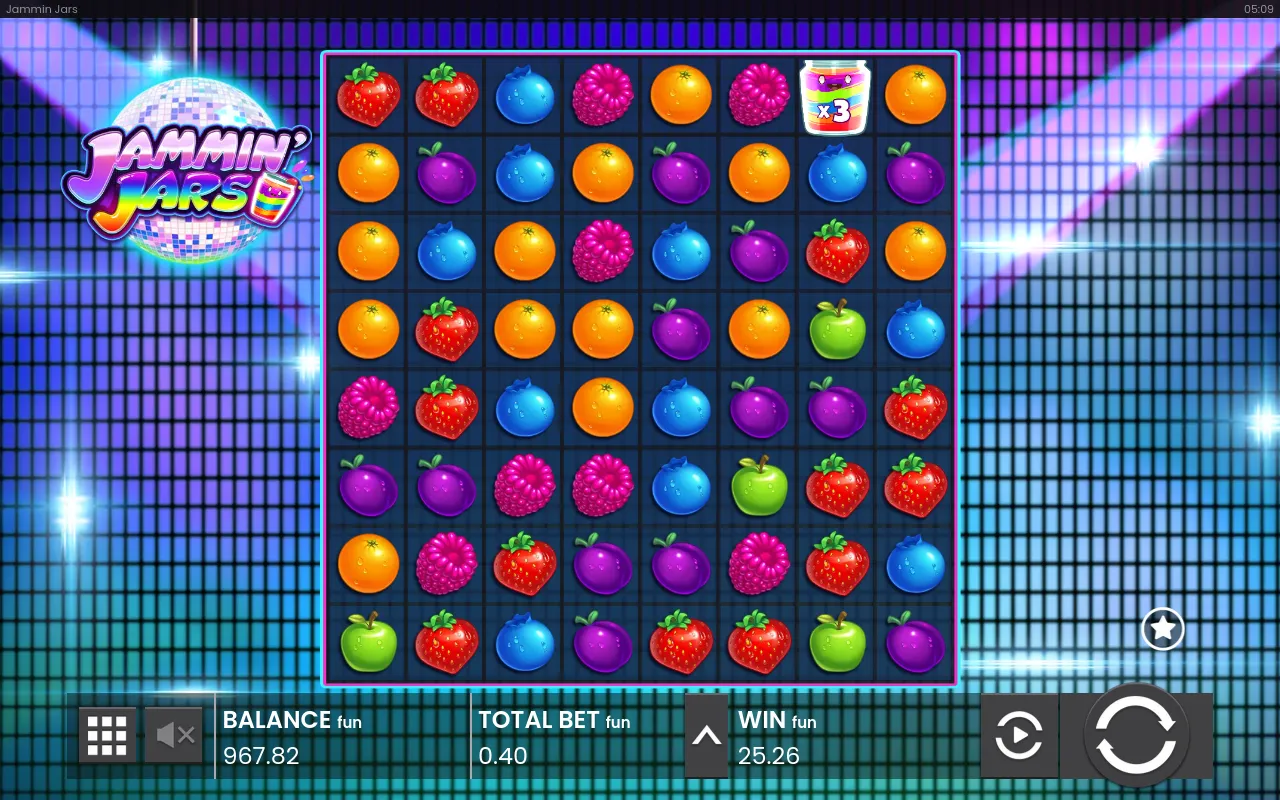
The rest of the session was the high-variance shape this game is built for. The balance opened near 999 and bled to about 949 through a long cold middle. The jars and the bonus then hauled it back to close at 1,011.06, up around 12. What stuck with me is how much the jars paid in ordinary play, well beyond the six free spins: a single 3x jar caught a base-game cascade for 25.26, 63x the stake.
The Minty Take: Over 444 spins at 0.40, Jammin' Jars paid me off the jar multipliers in the base game and the bonus alike. A six-spin round closed at 62.20 (155x the stake) and a base-game 3x jar caught a cascade worth 25.26 (63x), carrying the run to a small gain at 1,011.06. The published top build is 96.83% and it plays high variance, so the cold patches between jar hits are the price of admission for a game built this way.
Five matching fruits touch, pay, and the board falls into the next win
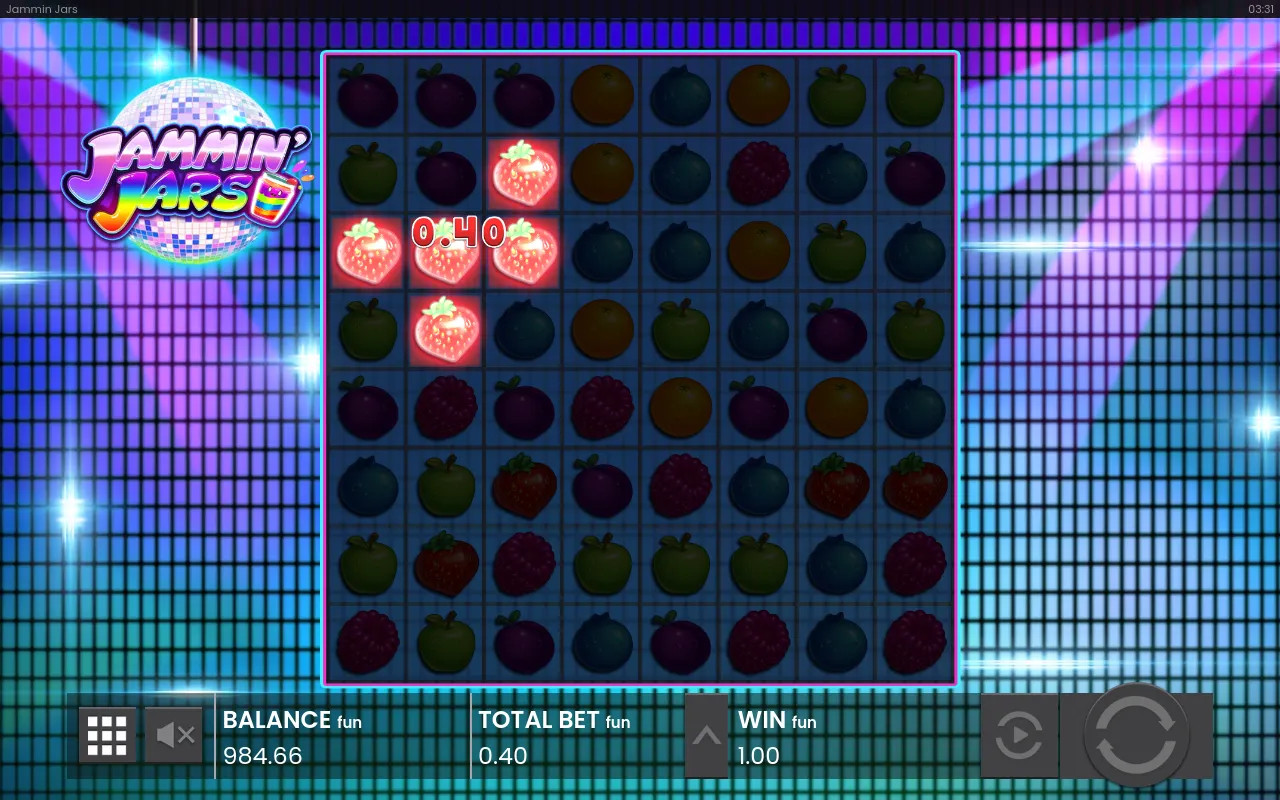
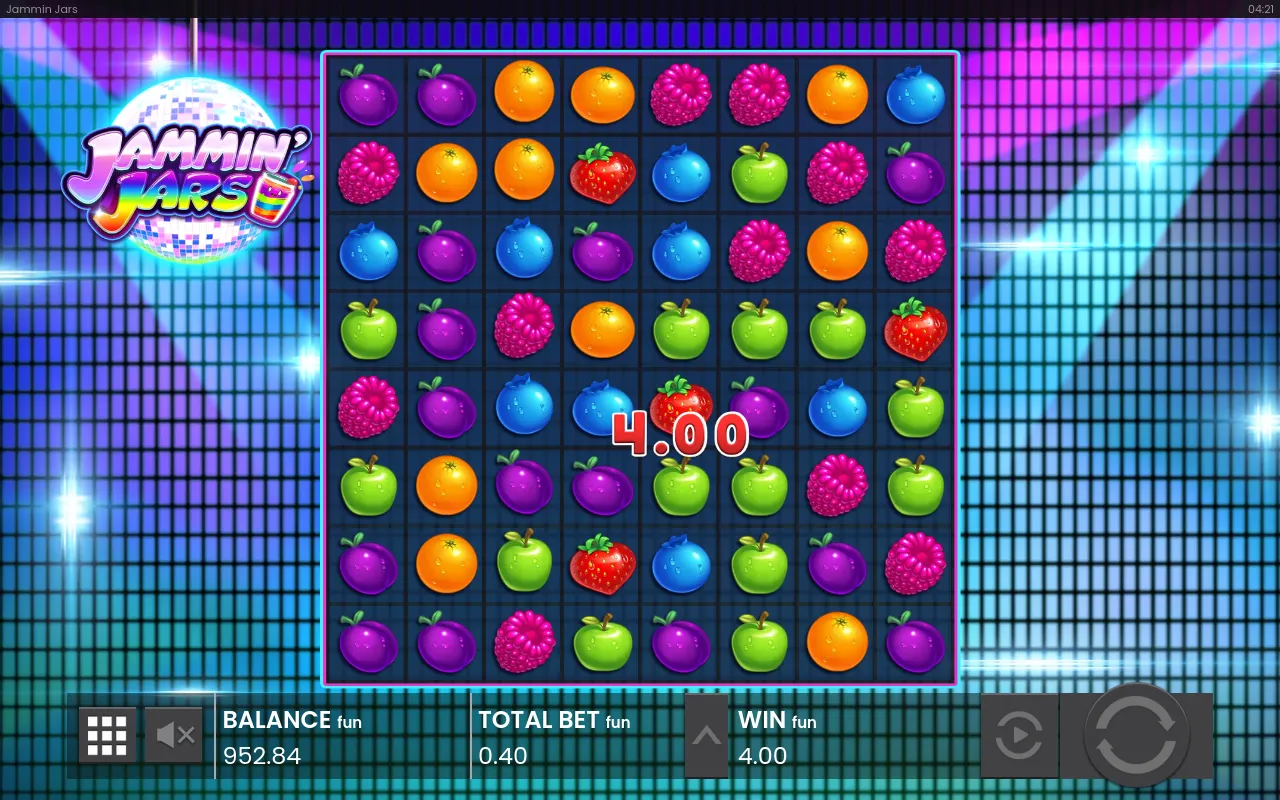
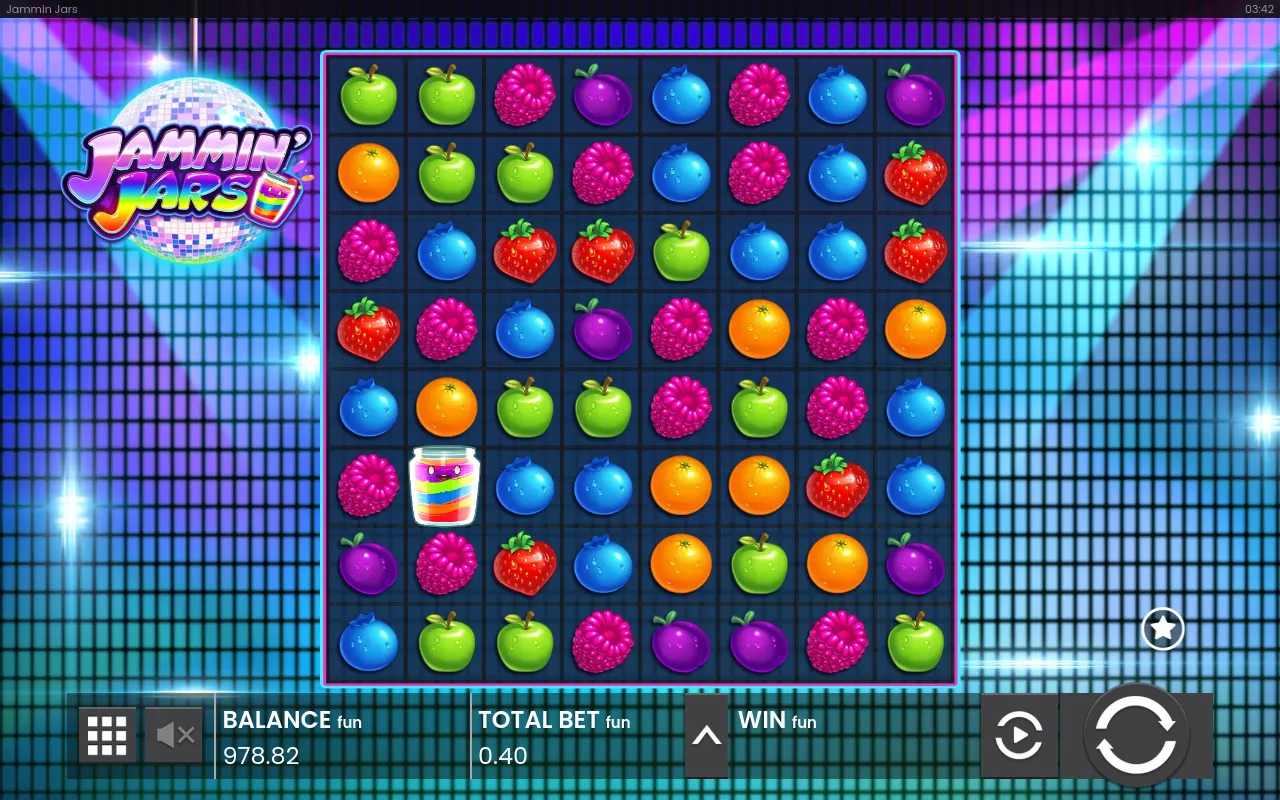
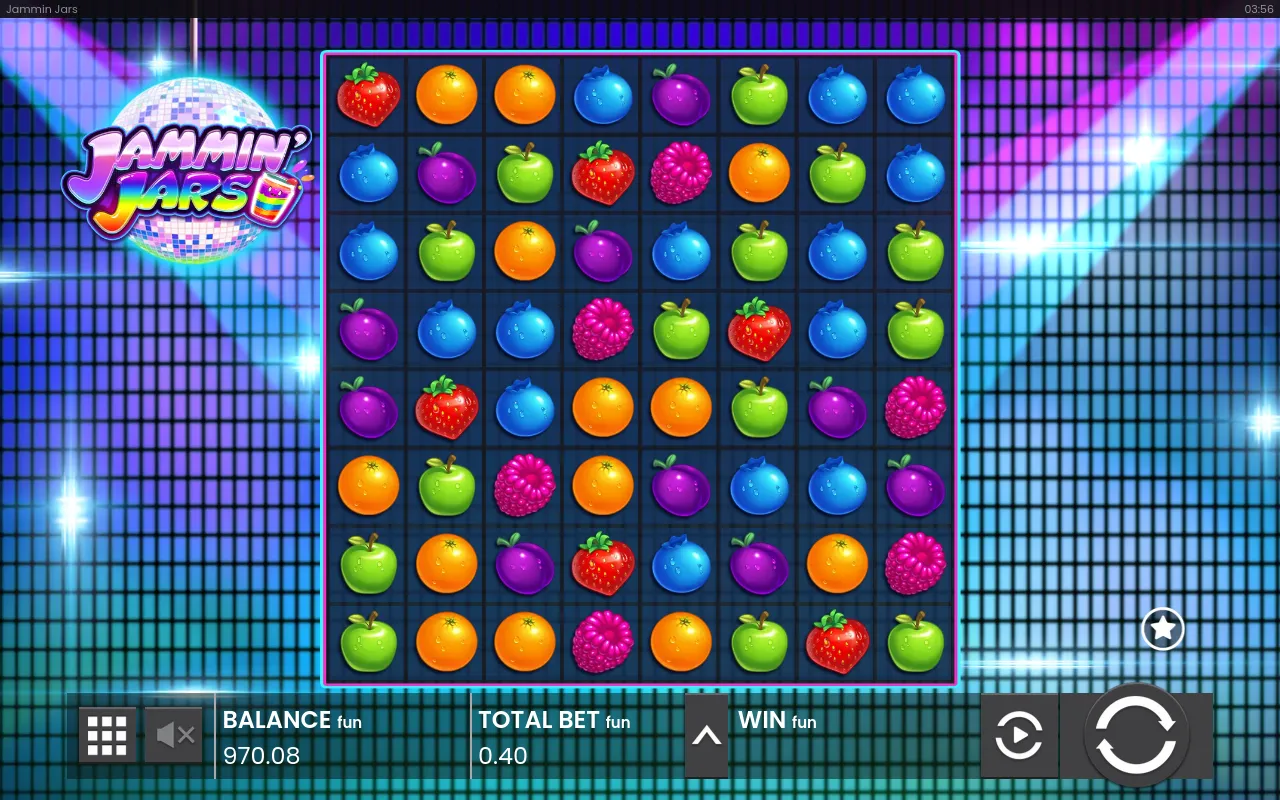
There are no paylines here. Five or more of the same fruit touching side to side or top to bottom on the 8x8 board form a cluster, that cluster pays and clears, and the fruit above tumbles down to fill the holes, which can land a fresh cluster on the same spin for no extra stake. Most of my 444 spins paid in small change this way: a 0.04 and a 0.08 cluster resolving on one drop, or a lone strawberry group for 0.40 while the meter ticked over by cents. The cascades are why a 0.40 spin sometimes chains two or three pays before it settles, and they are also why a flat board with nothing connected feels so quiet by comparison.
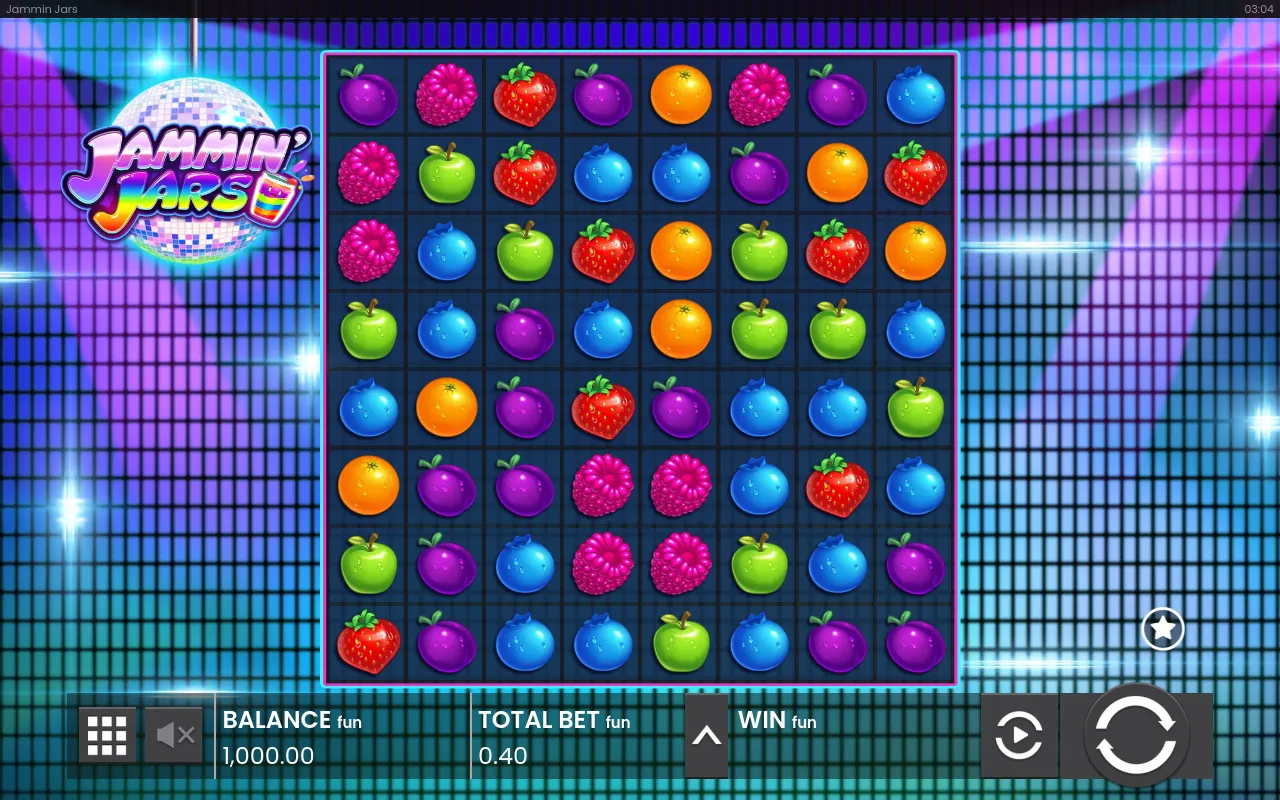
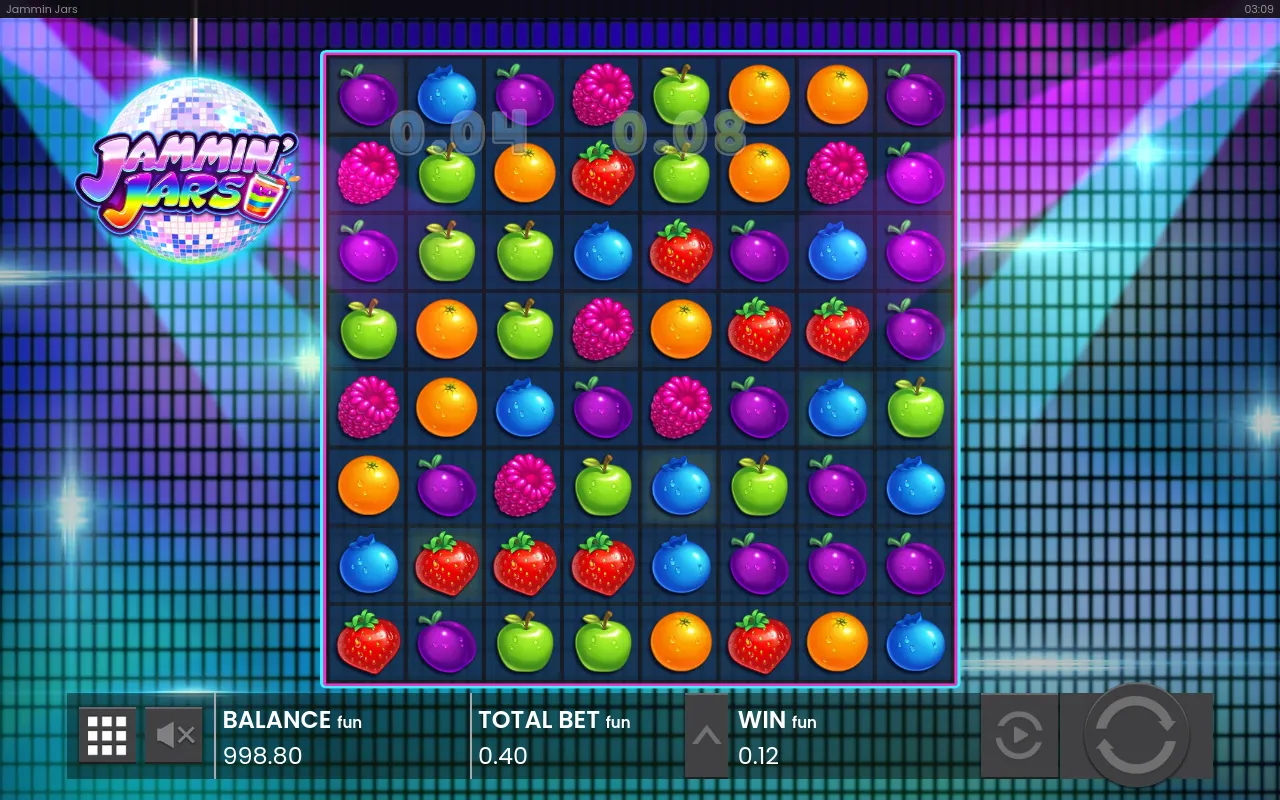
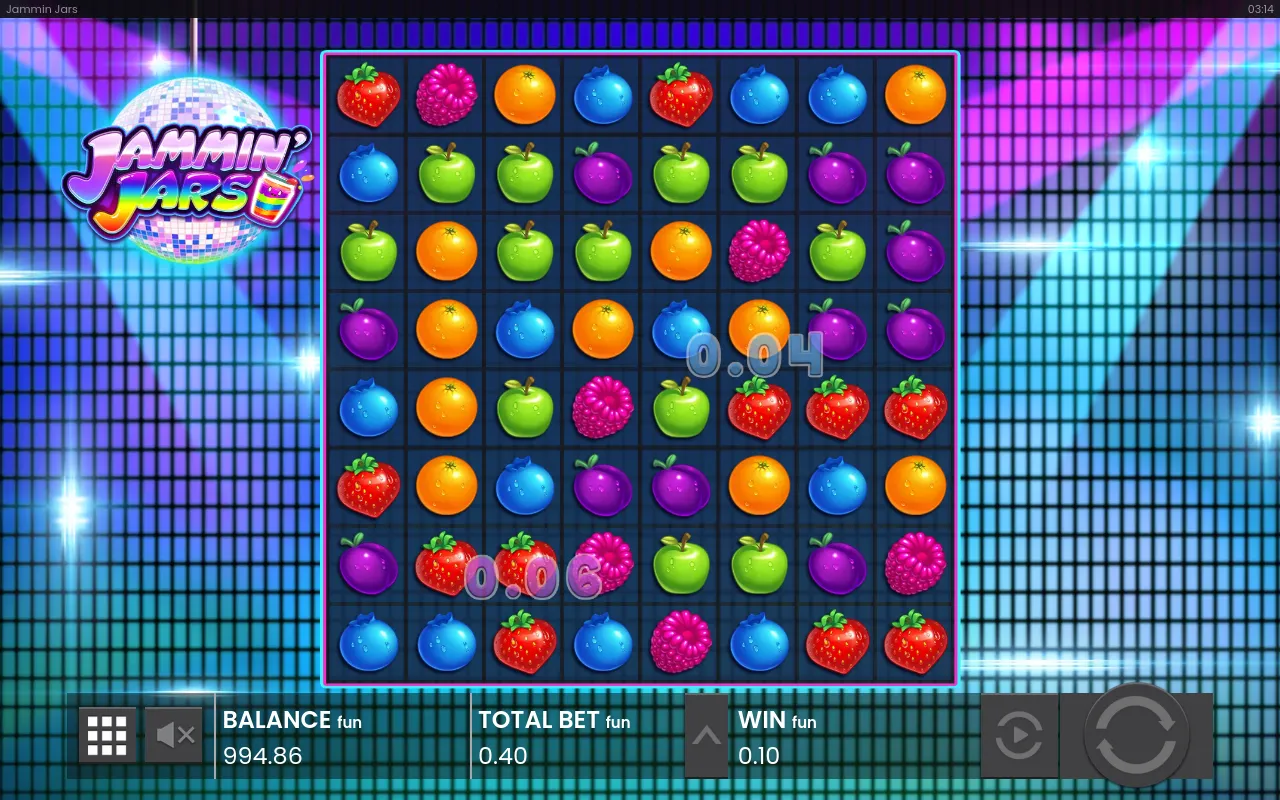
The jars don't wait for the bonus: a 3x jar caught 25.26 in normal play
The jam jar is the wild and the engine. It drops onto the grid and holds its spot while everything cascades around it, stepping its multiplier up by one each time a winning cluster forms against it. The thing the rules summaries undersell is that this happens during normal spins, well before any bonus. Partway through the cold middle, with the balance down at 967.82, a jar sitting at 3x near the top of the grid caught a cascade chain and paid 25.26, 63x my 0.40. Another board with a jar already grown to 7x returned 9.16. Those two hits, not the small fruit clusters, were what kept the base game from being a straight slow bleed.
Strawberries and raspberries up top, blueberries at the floor
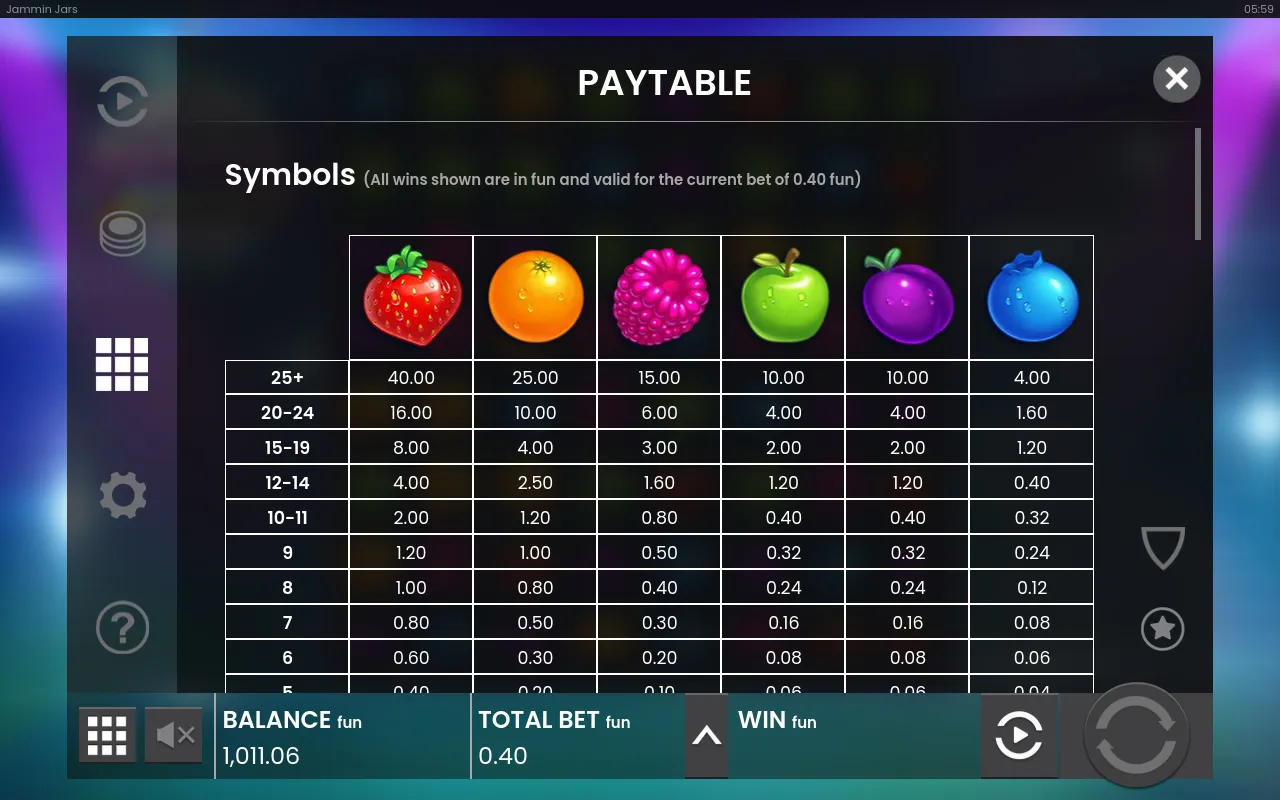
Six fruits fill the board. The two reds, strawberry and raspberry, are the premium symbols and the blue blueberry pays the least, with orange mid-ladder and apple and plum just under it. Because a cluster has to be five-plus and the bigger bands want twenty-five or more of one fruit, the reds are what you are quietly hoping bunch up. My biggest fruit-only group was a dense strawberry cluster worth 4.00, ten times the stake and the largest hit I had outside the jar mechanic entirely. A glance at the pay table before you start tells you which colours move the meter.
Six free spins, jars locked, multipliers that never reset
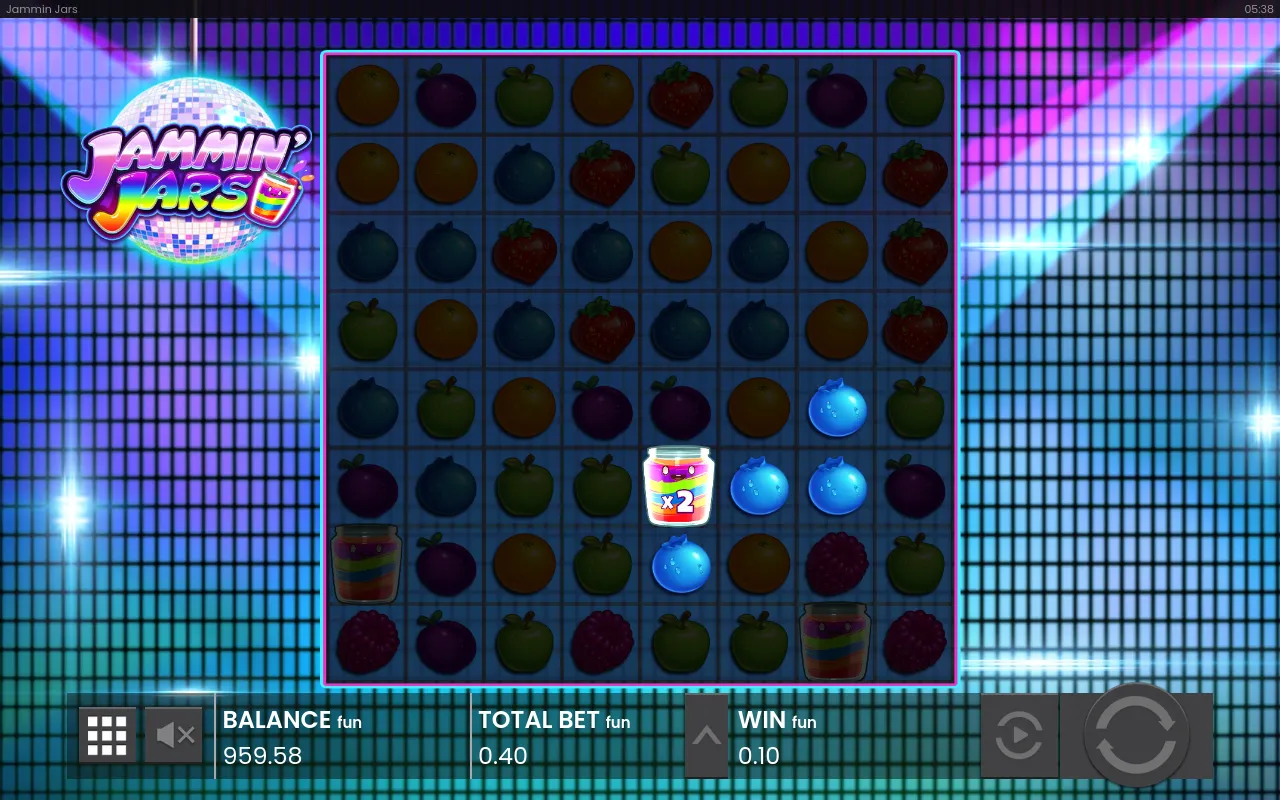
Three jars landing together open the bonus: six free spins, and for the whole round the jars stay welded to the grid and keep whatever multiplier they have built. That persistence is the difference. In the base game a jar resets between spins; in here a jar at 5x after the second spin is still at 5x going into the fifth, and every cascade that touches it both pays at that value and pushes it higher. By spin two of my round three jars were already carrying multipliers as high as 10x and the running total read 42.40. The closing spin had four jars stacked across the grid with the highest at 13x, and the cascades running through that cluster of multipliers are what turned the round into 62.20. Six spins does not sound like much; six spins with the multipliers compounding is the entire reason to be here. Some operators also let you buy in for a fixed price, paying for instant entry to the six-spin round, which skips the wait for three jars but also skips the base-game jar hits that paid me 25.26 and 9.16.
The cold middle, and the Rainbow that drops oversized fruit to break it
The dry spell in the middle of my run was real: long stretches where the board settled with nothing connected and the balance just drifted toward 949. Push Gaming's safety valve for that is the Rainbow, a random feature that can fire after a non-paying drop and sweep an oversized block of a single fruit onto the grid, three-by-three or larger, and force a cluster that often chains into the fruit around it. The jars are left untouched by it. It did not rescue every cold patch I hit, but it shows up often enough to shape how the base game feels rather than landing once a session.
Which RTP build you're on, and where the 20,000x lives
Stakes run from 0.20 to 100 a spin, so my 0.40 sat near the floor. The ceiling is a published 20,000 times the bet, and after watching the bonus math it is clear where that number hides: several jars stacked high on the same locked grid and multiplying each other across a long cascade, almost certainly during the free spins. There is a catch on the return, though. The 96.83% you read about is only the top configuration, and a casino can quietly run a cut-down one. Whichever build is loaded shows up in the rules once the game opens, and a ten-second look there tells you what you are really playing for.
Worth the seat if you can ride out the quiet
This is a wait-for-the-jars game. The base cascades and the small fruit clusters keep you ticking over, but the money sits in the jar multipliers stacking up, and across 444 spins that paid off for me twice in the base game and once in a bonus that more than covered the cold middle. If you find the original too lean there is a sequel, Jammin' Jars 2, with a bigger ceiling and an extra collection layer over the same jar idea. The rest of the studio's grids and coin-collect titles sit in the wider Push Gaming catalogue if this style clicks.